Kusksu (broad bean soup)
the Heart of Maltese Cooking
Kusksu is one of those dishes that doesn’t need an introduction — it simply arrives, warm and reassuring, and you understand immediately what it’s meant to do. This isn’t a soup you rush through or analyse too closely. It’s the kind you sit with, spoon by spoon, letting it do its job.
The first time I had kusksu, it felt familiar in a quiet way. Not exciting or dramatic, but comforting — like something that has been cooked the same way for generations because it works.
The Role of Broad Beans in Kusksu
Broad beans are what give kusksu its soul.
In Malta, broad beans aren’t just another ingredient — they’re seasonal markers. When they appear in markets, usually in spring, you know exactly what time of year it is. Kusksu follows naturally, cooked while the beans are still young, tender, and slightly sweet.
What I love about broad beans in this dish is how they change everything without overpowering it. They soften as they cook, releasing a gentle sweetness into the broth that balances the savoury base. They don’t shout for attention, but without them, kusksu simply wouldn’t be kusksu.
Traditionally, the beans are added early so they have time to break down slightly, thickening the soup naturally. Some stay whole, others melt into the broth, giving it body without needing cream or heavy ingredients. When the ġbejna is added at the end, the beans absorb that richness beautifully.
This is classic Maltese cooking — using what’s in season, letting one ingredient do multiple jobs, and trusting time more than technique. Broad beans don’t just flavour kusksu; they define it.
My First Impression
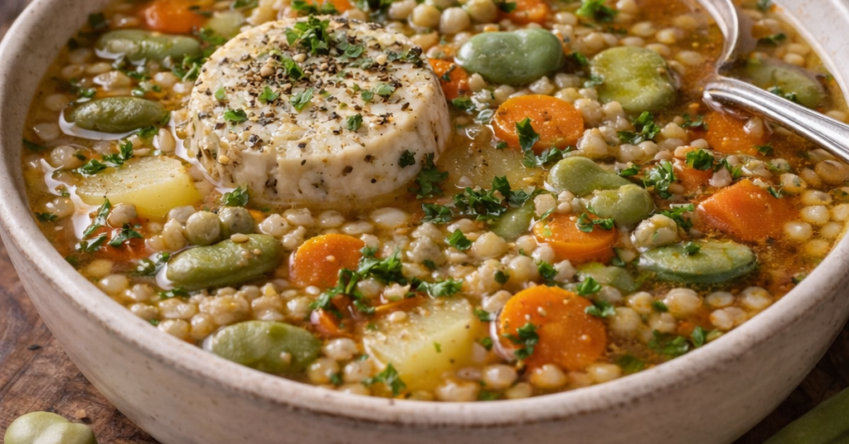
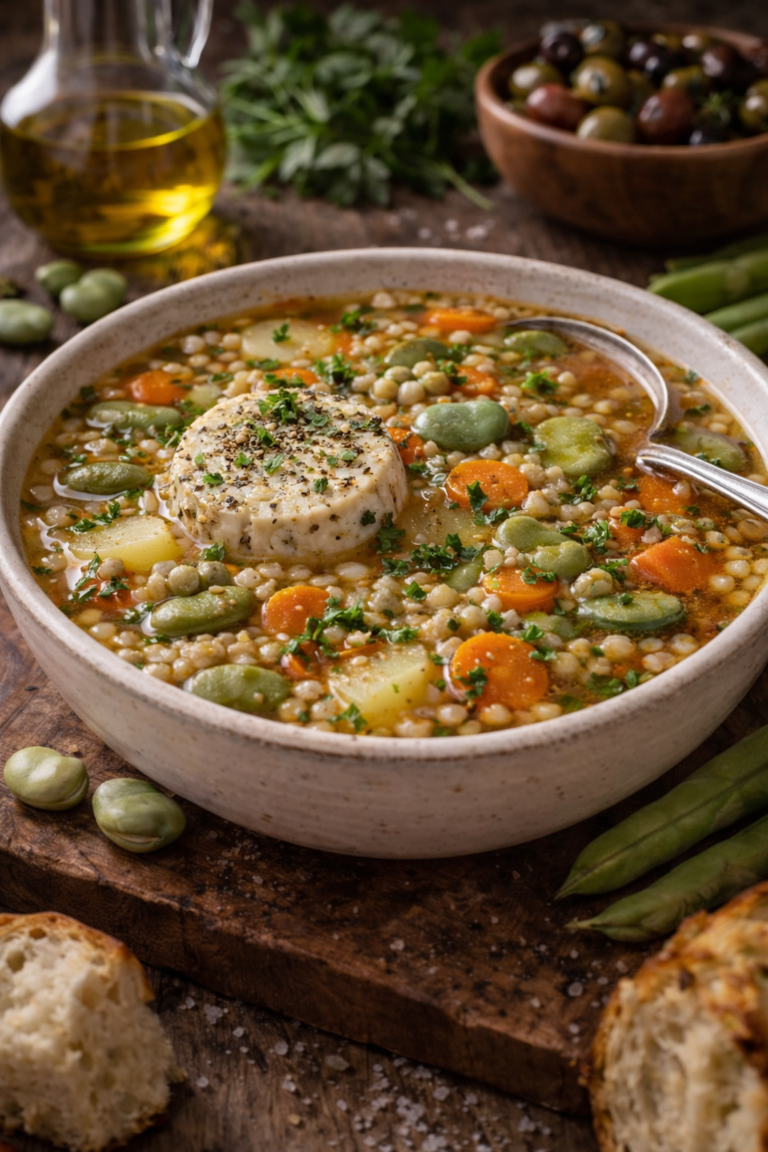
At first glance, kusksu looks simple. Pale beans, small pasta, a light broth. Nothing flashy. But once you start eating, the flavours build slowly. The beans give sweetness, the pasta adds body, and the ġbejna brings a soft richness that ties everything together.
Halfway through the bowl, I realised I was eating slower without meaning to. That’s when you know it’s working.
How It’s Served
Kusksu is usually served simply, straight from the pot. There’s often bread on the table, even if you don’t strictly need it. The ġbejna melts slowly into the soup, changing the flavour as you eat.
There’s no rush, no strict portioning. You take what you want, and you sit a little longer.
Kusksu is the kind of dish that stays with you, not because it’s dramatic, but because it’s steady. Warm, filling, and deeply tied to everyday life in Malta, it’s food that makes sense.
If you want to understand Maltese home cooking beyond the obvious classics, start with a bowl of kusksu and take your time.
That’s how it’s meant to be eaten.
Share this recipe
Kusksu (Maltese Broad Bean & Pasta Soup)
NUTRITION
EQUIPMENT
Ingredients
- 2 tbsp olive oil 30 g
- 100 g onion finely chopped
- 30 g tomato paste approx. 1 heaped tbsp
- 200 g fresh or frozen broad beans
- 100 g small pasta kusksu beads or orzo
- 1.2 L water or vegetable stock
- Salt and pepper to taste
- 4 eggs one per person
Instructions
- Heat olive oil in a large soup pot over medium heat. Add onion and cook until softened, about 5 minutes.
- Stir in tomato paste and cook for another 1–2 minutes to deepen the flavour.
- Add broad beans and water or stock. Bring to a gentle simmer.
- Stir in pasta and cook for 10–12 minutes, or until tender.
- Crack the eggs directly into the soup, spacing them apart. Poach gently for about 4–5 minutes until the whites are set but yolks still soft.
- Season with salt and pepper to taste.
- Serve hot with Maltese crusty bread or galletti crackers.