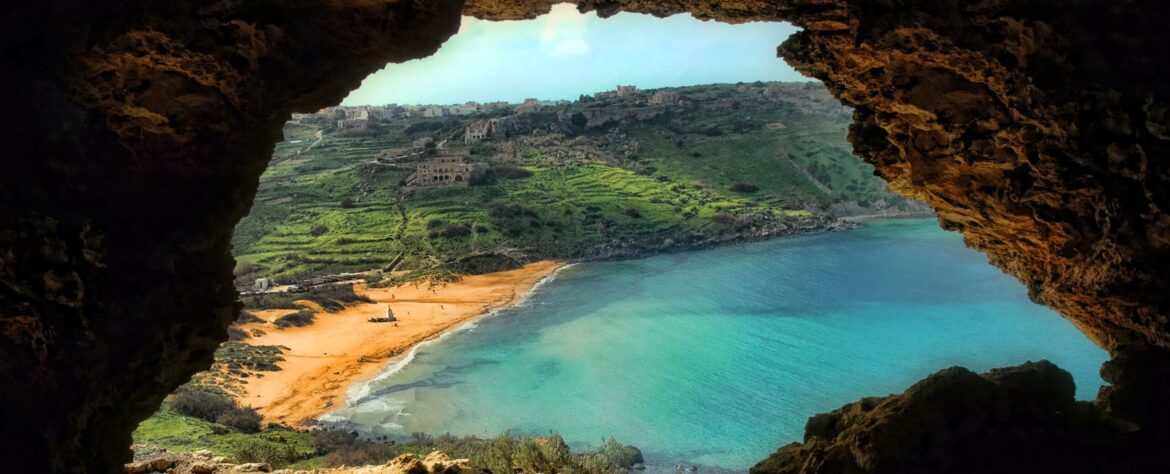
Arriving in Malta feels a little like stepping into a film set where every scene shifts seamlessly from history to holiday. One moment you’re gazing up at golden-stone fortresses that have withstood centuries of sieges, and the next you’re floating in turquoise bays that look like they’ve been Photoshopped. That’s Malta for you: compact, versatile, and endlessly surprising.
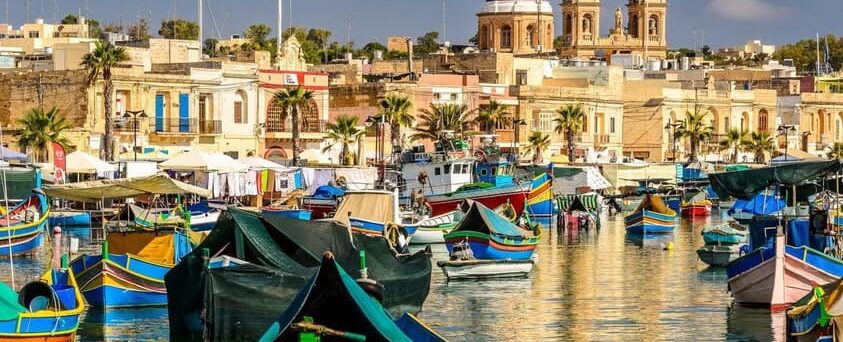
What struck us most wasn’t just the scenery, though. It was the people. Maltese hospitality is something you can taste and feel—whether it’s a fisherman in Marsaxlokk proudly explaining the story of his painted luzzu boat, or a café owner who insists you try pastizzi “the proper way” (with a strong tea on the side). Everywhere we turned, someone was ready to share a smile, a story, or a plate of something delicious.
why it captivates it travelers
Malta might be a speck on the map, but don’t let its size fool you. This island is like that friend who says, “Oh, I’ll just bring a small snack to the party”—and then shows up with a feast that could feed a village. Easy to explore in a few days, but endlessly rich in layers, Malta keeps pulling you back for just one more discovery.
It’s the balance that makes it magic. Spend the morning floating in the Blue Lagoon, where the water is so clear it feels like snorkeling in liquid glass. By sunset, you’re perched on the city walls of Valletta, watching the sky melt into pink and gold while church bells echo through the streets. Lazy beach day or adrenaline rush? Malta doesn’t make you choose. You can hike windswept cliffs in the morning, dive into shipwrecks at noon, and toast the evening with local wine as fireworks explode at a village festa.
And then there are the opportunities that you can’t plan, the kind that just happen. A fisherman in Marsaxlokk beckons you over to taste today’s catch, grilled right there on the dock. You stumble upon a festa in a tiny hilltop village, suddenly swept into a crowd dancing under confetti and fireworks.
Malta isn’t just about beaches (though those are spectacular). This little archipelago is one of the Mediterranean’s greatest storytellers. Valletta, with its imposing fortifications and ornate Baroque palaces, feels like walking through a living museum. Mdina, the “Silent City,” is eerily beautiful, with lantern-lit alleys that make you half expect a knight to appear around the corner.
And then there are the prehistoric temples—Ħaġar Qim and Mnajdra—standing quietly on cliff tops, older than the pyramids, keeping their mysteries close. The Grand Harbour tells its own tale, framed by the Three Cities that watched the rise and fall of empires. Even the more recent past is fascinating; World War II shelters and bunkers reveal Malta’s incredible resilience.
Of course, Malta’s history isn’t frozen behind glass—it’s woven into daily life. Fishermen still paint the protective eye on their boats in Marsaxlokk, families still gather in village squares for festas, and crumbling fortresses now host concerts under the stars.
Malta can be visited year-round, but the experience changes noticeably with the seasons.
April to June and September to October are the most balanced periods. The weather is warm without being extreme, the sea is already pleasant for swimming, and the island feels lived-in rather than crowded. These months are ideal for exploring cities like Valletta and Mdina, visiting markets, hiking coastal paths, and enjoying long lunches without the intensity of peak summer heat.
July and August are hot, dry, and busy. This is beach season in full force, with crystal-clear water and a lively atmosphere, but also higher prices and crowded bays. Sightseeing during the day can be tiring, so experiences tend to shift toward early mornings, late afternoons, and evenings by the sea.
November to March offers a quieter side of Malta. While swimming is limited, this period is well suited for cultural travel, local food, and slow exploration. Markets, bakeries, and traditional restaurants remain active, making it a good time to focus on Maltese cuisine and everyday life rather than beaches.
For travellers interested in both food and exploration, late spring and early autumn provide the richest overall experience.
Places You Simply Can’t Miss
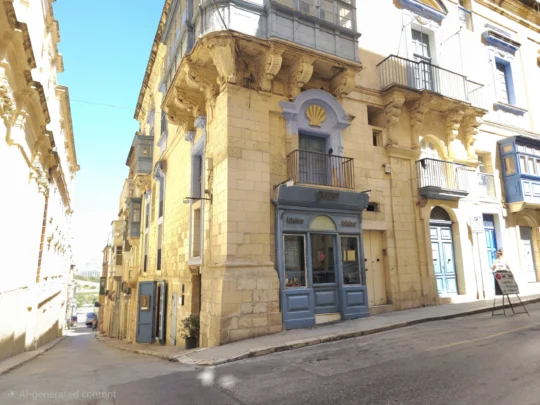
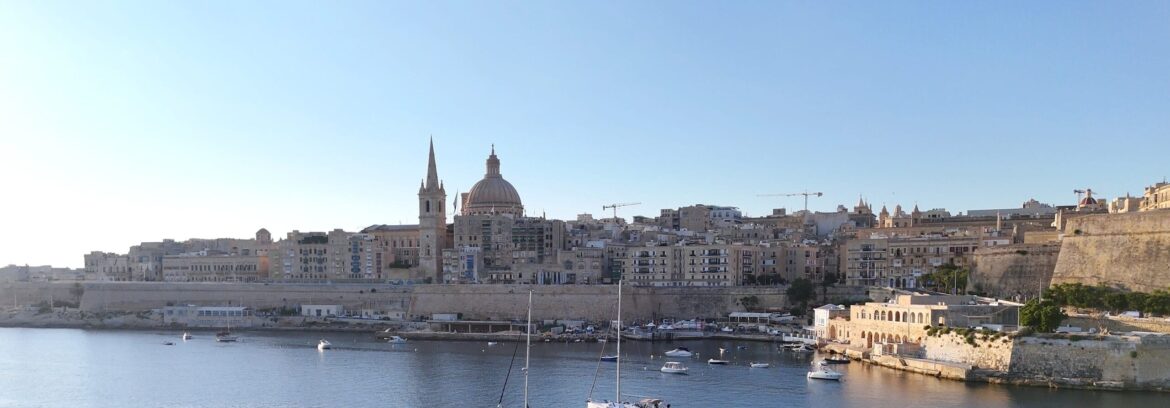
Valletta was our first real taste of Malta’s grandeur, and it hit us the moment we sailed into the Grand Harbour. Those fortress walls rise out of the sea like golden giants, glowing even more in the evening sun. Walking through the city, we found ourselves weaving between Baroque palaces, grand churches, and narrow streets that always seemed to end in a jaw-dropping view of the harbor. Valletta feels alive—not just as a capital, but as a stage where history and daily life mingle. We sipped coffee on Republic Street, watched locals chat in Maltese while balancing shopping bags, and realized: this isn’t a city you just see, it’s one you feel under your skin.
Mdina felt like walking straight into a fairy tale. The moment we passed through the grand Baroque gate, it was as if the world outside disappeared—the noise, the traffic, even the pace of modern life. Inside, the city is hushed and timeless, which is why they call it the “Silent City.”
By day, we wandered its narrow alleys and sun-drenched courtyards, trying to imagine all the lives these walls had seen. Mdina has been here since the Phoenicians, later expanded by the Romans and reshaped by the Arabs. The Knights of St. John left their mark too, but somehow the city has kept its quiet dignity. Every turn felt like peeling back another layer of history.
And then, as if to prove history is still alive here, we stumbled straight into the Medieval Festival. Suddenly the silent streets were full of costumed knights, jugglers, and the sound of drums echoing off the old stone. We tried roasted meats from stalls, watched sword fights in the square, and wandered among falconers and flag-bearers as if we had genuinely time-traveled. It gave Mdina a whole extra dimension—like the city wasn’t just a museum of the past, but a stage where it comes alive again.
At dusk, lanterns lit up the golden stone and the silence returned, more magical than ever. We found a spot on the ramparts, looked out over the island spread below us, and honestly—it was one of those goosebump moments. No wonder directors picked Mdina for Game of Thrones. Standing by the gate where Catelyn Stark once entered King’s Landing, I half expected a Lannister to ride past.
But beyond the film magic, Mdina is simply romantic in its own right. Walking those streets at night, with soft light spilling from doorways and shadows playing on ancient walls, felt like stepping back into another century. It’s the kind of place that doesn’t just show you history—it lets you live it.
We’d seen countless photos of the Blue Lagoon before arriving in Malta, but nothing prepares you for that first dive. The water is so blue it almost looks unreal—like someone turned up the saturation until the sea became pure turquoise. Floating there felt like swimming through sunlight itself.
Getting there is part of the adventure. On one hand, you can rent your own boat—sailboats, catamarans, even small powerboats—for a day of freedom, hopping between coves and diving in whenever the heat gets too much. On the other, you can grab one of the budget tourist boats that ferry hundreds of people over daily. They’re affordable, but you’ll be sharing the view with a sea of selfie sticks and inflatable flamingos.
The trick, we discovered, is timing. The Blue Lagoon during the day is stunning, yes—but it’s also teeming with people. The magic happens at sunset, when most of the big boats leave and the lagoon suddenly exhales. The water glows in the fading light, the cliffs turn golden, and it feels like you have a private slice of paradise. Spending the night there, gently rocking at anchor under a sky full of stars, was pure magic. It was the Comino everyone dreams about, without the crowds. Gorgeous, unforgettable, and a little bit addictive—one swim was never enough.
Gozo felt like Malta’s slower, greener sister—the kind of place where time stretches out and you can actually breathe a little deeper. The ferry ride over is short, but somehow you arrive in a world that feels both familiar and completely different.
Our first stop was Dwejra, a wild stretch of coast famous for its cliffs, caves, and the Inland Sea. We took a tiny boat through the cave that connects the sheltered lagoon to the open Mediterranean—it was like slipping through a secret door carved by nature. Out on the other side, the waves crashed against the cliffs with dramatic force, reminding us just how powerful this coastline is. Standing there, we could almost picture the Azure Window arch that once stood proudly before collapsing in 2017. Even without it, Dwejra remains spectacular—raw, untamed, and unforgettable.
In the heart of the island lies Victoria, Gozo’s bustling capital. We wandered its streets before climbing up to the Citadel, a fortified city that’s been guarding the island for centuries. From the top, the view is breathtaking—you can see the entire island spread out like a patchwork quilt of fields, villages, and winding roads, with the sea framing it all in the distance. The Citadel itself feels alive with history, from medieval walls to little chapels tucked into corners. Walking there at sunset, the stones glowing gold, was one of those moments where you can almost hear the stories echoing in the walls.
And then, of course, there’s Ġgantija—the oldest freestanding temple complex in the world, dating back over 5,500 years. Older than Stonehenge, older than the pyramids, these massive stone structures left us speechless. Standing there, touching stones that Neolithic hands once placed, I couldn’t help but wonder what ceremonies or rituals unfolded here millennia ago. It’s humbling, surreal, and one of those rare places that makes time feel irrelevant.
Gozo may be small, but it packs in natural beauty, living history, and some of Malta’s most moving experiences. For us, it was the perfect balance to the bustle of the main island—a reminder that sometimes slowing down lets you see more.


Marsaxlokk was like stepping into a postcard we’d already seen a hundred times—but somehow it still took our breath away. The bay is dotted with luzzu boats, painted in bright reds, yellows, and blues, each with the traditional “Eye of Osiris” on the bow to ward off bad luck. Watching them bob gently in the water felt like watching a scene that hasn’t changed in centuries.
We timed our visit for Sunday, when the fish market is in full swing. Stalls overflowed with everything from glistening swordfish to trays of squid and piles of local produce. The air was a mix of salt, sizzling grills, and the chatter of locals bargaining for the best catch. We ended up at a harbor-side restaurant where the fish was so fresh it had probably been swimming that morning. A plate of grilled calamari, a carafe of local wine, and the sound of the water lapping against the quay—it was simple, perfect, and very Maltese.
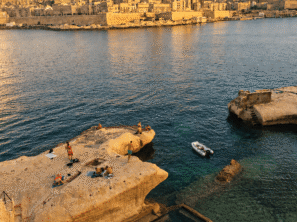
Just around the corner, a short drive or boat ride away, lies St. Peter’s Pool—a natural swimming spot carved into the rock, with turquoise water so inviting it practically begs you to jump in. And jump people do—off cliffs, ledges, and even from the higher rocks for the thrill of it. We swam, sunbathed on the flat stones, and watched as locals showed off their best dives with effortless grace. It felt like a natural amphitheater of joy, where the only tickets needed were a swimsuit and a towel.
Together, Marsaxlokk and St. Peter’s Pool capture two sides of Malta we loved: tradition and relaxation. One rooted in fishing boats and Sunday markets, the other in sun, sea, and the pure pleasure of diving into blue water. Both left us salty, happy, and hungry for more.
Spending a day on the water completely changes how Malta is experienced. With a small motorboat or sailing boat, the coastline opens up — hidden coves, clear swimming spots, and stretches of water that are difficult or impossible to reach from land. Areas around Comino, Gozo, and the Crystal Lagoon are at their best this way, allowing time to swim, snorkel, and move on when it feels right rather than following a fixed schedule. For travellers who prefer a more relaxed approach, companies like Sail Malta Charters offers day charters with a skipper, making it possible to enjoy the water without worrying about navigation or logistics.
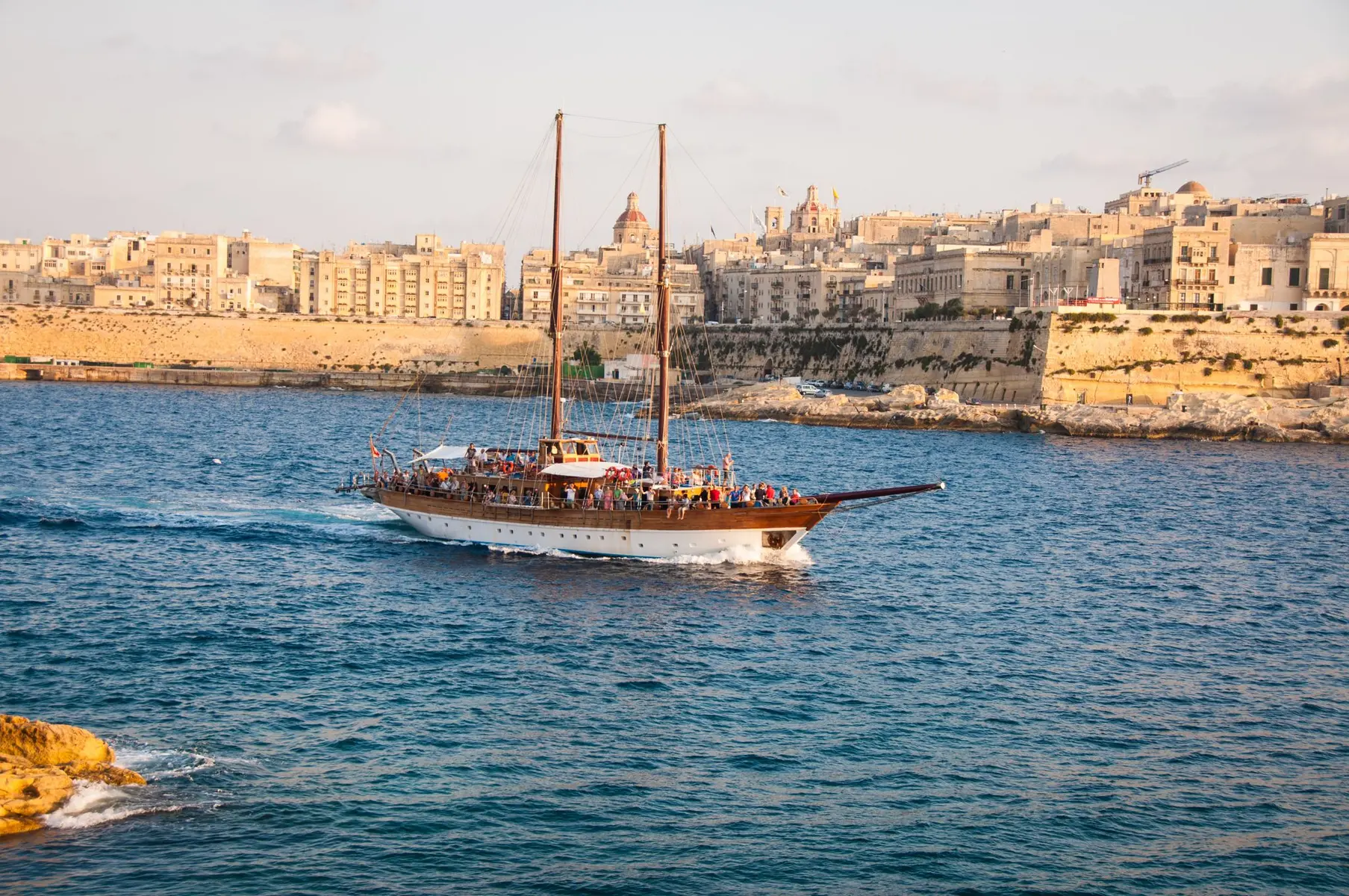
For a slower, guided experience, harbour cruises offer insight into Malta’s maritime history. Moving through the Grand Harbour and surrounding creeks gives context to the island’s strategic importance and provides excellent views of fortified cities from the water.
One of the things that absolutely fascinated us in Malta were the Megalithic Temples—some of the oldest freestanding stone structures in the world. Scattered across the islands, there are seven sites recognized by UNESCO, including Ġgantija on Gozo, Ħaġar Qim and Mnajdra near Qrendi, and Tarxien closer to Valletta. What blew our minds is just how old they are—built between 3600 and 2500 BC, they’re even older than Stonehenge and the pyramids of Egypt.
The history is still wrapped in mystery. How did Neolithic communities move and place these massive stones? What rituals or ceremonies did they perform here? Standing in front of the huge slabs, carved altars, and alignments with the sun, it felt like we were staring at humanity’s first architectural masterpieces.
And then there’s the legend. Ġgantija literally means “the Giant’s Tower,” because according to local lore, these temples weren’t built by ordinary people at all. They were the work of a giantess named Sunsuna, who carried massive stones on her head while cradling her baby, building the temples as if it were child’s play. The story says she even used the temples to live in and feed on broad beans. Whether myth or memory, the idea of giants shaping the island captured our boys’ imagination instantly—suddenly every massive stone became a giant’s footprint in their eyes.
Our curiosity actually started before we ever set foot on site. One evening on the boat, we watched an episode of The Why Files on YouTube about Malta’s temples (watch here
), and our kids were instantly hooked. They peppered us with questions: Who built them? Why? Did giants really exist? By the time we actually visited, they were racing ahead of us, pointing at stones and shouting, “The giants did this!”
Seeing the temples in the flesh gave us goosebumps. Touching stones that have stood for over 5,000 years is humbling, but hearing the kids weave legends into the history gave it an extra layer of magic. Malta’s beaches and harbors are stunning, yes, but its temples remind you that this island has been a crossroads of humanity—and maybe even giants—for longer than we can truly imagine.
Popeye Village, originally built as a film set, is now a family-friendly attraction with colorful wooden buildings overlooking Anchor Bay. It works best as a half-day visit, especially with children. The location itself is part of the appeal, combining coastal views with light entertainment rather than a full-scale theme park.
Esplora is well suited for families and curious minds of all ages. Hands-on exhibits, workshops, and outdoor spaces make it an easy indoor–outdoor option, particularly on hotter days or when you want a change from historical sites. It adds a modern, educational layer to Malta’s otherwise historic landscape.
For us, Malta wasn’t just about the cities and temples—it was about the sea. Every curve of the coastline hides another bay or beach, each with its own character. Exploring them became a bit of an obsession; every time we thought we’d found the spot, another one came along to steal the show.
Tuffieħa Bay felt like a reward for effort. You have to walk down a long set of stairs, but the view that opens up is worth every step—golden sand framed by steep cliffs, waves rolling in with a rhythm that makes you want to stay until the sun dips below the horizon. We sat there barefoot in the sand, watching the sky turn pink and gold, and agreed it was one of Malta’s most magical sunsets.
Right next door is Golden Bay, livelier and more accessible. Families set up camp with umbrellas and coolers, cafés line the shore, and there’s always the sound of laughter and splashing. It’s the kind of place where you can grab a cocktail and still run straight into the sea—a perfect mix of comfort and fun.
For something quieter, we discovered Hofriet, a tucked-away cove that felt like stumbling on a secret. Surrounded by rugged cliffs, the water here is calm and clear, and we spent hours just floating, listening to nothing but the echo of waves bouncing off the rocks. It was Malta at its most peaceful.
Then there’s St. Paul’s Bay, a place layered with legend. This is where, according to tradition, St. Paul was shipwrecked while on his way to Rome. Standing there, looking out at the small islets offshore, we imagined the chaos of that storm centuries ago—and how it shaped the history of the island. Swimming there felt like swimming through a story.
And finally, Little Armier, in the north, quickly became one of our favorites. The water is crystal clear, shallow, and perfect for families. Locals spread out picnics on the beach, kids raced into the shallows, and the whole atmosphere felt relaxed and welcoming. It wasn’t just another pretty bay—it felt lived in, loved, and shared.
Malta’s bays and beaches are as varied as the island itself—some wild, some polished, some quiet, some buzzing with life. Together, they showed us that the sea here isn’t just scenery; it’s the stage where Maltese life happens, and we were more than happy to dive right in.
And the truth is, this is just the beginning. Malta is small, but it’s packed so tightly with stories, coves, viewpoints, villages, and festivals that even after spending a whole summer here, I’m not sure we covered it all. Every time we thought we’d seen “the last” hidden corner, someone would mention another bay, another chapel, another trail worth exploring. That’s the magic of Malta—you can circle it in a day, but it will take a lifetime to really know.


Where you stay in Malta has a direct impact on how the island feels day to day. For us, Sliema consistently works best — practical, well-connected, and easy to live in rather than just visit.
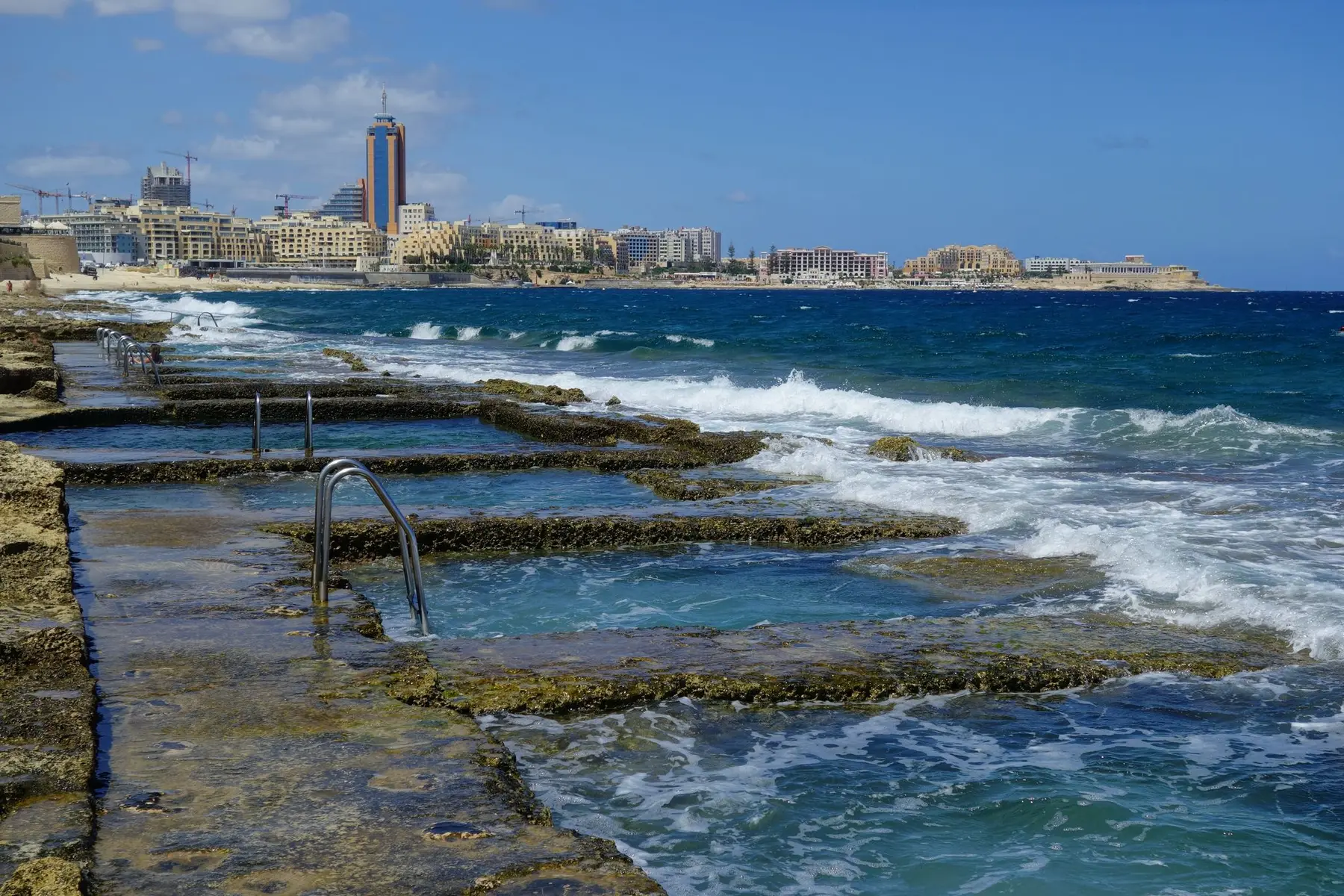
Sliema sits along the coast opposite Valletta and combines waterfront walks, cafés, bakeries, and everyday shops with frequent ferry and bus connections. It’s a good base if you want access to restaurants, markets, and swimming spots without being tied to a car. Morning swims, quick ferry trips to Valletta, and evenings spent along the promenade come naturally here.
Valletta is visually striking and rich in history, but staying inside the city can feel intense and compact, especially during peak hours. It works well for short stays or culture-focused trips, less so if you prefer space and routine.
St. Julian’s offers nightlife and modern hotels, but the atmosphere can feel busy and commercial. It suits travellers looking for entertainment over calm.
Gozo is ideal for slower travel and nature, but better experienced as a separate leg of the trip rather than a base for exploring mainland Malta.
If your travel style leans toward walkability, local food access, and flexibility, Sliema is a strong, reliable choice — especially for longer stays where comfort and rhythm matter more than landmarks outside your window.
If history in Malta is carved into stone, then its soul is definitely baked, fried, and simmered into the food. I swear, every single meal we had here felt like opening another chapter in the island’s storybook—except with more crumbs on my shirt.
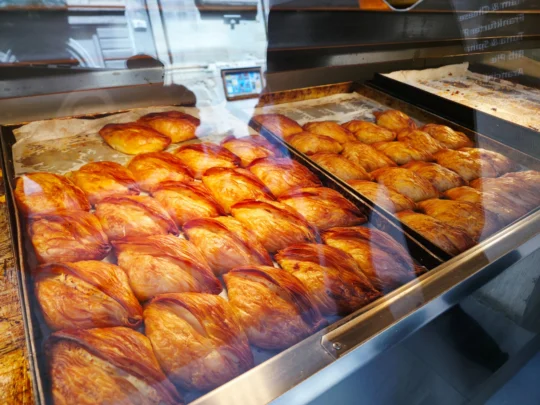
We started, of course, with pastizzi. Those golden, flaky little pastries are everywhere, stuffed with ricotta or mushy peas, and eaten standing up because sitting down would just slow you down. At €0.80 a piece, they’re not just tasty—they’re practically Malta’s answer to budget living. We discovered that if all else failed, we could survive happily on pastizzi alone… though maybe not with clean T-shirts.
And then there’s ftira, Malta’s genius contribution to the sandwich world. Imagine a pizza and a sandwich had a delicious baby—round, flat Maltese bread split open and stuffed with tuna, tomatoes, onions, capers, and olives. It’s the kind of food that disappears in seconds, leaving you with salty fingers and a grin.
Markets introduced us to another island staple: the big white beans that grow on Maltese soil. They’re plump, creamy, and turn up in stews, soups, and rustic spreads. Sometimes they’re mashed into bigilla, Malta’s famous bean paste. It’s earthy, garlicky, and best enjoyed scooped up with crunchy water crackers or torn hunks of bread. We picked up a tub at a market “just to try,” only to scrape the bottom clean before we’d even made it back to the boat.
One day at a local market, we also stumbled upon rounds of Maltese goat cheese (ġbejniet). These little white disks can be fresh, tangy, and mild, or dried and peppered until they pack a real punch. We nibbled them with bread and tomatoes, pretending we’d just have “a taste.” By the end, we’d demolished the lot and were plotting how to smuggle a few more on board.
Of course, no Maltese feast ends without something sweet. Enter imqaret—date-filled pastries fried until golden. You’ll smell them before you see them, usually at street stalls, and if you buy one, you’ll immediately wish you’d bought three.
To wash it all down? A glass of local wine (underrated and absolutely worth seeking out), a cold Cisk beer, or, if you’re feeling adventurous, Malta’s national soda: Kinnie. It’s bittersweet, herbal, and citrusy—love it or hate it, but definitely try it. I personally loved it… after the third sip.
Rabbit (fenek) isn’t just Malta’s national dish—it’s a window into the island’s farming history. Malta’s land is rocky and limited, with little room for large herds of cattle or sheep. Raising rabbits, however, was practical: they’re small, reproduce quickly, and thrive even in tight rural spaces. For centuries, Maltese families kept rabbits not just as livestock but as a reliable source of meat in a landscape where farming was tough and resources were scarce.
There’s also a cultural layer. Under the rule of the Knights of St. John, hunting rabbits was once restricted to the nobility—ordinary Maltese weren’t allowed to catch or raise them freely. When the ban was lifted, rabbit became a symbol of freedom and resilience. Over time, it grew into a beloved Sunday meal, something families would gather for at home or in countryside restaurants known as fenek places.
So when you sit down to a steaming plate of stuffat tal-fenek, you’re not just tasting a stew—you’re tasting centuries of tradition, ingenuity, and even a little rebellion. It’s one of the dishes that truly defines Malta.
The name fooled us at first—beef olives? We were expecting something with olives tucked inside. Instead, what arrived at our table was even better: thin slices of beef rolled carefully around a stuffing of breadcrumbs, herbs, and just enough bacon to make it irresistible. The rolls were then simmered slowly in a rich tomato sauce until they were fork-tender.
We ordered braġjoli at a tiny, family-run spot on a side street in Rabat. The waiter winked when we chose it—“proper comfort food,” he said—and he was right. The dish came bubbling hot in a clay dish, with thick slices of Maltese bread on the side, perfect for mopping up the sauce.
It wasn’t fancy, but it didn’t need to be. Eating braġjoli felt like being handed a plate of Maltese home cooking, the kind of meal you’d expect to find at someone’s grandmother’s table. Hearty, humble, and cooked with love—exactly the kind of food that makes you want to linger long after the plate is empty.
We discovered aljotta on a breezy afternoon in Marsaxlokk, Malta’s famous fishing village. After wandering the Sunday market—dodging baskets of squid, gleaming swordfish, and rows of fresh octopus—we sat down at a little restaurant by the water. The waiter recommended the fish soup, “simple but very
Maltese,” so we went for it.
What arrived was a steaming bowl of garlicky broth, lemony and bright, with little grains of rice soaking up the flavor. It wasn’t heavy or complicated—just honest, rustic, and packed with the taste of the sea. Each spoonful carried that salty freshness, like the Mediterranean had been ladled straight onto the table.
It reminded me a little of bouillabaisse, but stripped back, lighter, and somehow more comforting. With the boats bobbing in the harbor just meters away, we couldn’t help but smile—it felt like the fish had practically jumped from the sea into our soup pot. Simple, warming, and unforgettable.
Lampuki Pie felt like Malta on a plate—seasonal, celebratory, and steeped in tradition. We learned quickly that lampuki, the local dolphin fish, or in some countrie mahi mahi, only appears in autumn when the fishermen set out their special nets. The excitement in the markets was contagious—stalls piled high with shiny silver fish, vendors proudly announcing, “Lampuki is here!”
When we finally tried the pie, it was clear why this dish has such a reputation. Flaky pastry gave way to a filling of fish mixed with spinach, cauliflower, olives, and nuts. The flavors were hearty yet delicate, the kind of meal that feels homemade even when you’re eating it at a restaurant.
What struck us most was how locals talked about it. Lampuki Pie isn’t just food—it’s a marker of time. You know the season has shifted, that autumn has arrived, when lampuki hit the menus. Sharing a slice felt less like ordering dinner and more like joining in a yearly ritual. We left the table full, happy, and already wishing we could come back for lampuki season again.
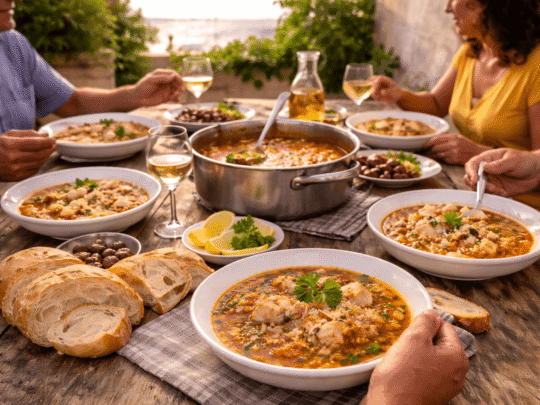
Kusksu was one of those dishes that surprised us. At first glance, it’s “just a soup”—but one spoonful in, and we understood why the Maltese wait for broad bean season every spring. It’s a simple, humble dish: fresh fava beans simmered with tomato and onion, little pasta beads floating in the broth, and, if you’re lucky, a poached egg or a piece of ġbejna (Maltese goat cheese) melting into it at the end.
We tried kusksu in a small village café where the owner’s mother was stirring a massive pot behind the counter. It was served in plain white bowls, steaming hot, with thick slices of Maltese bread on the side. The first bite was earthy and comforting—like spring had been distilled into soup.
There was something deeply satisfying about it, not fancy or showy, just honest food cooked from whatever was in season. Sitting there with our spoons clinking against the bowls, we realized that kusksu isn’t about impressing—it’s about nourishing. It felt like the kind of dish a Maltese grandmother would put in front of you without asking if you were hungry, because she already knew you were.
Ross il-Forn was comfort food at its finest—the kind of dish that makes you feel like you’ve been invited to Sunday lunch with a Maltese family, even if you’re just sitting in a little local restaurant. It’s oven-baked rice, cooked with minced meat, tomato sauce, eggs, and cheese until it forms a golden, slightly crispy crust on top.
We first tried it in a tucked-away eatery where the portions looked big enough to feed a small army. The waiter set down a piping-hot tray in front of us, and the smell alone was enough to make us forget we’d already had a starter. That first bite was rich, hearty, and just a little nostalgic—even though we’d never grown up with it.
There was something about the texture that won us over: soft, saucy rice inside, crispy browned edges outside. We found ourselves scraping the corners of the dish, unwilling to let even a single crunchy grain go to waste. By the end, we were stuffed, but in that happy, content way that makes you linger at the table a little longer.
Timpana was the dish that completely won over our kids—and honestly, we understood why. Imagine macaroni mixed with minced meat, tomatoes, eggs, and cheese, then wrapped in pastry and baked until golden. It’s indulgent, filling, and slightly outrageous in the best way.
The first time we ordered it, we thought it would just be a one-off novelty—something to try once and tick off the list. But the kids had other plans. The moment that first slice hit the table, they were wide-eyed and instantly hooked. Layers of pasta and meat encased in flaky pastry? It was like someone had invented lasagna, pie, and comfort food heaven all in one.
From that meal on, timpana became their obsession. They started scanning menus everywhere we went, asking, “Do they have timpana here?” Sometimes they were disappointed, but when we struck gold, it was a celebration. We’d watch them devour slice after slice, sauce on their cheeks, crumbs everywhere, grinning like they’d found the holy grail of Maltese cooking.
For us, timpana was delicious and heavy—definitely a dish to share. But for the kids, it was love at first bite, and the kind of culinary crush that defined our summer in Malta.
Malta isn’t the kind of place you simply visit—it’s a place that wraps itself around you. Between its ancient stone temples and fortress cities, the turquoise lagoons, and the unmistakable smell of fresh pastizzi from a corner bakery, the island is a rhythm of contrasts: old and new, adventurous and relaxed, familiar yet entirely its own.
We came by boat, planning to spend a summer, but Malta had other ideas. It kept surprising us with hidden coves, friendly conversations, festas that lit up entire villages, and dishes that tasted like they carried centuries of stories in them.
Even after months of exploring, we left knowing we hadn’t uncovered it all. And maybe that’s the magic—Malta always leaves you wanting more. It’s not just a chapter in our journey; it’s one of those places that stays with you, long after you’ve sailed away.