Set the Tone for Worldly Tastes in Every Kitchen
One of Sri Lanks's Favorites
Sri Lankan Lamprais Recipe
A Colonial Legacy Wrapped in Flavor
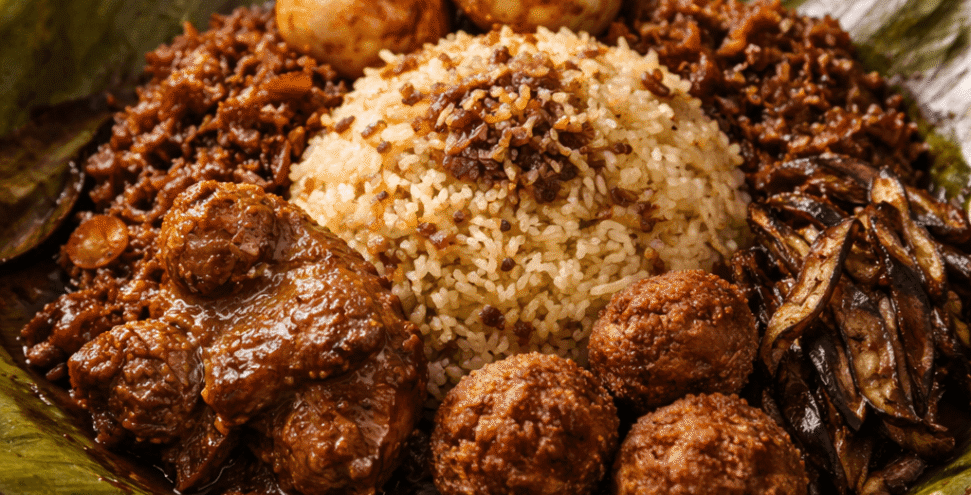
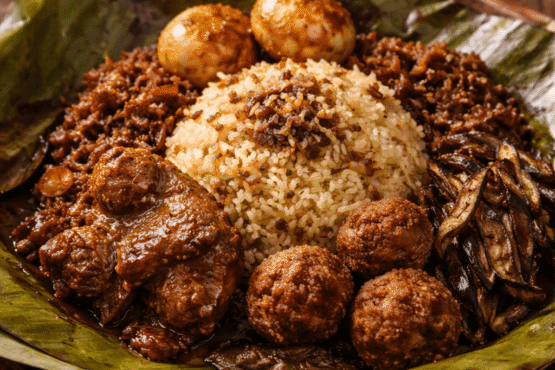
Sri Lankan Lamprais is not just a dish — it’s a cultural time capsule. This iconic Sri Lankan rice parcel, wrapped in banana leaves and filled with spiced meat, eggplant curry, sambol, and boiled egg, carries the influence of Dutch colonizers, Burgher community traditions, and generations of Sri Lankan home cooks.
What Is It?
- The rice is subtly spiced, cooked in stock or with aromatics like pandan and cloves.
- The meat curry (chicken, beef, or pork) is thick, dark, and deeply spiced — unlike runnier curries.
- The eggplant curry and sambol add sweetness, tang, and heat.
- Everything is wrapped in banana leaf and baked or steamed, infusing the meal with a rich, earthy aroma.
A Little History
The word lamprais is believed to come from the Dutch word lomprijst, which loosely translates to “a packet of food.” It was brought to Sri Lanka by the Dutch Burghers, a Eurasian ethnic group descended from Dutch colonial settlers who blended local and European culinary traditions.
Originally served at festive family gatherings and Sunday lunches, lamprais combined the Dutch love of oven-baked meals with Sri Lankan spices and ingredients. Over time, it became a beloved specialty — especially in Colombo and Galle.
Traditionally, lamprais was a complete meal wrapped into one parcel, easy to transport and perfect for sharing. Today, it’s still served in many homes and restaurants, especially on weekends or holidays.
You’ll often find it accompanied by Dutch-style frikkadels (fried meatballs), although modern versions simplify the recipe with just curry, eggplant, and sambol.
The Process
Lamprais is not a dish that comes together in a single pot. Instead, it is built step by step, with several small preparations that each contribute their own flavor, texture, and character to the final parcel. Fragrant rice, rich curry, spiced eggplant, sambol, and boiled eggs are prepared separately before everything is carefully layered together inside a banana leaf.
Once wrapped, the parcels are gently steamed or baked so the ingredients warm through and the banana leaf releases its subtle aroma into the rice and curry. This final stage is what brings the entire dish together, allowing the flavors to mingle while keeping each component distinct.
While the process takes a little time, the result is a beautifully balanced meal where every bite offers something different — soft rice, tender curry, spiced vegetables, and the unmistakable fragrance of banana leaf.
Step-by-Step Instructions
Lamprais is one of those dishes that feels special from the very start. It is not a quick one-pan meal, but a layered, deeply satisfying dish where each component adds its own flavor and texture. Taking the time to prepare each part properly is what gives lamprais its rich, comforting character.
Step 1 — Cook the Rice
Begin with the rice, since it forms the base of every parcel.
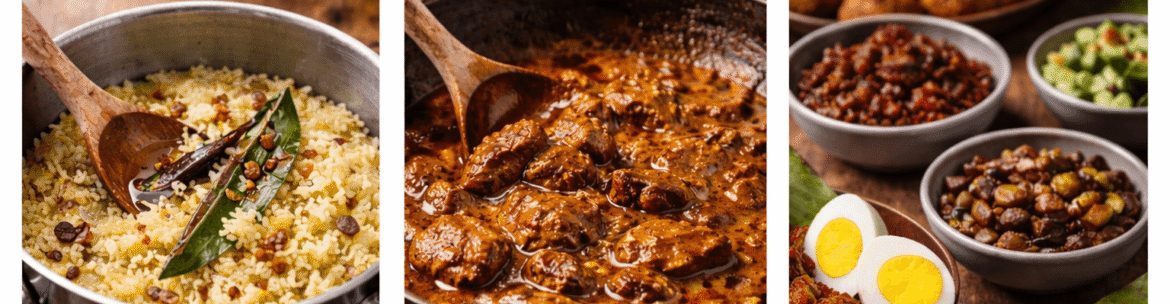
Add the rice to a pot with the pandan leaf, cloves, cinnamon, salt, and coconut oil. As the rice cooks, it absorbs the fragrance of the whole spices and pandan, giving it a warm, aromatic flavor that is central to the dish. The coconut oil adds a gentle richness and helps keep the grains separate.
Cook until the rice is tender and fluffy, then set it aside. It should be cooked through but not overly soft, since it will be wrapped and heated again later.
Step 2 — Prepare the Chicken Curry
The curry is the heart of the parcel, bringing moisture, spice, and richness.
Start by sautéing the onion, garlic, and ginger in a pan until softened and fragrant. This creates the flavor base and should smell warm, savory, and slightly sweet. Take your time here, as properly softened aromatics give the curry much more depth.
Add the chicken and spices, stirring well so the meat is evenly coated and begins to take on the flavors. Once the spices have bloomed, pour in the coconut milk and let everything simmer gently.
Cook the curry until the chicken is tender and the sauce has thickened. You do not want it too watery, because excess liquid can make the parcels soggy. The finished curry should be rich and spoonable, with a thick, flavorful coating around the chicken.
Step 3 — Prepare the Eggplant
The eggplant adds a soft, silky element with a lightly spiced finish.
Slice the eggplant and season it with turmeric and salt. You can either fry it for a richer, more traditional result or roast it for a lighter version. In either case, cook until the eggplant is fully tender and lightly golden around the edges.
The goal is for the eggplant to be soft and flavorful, not undercooked or dry. Set it aside once done.
Step 4 — Make or Prepare the Sambol
Lamprais needs something punchy and intense to balance the richness of the rice and curry.
You can make a lunu miris for heat and sharpness, or use a sweet caramelized onion sambol for a deeper, gentler sweetness. Either option brings contrast and keeps the parcel from tasting too heavy.
Prepare the sambol and set it aside in a small bowl, ready for assembly.
Step 5 — Boil the Eggs
Boil the eggs until they are cooked through, then peel them once cool enough to handle.
Cut them in half before assembling the parcels. The egg adds another traditional layer to the lamprais and gives each parcel a more complete, generous feel.
Step 6 — Assemble the Parcels
Now comes the part that gives lamprais its signature look and aroma.
Lay a square of banana leaf flat on your work surface. If needed, soften the leaf first so it folds more easily without tearing. Place a scoop of the cooked rice in the center, then top it with some chicken curry, eggplant, sambol, and half a boiled egg.
Try not to overfill the parcel. You want enough filling to make it generous, but still be able to fold the leaf neatly around everything.
Step 7 — Fold and Steam or Bake
Fold the banana leaf around the filling to make a compact parcel, enclosing all the components securely inside. The wrapping helps the flavors mingle while also trapping the steam and fragrance of the banana leaf.
Place the parcels in a steamer or in the oven at 180°C for 15 to 20 minutes. This final heating stage warms everything through and allows the banana leaf to perfume the rice and curry.
Step 8 — Serve Hot
Serve the lamprais hot, ideally still wrapped in the banana leaf.
Opening the parcel at the table is part of the experience. The steam escapes first, carrying the scent of the leaf, spices, curry, and rice. That aroma is one of the most distinctive and comforting parts of the dish, and it is what makes lamprais feel so special.
Serving & Customizing
Serve With
- Serve with a side of coconut chutney or raita to cool the palate
- Pair with iced tea, ginger beer, or a dry white wine
- Enjoy as a special Sunday lunch or wrap as a gift meal for a friend
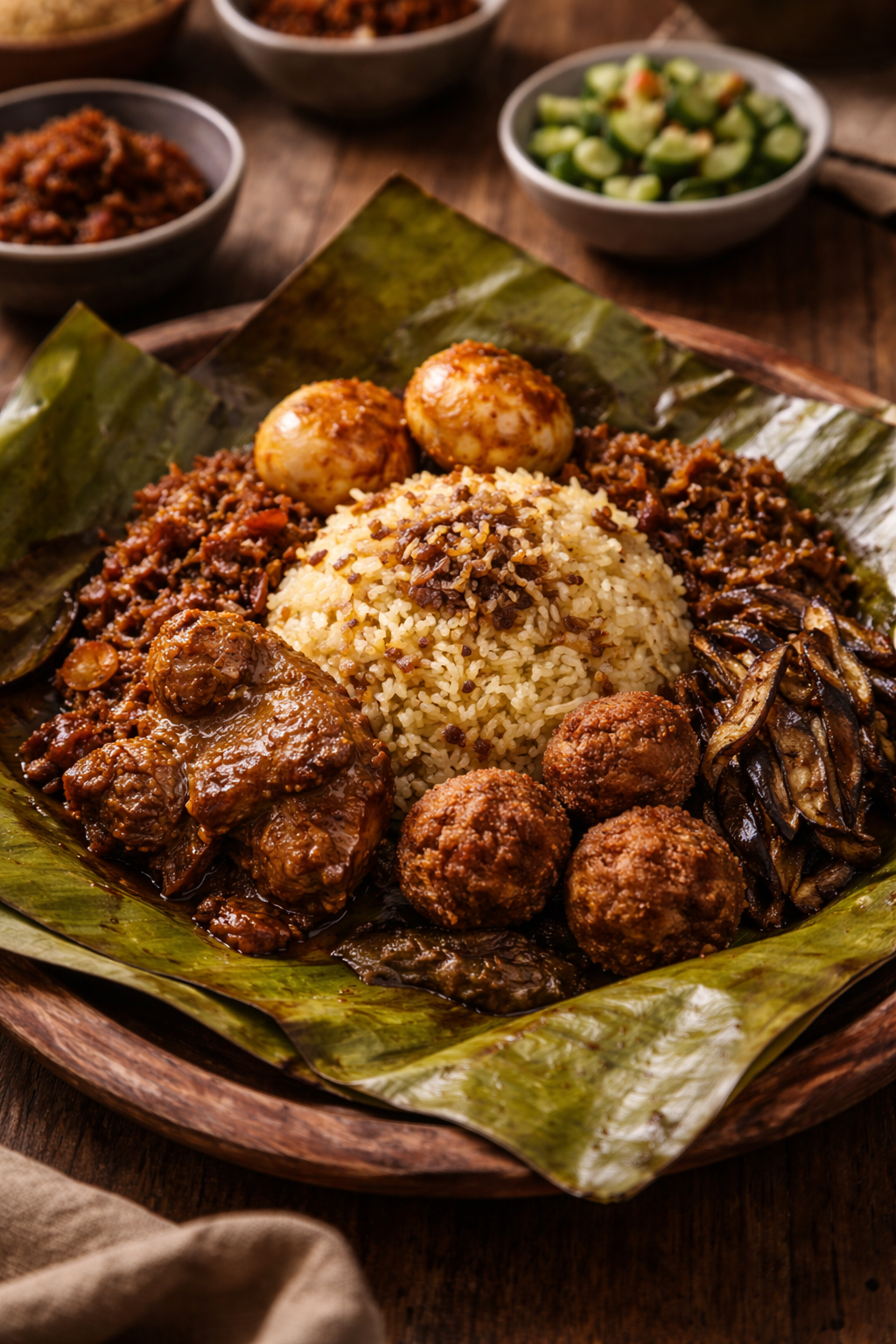
Sri Lankan lamprais
Ingredients
For the rice
- 300 g white rice
- 1 pandan leaf
- 1 cinnamon stick
- 3 cloves garlic
- salt to taste
- 1 tbsp coconut oil
For the mixed meat curry
- 300 g chicken or beef in chuncks
- 1 onion chopped
- 2 cloves garlic minced
- 1 tsp ginger grated
- 1 tsp curry powder
- 1/2 tsp turmeric
- 1/2 tsp chili powder
- 1/2 tsp garam masala
- 100 ml coconut milk
- salt and pepper to taste
- 1 tbsp coconut oil
Sides (optional)
- 200 g eggplant curry
- 100 g lunu miris or seeni sambol
- 2 hardboiled eggs halved
- banana leaves lightly toasted
Instructions
Cook the Aromatic Rice
- Start with the rice, as it forms the base of every parcel.
- Rinse the rice under cold water until the water runs mostly clear. This removes excess starch and helps the grains cook fluffy instead of sticky.
- Place the rice in a pot and add enough water to cook it as you normally would. Add the pandan leaf, cloves, cinnamon, salt, and coconut oil directly to the pot. As the rice cooks, these aromatics slowly release their flavor into the grains.
- Bring the pot to a gentle boil, then reduce the heat and cook until the rice is tender and the liquid has absorbed. The finished rice should be fragrant and lightly seasoned, with separate grains rather than a sticky texture.
- Once cooked, remove the whole spices if desired and set the rice aside.
Prepare the Chicken Curry
- While the rice is cooking, begin preparing the curry.
- Heat a little oil in a pan over medium heat. Add the chopped onion and cook until it begins to soften and turn slightly translucent. This step builds the base flavor of the curry.
- Add the garlic and ginger and sauté for another minute until fragrant. Stir frequently so the aromatics do not burn.
- Add the chicken pieces to the pan and cook briefly until they start to color slightly on the outside. Sprinkle in the spices and stir well so the chicken is evenly coated.
- Pour in the coconut milk and bring the mixture to a gentle simmer. Lower the heat and let the curry cook slowly until the chicken becomes tender and the sauce thickens.
- The curry should be rich and flavorful but not too watery, since it will be added to the rice parcels later.
- Set the curry aside once ready.
Prepare the Eggplant
- Eggplant is an essential side component of lamprais and adds a soft, savory element.
- Cut the eggplant into strips or slices. Sprinkle them with turmeric and salt, making sure the pieces are lightly coated.
- You can cook the eggplant in two ways:
- Frying: Heat oil in a pan and fry the eggplant until soft and golden.
- Roasting: Toss the eggplant with a little oil and roast in the oven until tender.
- Either method should produce eggplant that is fully cooked, slightly caramelized, and flavorful.
- Set the cooked eggplant aside.
Prepare the Sambol
- Lamprais typically includes a sharp or sweet condiment to balance the richness of the curry and rice.
- You can prepare lunu miris, a spicy onion-chili sambol, if you want a traditional sharp and spicy flavor.
- Alternatively, you can make a sweet caramelized onion sambol, where onions are slowly cooked until deep brown and sweet with spices.
- Prepare whichever sambol you prefer and keep it ready for assembling the parcels.
Boil the Eggs
- Place the eggs in a pot and cover them with water.
- Bring the water to a boil, then lower the heat and cook for about 8–10 minutes until the eggs are fully hard-boiled.
- Once cooked, transfer the eggs to cold water to cool them down. Peel off the shells and cut each egg in half.
- Set the egg halves aside for assembling the parcels.
Prepare the Banana Leaves
- Banana leaves can be slightly stiff when fresh, so they need to be softened before folding.
- Cut the leaves into squares large enough to wrap the parcels. Briefly pass the leaves over a flame or dip them in hot water for a few seconds. This softens the fibers and prevents tearing when folding.
- Lay the banana leaf squares flat on your work surface.
Assemble the Lamprais Parcels
- Place a generous scoop of the fragrant rice in the center of each banana leaf.
- On top of the rice, add:
- a portion of chicken curry
- a spoon of eggplant
- a spoon of sambol
- half a boiled egg
- Keep the filling centered so the leaf can fold easily.
- Fold the Parcels
- Fold the banana leaf around the filling to create a compact parcel.
- Typically, the sides are folded inward first, then the top and bottom are folded over to seal the package. The goal is to create a neat, enclosed bundle that keeps the ingredients together.
- Place the finished parcels seam-side down.
- Steam or Bake the Parcels
- Preheat the oven to 180°C if baking.
- Arrange the parcels on a baking tray or in a steamer. Heat them for 15–20 minutes. During this time, the banana leaf warms and releases its aroma into the rice and curry while everything inside heats through.
- This step allows the flavors to meld together.
Serve
- Serve the lamprais hot and still wrapped in the banana leaf.
Notes
- Traditionally includes frikkadels (Dutch meatballs) — optional but authentic.
- Can be made vegetarian by omitting meat and doubling eggplant.
- Banana leaves add aroma — substitute parchment paper if needed.
🧊 Storage:
Keep refrigerated in wrapped parcels for 2–3 days. Reheat in the oven.
Nutrition
Product We Use
to make our cooking experience better