Set the Tone for Worldly Tastes in Every Kitchen
Harissa: Authentic Tunisian Chili Paste Recipe
Traditional Tunisian Harissa with Roasted Chili & Warm Spices
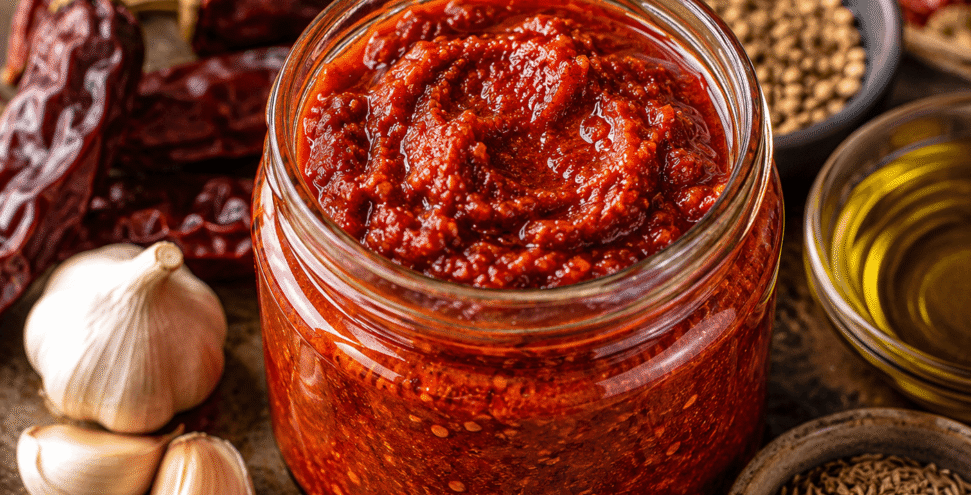
Harissa is Tunisia’s most iconic condiment — a deep red chili paste packed with smoky heat, garlic, olive oil, and warm earthy spices. Rich, bold, and intensely aromatic, it adds depth and spice to everything from couscous and grilled meats to soups, stews, sandwiches, and marinades.
Unlike many hot sauces, harissa is not just about heat. The balance of dried chilies, toasted spices, garlic, and olive oil creates layers of flavor that are smoky, earthy, slightly sweet, and deeply savory all at once.
Homemade harissa has a fresher, fuller flavor than most store-bought versions and can easily be adjusted depending on the type of chili used and the preferred spice level.
What Is It?
Harissa is a North African chili paste traditionally made by blending softened dried chilies with garlic, spices, olive oil, and salt into a thick, smooth paste.
The exact flavor depends on the peppers used, but cumin, coriander, and caraway are considered signature spices in Tunisian-style harissa. Olive oil gives the paste richness while also helping preserve it.
Harissa can be used as a condiment, cooking base, marinade, or finishing sauce.
A Little History
Harissa originated in Tunisia and has become one of the defining ingredients of Tunisian cuisine. Chili peppers arrived in North Africa through Spanish and Ottoman trade routes after being introduced from the Americas.
Over time, Tunisian cooks combined dried peppers with local spices, olive oil, and garlic to create the intensely flavorful paste known today as harissa.
Different regions and families have their own versions, ranging from smoky and mild to extremely spicy. Baklouti peppers are especially common in Tunisia, while guajillo or ancho peppers are often used elsewhere for similar depth and color.
Today, harissa is widely used across North Africa, the Middle East, and Mediterranean cooking.
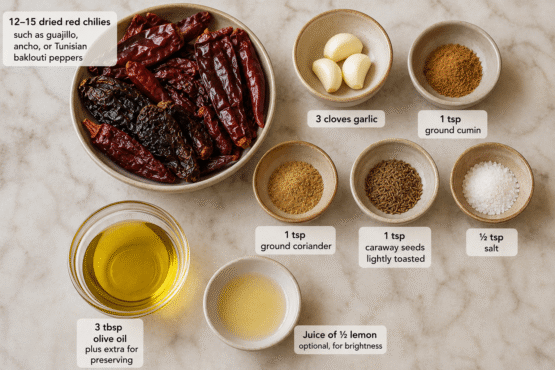
What You Need
Dried red chilies
Garlic
Ground cumin
Ground coriander
Caraway seeds
Salt
Olive oil
Lemon juice
The Process
The dried chilies are first softened in hot water so they blend into a smooth paste rather than remaining fibrous or grainy.
Toasting the caraway seeds helps release their oils and deepen the aroma of the paste. Everything is blended together gradually while olive oil is added slowly to create a rich, thick texture.
A final layer of olive oil on top of the stored harissa helps preserve freshness and prevent oxidation.
Step-by-Step Instructions
- Remove the stems and seeds from the dried chilies.
- Place the chilies in a bowl of hot water and soak for 30 minutes until softened.
- Drain the chilies thoroughly.
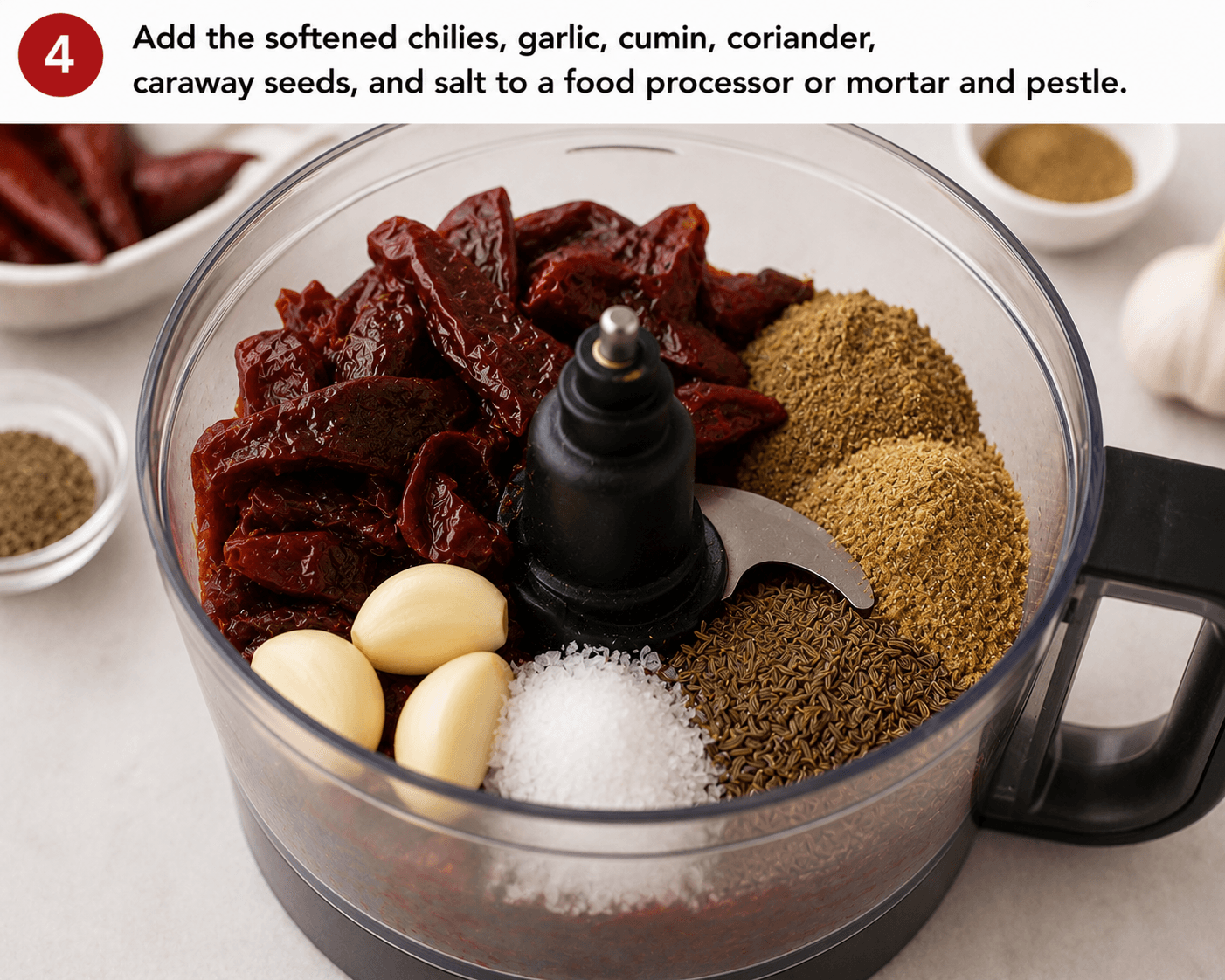
- Add the softened chilies, garlic, cumin, coriander, caraway seeds, and salt to a food processor or mortar and pestle.
- Blend until smooth.
- Slowly drizzle in the olive oil while blending until a thick paste forms.
- Add lemon juice if using and blend briefly again.
- Transfer the harissa to a sterilized jar and smooth the surface.
- our a thin layer of olive oil over the top before sealing.
Store refrigerated.
Serving
Harissa is traditionally served alongside couscous, grilled meats, fish, sandwiches, soups, stews, and roasted vegetables.
It can also be mixed into marinades, salad dressings, yogurt sauces, or stirred directly into cooked dishes for extra heat and depth.
Storing
Store harissa in a sterilized airtight jar in the refrigerator for up to 3 weeks. Keep a thin layer of olive oil over the surface to help preserve freshness and color.
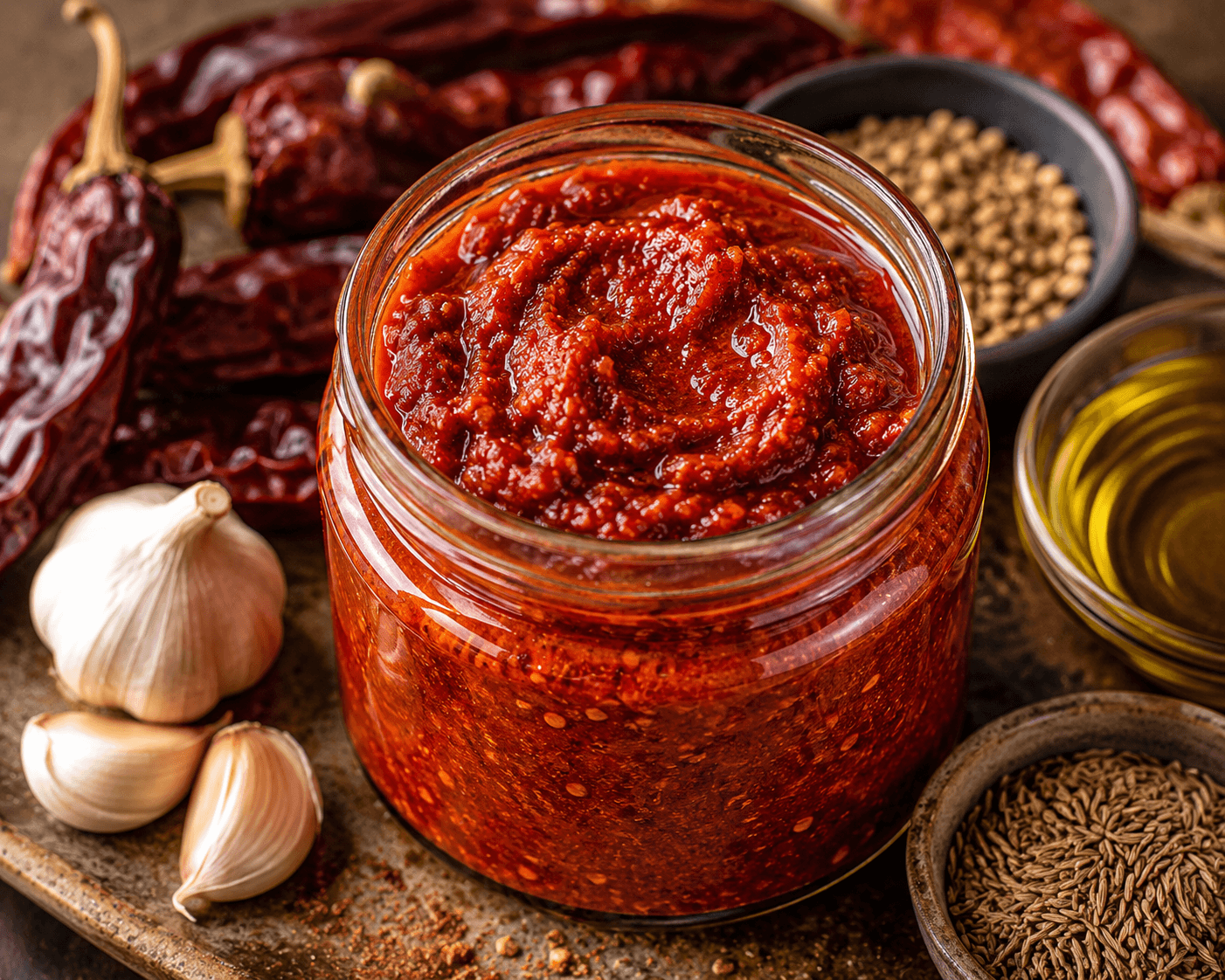
Harissa (Traditional Tunisian Chili Paste)
Ingredients
- 12 –15 dried red chilies such as guajillo, ancho, or Tunisian baklouti peppers
- 3 cloves garlic
- 1 tsp ground cumin
- 1 tsp ground coriander
- 1 tsp caraway seeds lightly toasted
- ½ tsp salt
- 3 tbsp olive oil plus extra for preserving
- Juice of ½ lemon optional, for brightness
Instructions
- Soften the chilies: Remove stems and seeds from the dried chilies. Place them in a bowl of hot water and soak for 30 minutes until soft. Drain well.
- Blend the paste: In a food processor (or mortar and pestle for traditional method), combine softened chilies, garlic, cumin, coriander, caraway, and salt. Blend until smooth.
- Add olive oil: Drizzle in olive oil while blending to form a thick, rich paste. Add lemon juice if desired for extra freshness.
- Store: Transfer to a sterilized jar, smoothing the top. Pour a thin layer of olive oil over the surface to preserve. Store in the fridge for up to 3 weeks.
Notes
Nutrition
Product We Use
to make our cooking experience better