

Travel tips Malta
Malta Tourist Tax 2027: The New Eco-Contribution Explained
What the new eco-contribution costs, who pays it and how it works.
On this page: What it is · What changes · When it starts and how to pay · What it costs · Other new charges · FAQ
Malta’s tourist tax is called the eco-contribution. Right now every adult staying in licensed accommodation pays €1.50 a night, up to €22.50 per stay. From 1 January 2027 the government plans to raise it to €8 a night in hotels and €10 a night in short-let apartments, capped at €64 and €80 per person. Children under 18 do not pay.
The new rates were announced in Malta’s Budget 2027 on 26 October 2026, together with new charges for Comino, cruise passengers and the Gozo ferry. At the time of writing they are announced but not yet written into law, so details can still change.
We put this guide together at Tone & Taste because the change is big enough to affect how you plan and budget a trip. For a couple spending a week in a hotel, the tax goes from €21 to €112. Here is what it is, how it works, what it will cost you and what to watch for when you book.
What Is Malta’s Tourist Tax?
The eco-contribution is a per-person, per-night charge on stays in tourist accommodation in Malta and Gozo. It was introduced in 2016 at €0.50 a night with a €5 cap, and rose to €1.50 a night with a €22.50 cap on 1 July 2026.
It applies to licensed accommodation of every kind: hotels, guesthouses, hostels, aparthotels, self-catering apartments, farmhouses, villas and B&Bs. Booking through a large platform does not change anything, and neither does calling a place “boutique” or “self-catering”.
The government says the money goes into tourism infrastructure and the environment in the busiest areas, and since July 2026 €0.50 of every contribution has gone to local councils, shared out by how much tourism each locality gets.
Explore the Malta hub
Planning a trip to Malta?
Pin this so you can budget the eco-contribution before you book.
What Changes in 2027
The 2027 rates split accommodation into two groups, and short lets pay more than hotels.
| Now (since 1 July 2026) | From 1 January 2027 (announced) | |
|---|---|---|
| Hotels, guesthouses, hostels (collective accommodation) | €1.50 per adult per night, max €22.50 | €8 per adult per night, max €64 |
| Short-let apartments (Airbnb-type rentals) | €1.50 per adult per night, max €22.50 | €10 per adult per night, max €80 |
| Guests under 18 | Free | Free |
| Language school accommodation | Charged | No longer charged |
The caps mean the tax stops after 8 nights at the new rates, against 15 nights today. Long stays are hit less hard than short ones.
When It Starts and How You Pay
When does Malta’s new tourist tax start?
The new rates are due to start on 1 January 2027. Until then, the current rate of €1.50 per adult per night (maximum €22.50) applies. That rate has been in place since 1 July 2026.
The 2027 rates were announced in the Budget on 26 October 2026, but they still need a legal notice before they apply, so the date could still move. If you are travelling in early 2027, check the Malta Tourism Authority’s page a few weeks before you fly.
How stays that run across 1 January 2027 will be charged has not been published yet. When the rate rose in July 2026, what counted was the date your stay started, not the date you booked. If your trip starts before 1 January, you will most likely pay today’s rate, but confirm with your accommodation.
How do you pay it as a tourist?
You don’t pay the eco-contribution online, at the airport or to the government. You pay it to the place you stay, and they pass it on. In practice it works like this:
- When you book, check whether the tax is included. On most booking sites it is listed separately, as “not included” or “payable at the property”. Treat it as an extra cost on top of the price you see.
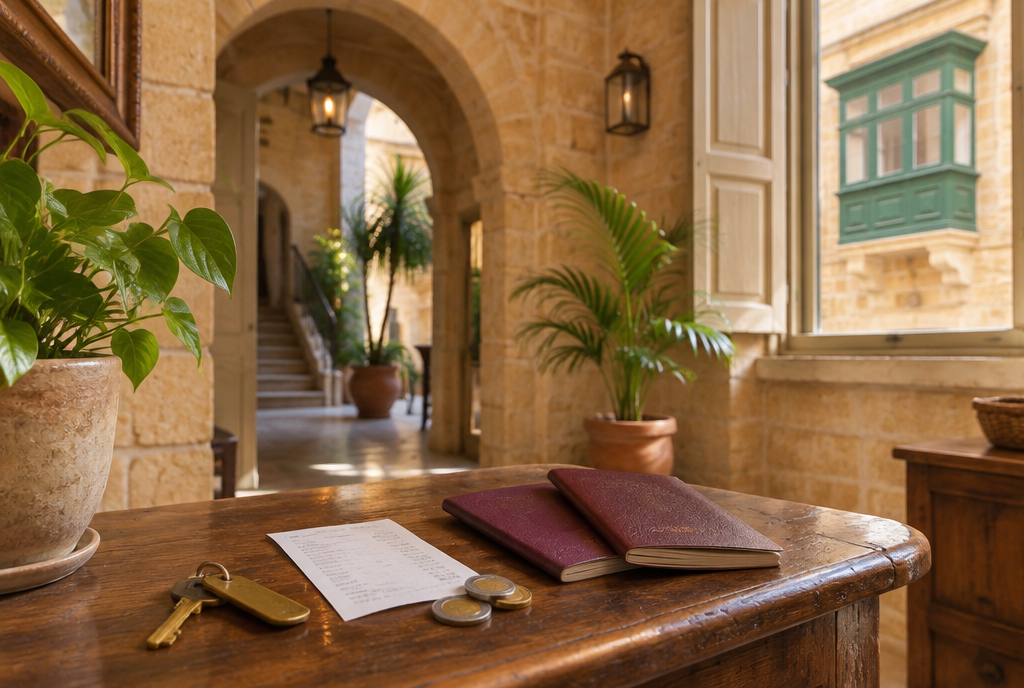
- At check-in, the accommodation records how many adults are staying and for how many nights. They can ask for each guest’s date of birth and a passport or ID card, so have your children’s documents ready to show they are under 18.
- Pay at the property, usually at check-in or check-out. How you can pay depends on the place. Hotels normally add it to your bill, while smaller apartments and B&Bs may prefer cash, so ask before you arrive if you are not sure.
- Get a receipt. The accommodation has to give you a fiscal receipt that shows the eco-contribution as its own line, separate from the room price.
- Changing accommodation? Show that receipt at your next stay. Malta and Gozo count as one visit, so the nights you have already paid count towards the cap.
Staying in an Airbnb or other short let? The licence holder (the host) is responsible for collecting the tax, not the booking platform. Some hosts ask for it when you arrive, some request it through the platform after you book, and some include it in the nightly price. Check the listing or message your host before you travel, so you know what to expect.
The rules behind it
These come from the Malta Tourism Authority’s guidelines for the current rate. They are expected to stay the same in 2027, with only the amounts changing.
- Per adult, per night. Two adults sharing a room both pay. A family with two children under 18 pays for the two adults only. Age counts on the day the visit starts.
- Per visit, with a cap. The cap applies to one continuous visit, even if you move between hotels or between Malta and Gozo.
- Charged on top of the room price and shown separately on your receipt.
- Every night you have the room counts, whether you sleep there or not.
What It Will Cost You
Some typical trips, at today’s rate and at the announced 2027 rates:
| Trip | Now | From 2027 |
|---|---|---|
| Couple, 7 nights in a hotel | €21 | €112 |
| Family of 2 adults and 2 children, 5 nights in a short-let apartment | €15 | €100 |
| Solo traveller, 10 nights in a hotel | €15 | €64 (cap) |
| Couple, 14 nights in a short-let apartment | €42 | €160 (cap) |
| Couple, weekend of 3 nights in a hotel | €9 | €48 |
Malta goes from one of the cheapest tourist taxes in the Mediterranean to one of the highest in the EU. For comparison, Lisbon charges about €4 a night and the Balearic Islands up to €4 in high season.
Other New Charges for Visitors
Budget 2027 also announced charges that have nothing to do with where you sleep. No start dates have been confirmed for these yet.
Comino
A €5 charge for non-resident visitors to Comino, paid through the existing Blue Lagoon booking system. If you plan a Blue Lagoon day, it will be part of booking your slot.
Cruise passengers
€10 for cruise passengers who get off in Malta and re-board the same ship. Passengers whose cruise starts in Malta don’t pay it.
Gozo ferry
Non-resident Gozo Channel fares rise from €4.65 to €11 for adults, from €1.15 to €7 for children, and from €15.70 to €22 for a car and driver. Fast-ferry tourist fares go up by €3 a crossing.
Is It Law Yet?
Not yet. The €8 and €10 rates were announced in the Budget speech, and they still need a legal notice before they apply. The Malta Tourism Authority still lists €1.50 as the current rate. We will update this guide when the legal notice is published.
Tips for Your Trip
- Add the eco-contribution to your budget now. Booking sites often show it as “not included” or “payable at the property”.
- Keep your receipt when you move from Malta to Gozo or change hotels, so the cap carries over.
- Carry your children’s passports or IDs. Everyone is treated as 18 or over unless you can show otherwise.
- On a longer stay, the cap works in your favour: after 8 nights you pay nothing more.
- Budget for the new Gozo ferry fares and the Comino charge if you plan day trips.
Malta Tourist Tax: Frequently Asked Questions
How much is the tourist tax in Malta?
Currently €1.50 per adult per night, up to €22.50 per stay. From 1 January 2027 the announced rates are €8 per night in hotels and other collective accommodation (up to €64) and €10 per night in short-let apartments (up to €80).
Do children pay Malta’s tourist tax?
No. Guests under 18 on the day their visit starts are exempt.
Is the tourist tax per person or per room?
Per person. Every adult pays the nightly amount, so a couple sharing a room pays twice.
How do I pay Malta’s tourist tax?
You pay it to your hotel, apartment or host, usually at check-in or check-out. It is not paid online, at the airport or to the government directly. The accommodation collects it and must give you a receipt that shows it as a separate line.
Is the eco-contribution included in my booking price?
Usually not. Most booking sites list it as payable at the property. Some short-let hosts include it in the nightly price, so check the listing or ask the host.
Do I pay again if I move from Malta to Gozo?
No. Malta and Gozo count as one visit, so the cap applies across both. Show your first receipt to the next accommodation.
When do the new rates start?
The announced start date is 1 January 2027. The rates still need to be written into law, so check the Malta Tourism Authority before you travel.
Sources: Malta Tourism Authority eco-contribution guidelines, KPMG Malta Budget 2027, TVM News. Last checked 11 November 2026.
Once the costs are sorted, the fun part is planning where to eat. Start with our Malta food guide, our favourite restaurants in Malta and things to do in Malta.


More from Malta
Keep exploring the island, one plate and one bay at a time
Destination guide
Malta Travel & Food Guide
Food
Malta Food Guide

Recipes
Maltese Recipes