

Food guide Tunisia
Tunisian Food Guide: What to Eat in Tunisia
Harissa, brik, tea with pine nuts and the markets where meat meets the sea: what we ate during a winter living in Tunisia.
Always on the table
Harissa
Street snack
Brik
Friday dish
Couscous
Drink
Tea with pine nuts
On this page: First flavours · Markets · Classic dishes · Recipes
When we first sailed into Tunisia, we expected French baguettes, Italian pasta, maybe some couscous and olives. What we didn’t expect was how alive the food would feel — how much it told us about the country itself. Tunisia’s cuisine isn’t just about influences borrowed from abroad; it’s bold, deeply personal, and woven into everyday life. Every bite seemed to carry a story.
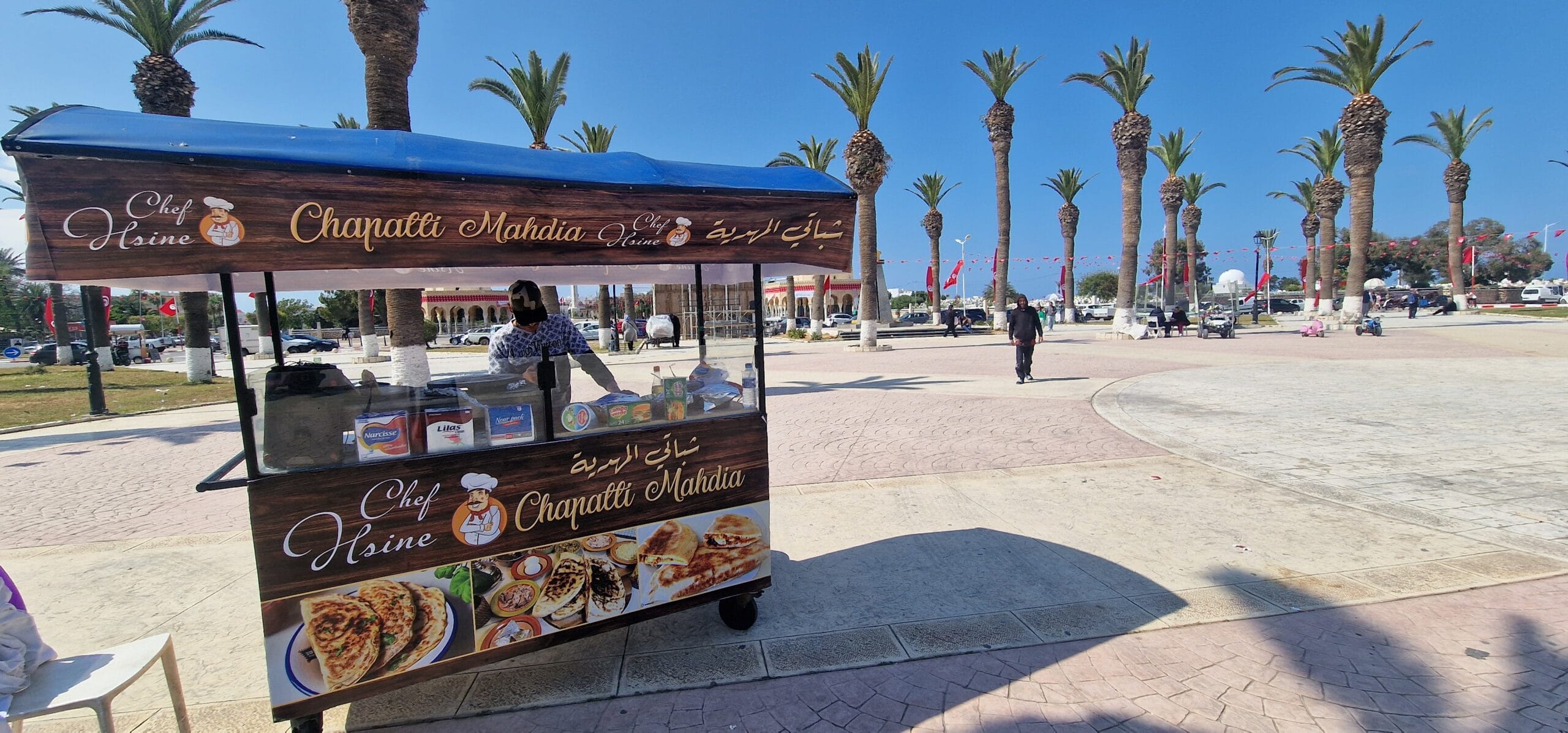
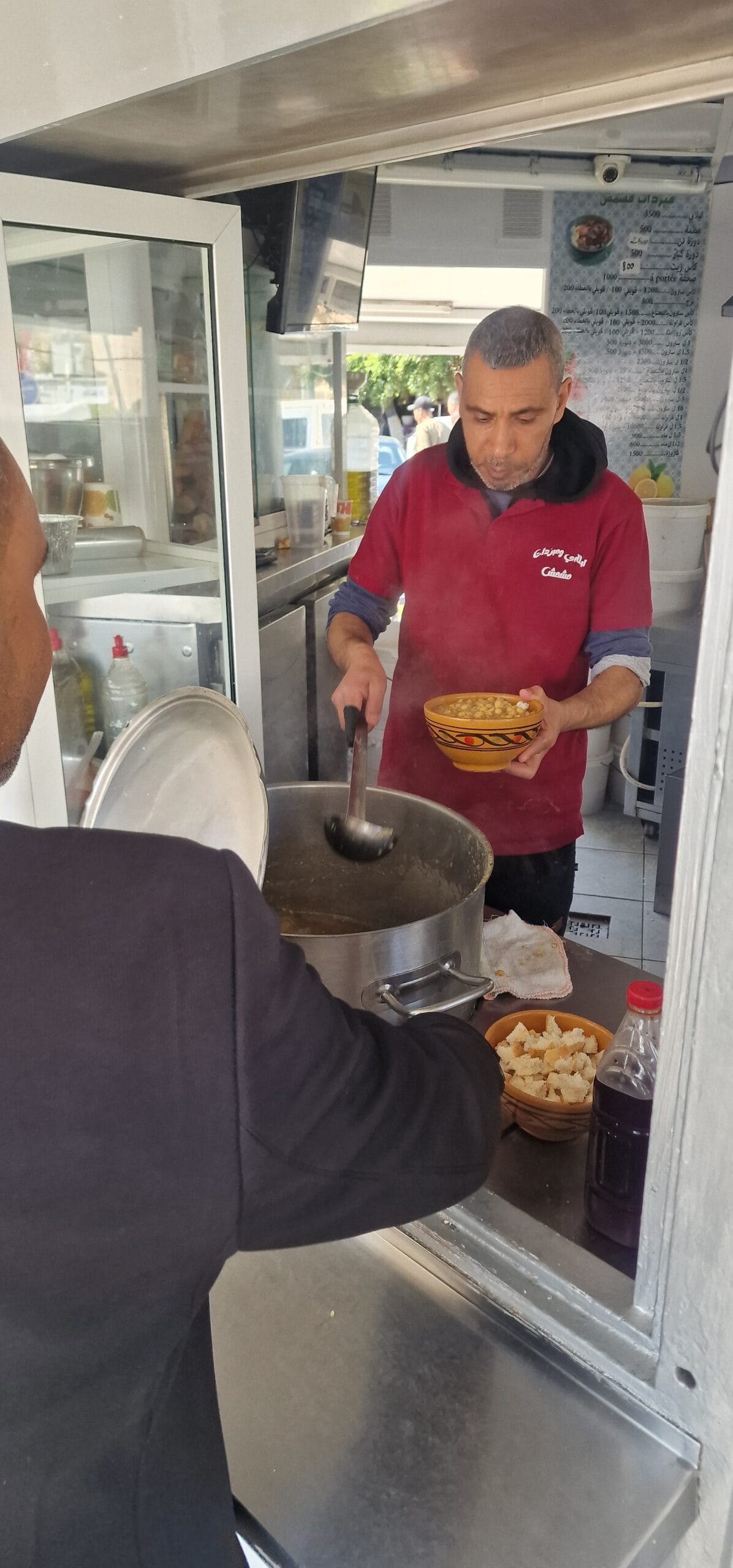
This guide covers the flavours we met first, the markets where Tunisian meals begin, and the dishes we kept coming back to. For sandwiches, lablabi and fried snacks, see our Tunisian street food guide.
Explore the Tunisia hub
Cooking Tunisian at home?
Pin this guide so the dishes are ready when you cook.
The Flavours We Met First
Harissa: Fire in a Jar
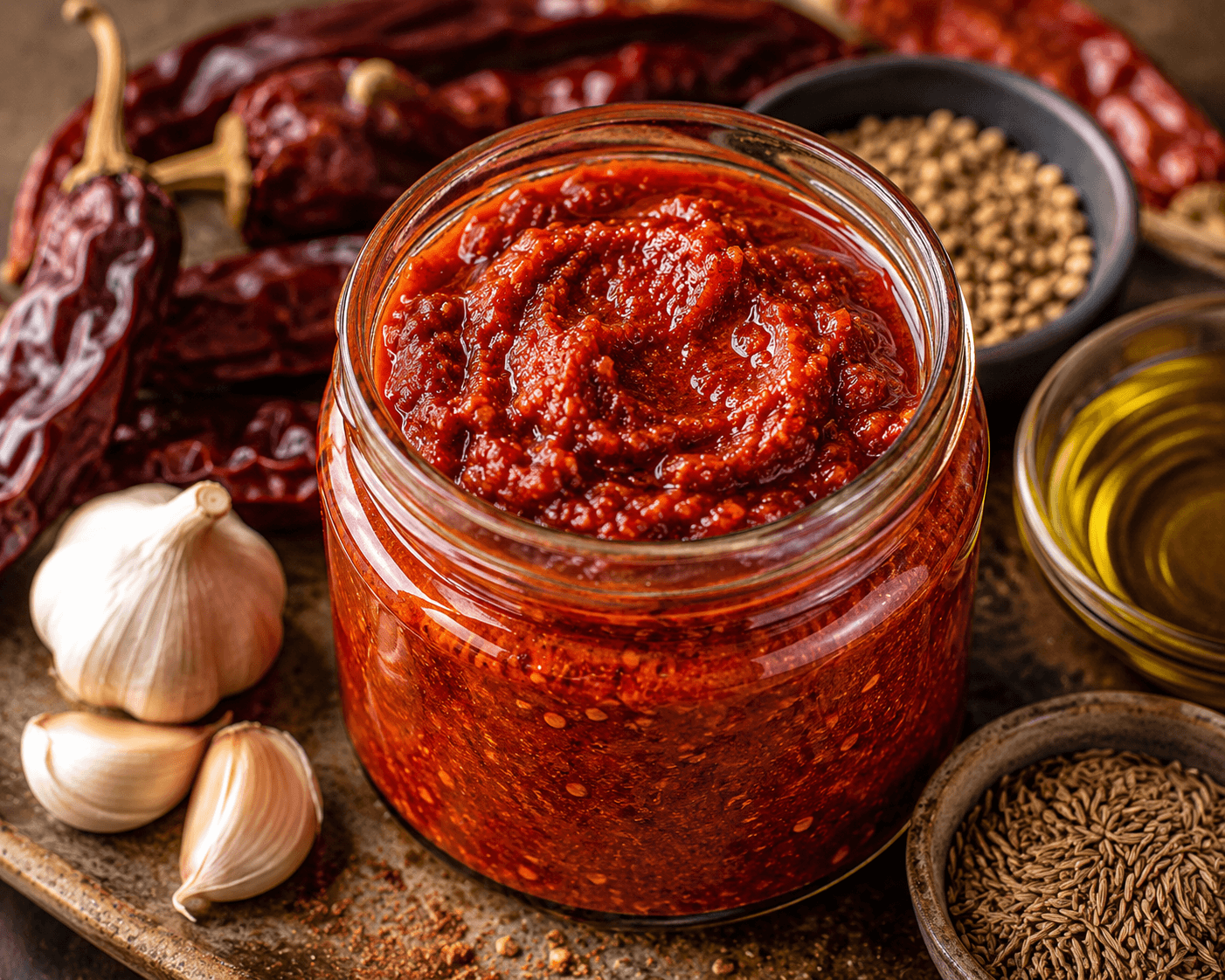
Our introduction came quickly, in the form of a small bowl placed on a café table alongside bread. Harissa. Deep red, glossy, and alive with spice. Made from sun-dried peppers, garlic, cumin, coriander, and olive oil, it’s more than a condiment here. It’s pride. Every family has their own recipe, passed down through generations.
We saw harissa everywhere: spooned onto sandwiches in Monastir’s market, stirred into soups on cold evenings, even folded into lablabi at a streetside stall. Soon, we were carrying jars of it back to the boat, because what was a meal without it?

Tea with Pine Nuts
One late afternoon in the medina of Tunis, tired from wrangling the kids through narrow alleys, we slipped into a café. Glasses of steaming amber tea arrived — dark, sugary, perfumed with mint. Then came the surprise: pale pine nuts bobbing on the surface. One sip changed everything. The pine nuts softened in the hot liquid, releasing their delicate flavour.
It wasn’t just tea. It was hospitality in liquid form, the kind of ritual that makes you slow down, savor, and connect.

Brik: The Golden Triangle
Our first brik came from a street stall, oil spattering in the pan as the vendor worked quickly, folding thin sheets of pastry around tuna, capers, parsley, and — the star — a raw egg. Seconds later he handed us a crisp, golden triangle. The first bite was a mess — egg yolk running down our hands, pastry shattering everywhere — and yet it was perfection.
We saw brik everywhere after that, from Ramadan tables to quick lunches at seaside cafés. You weren’t just eating a snack, you were joining a tradition.

Slata: Freshness in Every Bite
For all the heat and richness, Tunisia also knows balance. At almost every meal, a slata appeared — sometimes just chopped tomatoes and cucumber with olive oil and lemon, other times elaborate with roasted peppers, onions, or boiled eggs.
For us, slata became a quiet favorite. On hot days when harissa felt too much, a cool slata with crusty bread was all we needed.
Tunisia’s Markets: Where Meat Meets the Sea
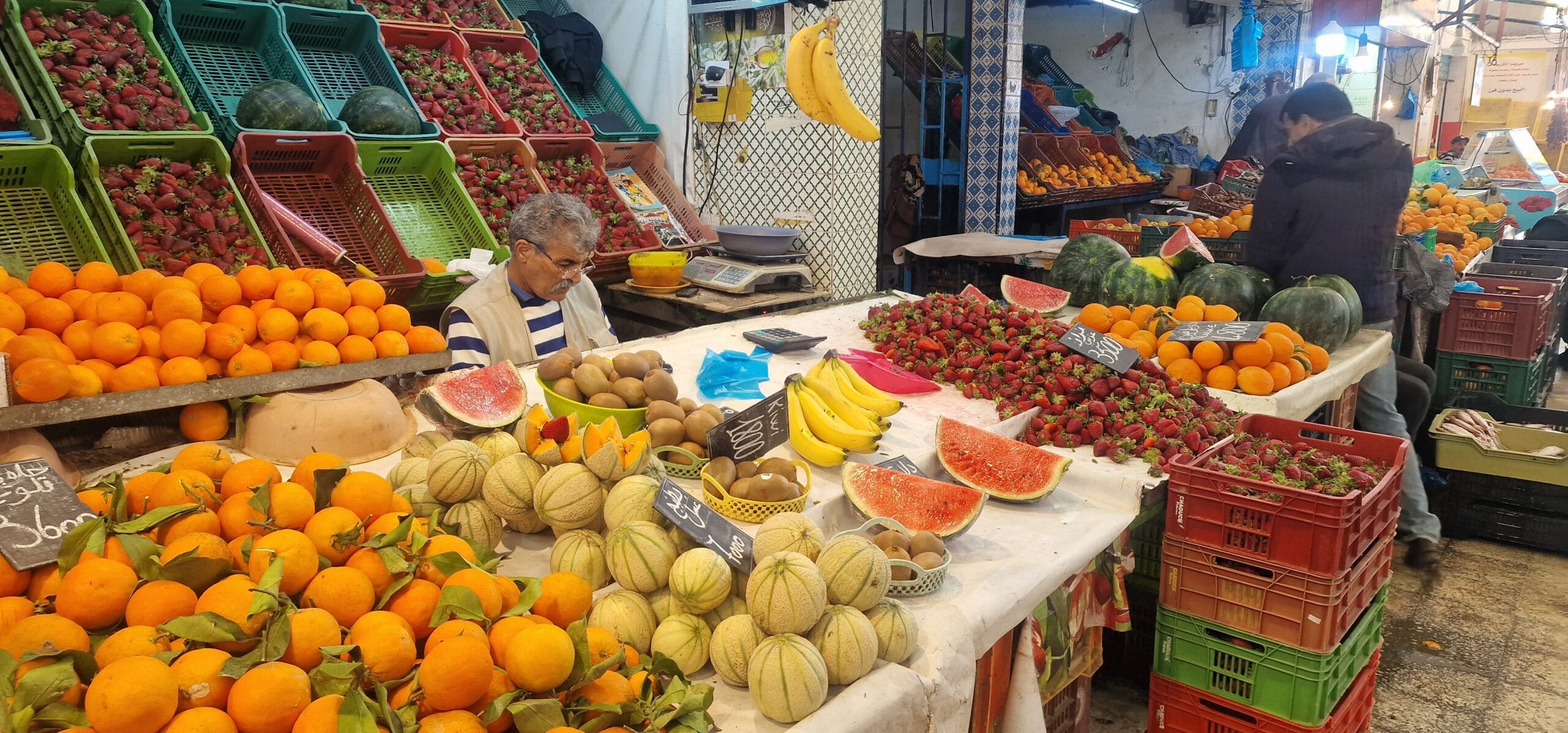
If the medinas are the cultural heart of Tunisia, then the markets are its stomach. Step inside Monastir’s marché central, and you’re immediately swept into a world of noise, color, and aroma. Bright pyramids of tomatoes, crates of citrus, and bundles of mint draw you in, but soon your eyes wander to the real show: the butchers and the fishmongers.
Lamb carcasses hang neatly from hooks, next to counters stacked high with chicken, beef, and coils of deep red merguez sausages. Just a few stalls away, the fishmongers lay out their morning catch — silver sardines piled in mounds, fat tuna steaks glistening pink, and squid stretched out across ice. The market is where land and sea meet, side by side, and where Tunisia’s meals begin.
The Dishes We Kept Coming Back To
Tajin: Eggs, Meat, and Even Tuna
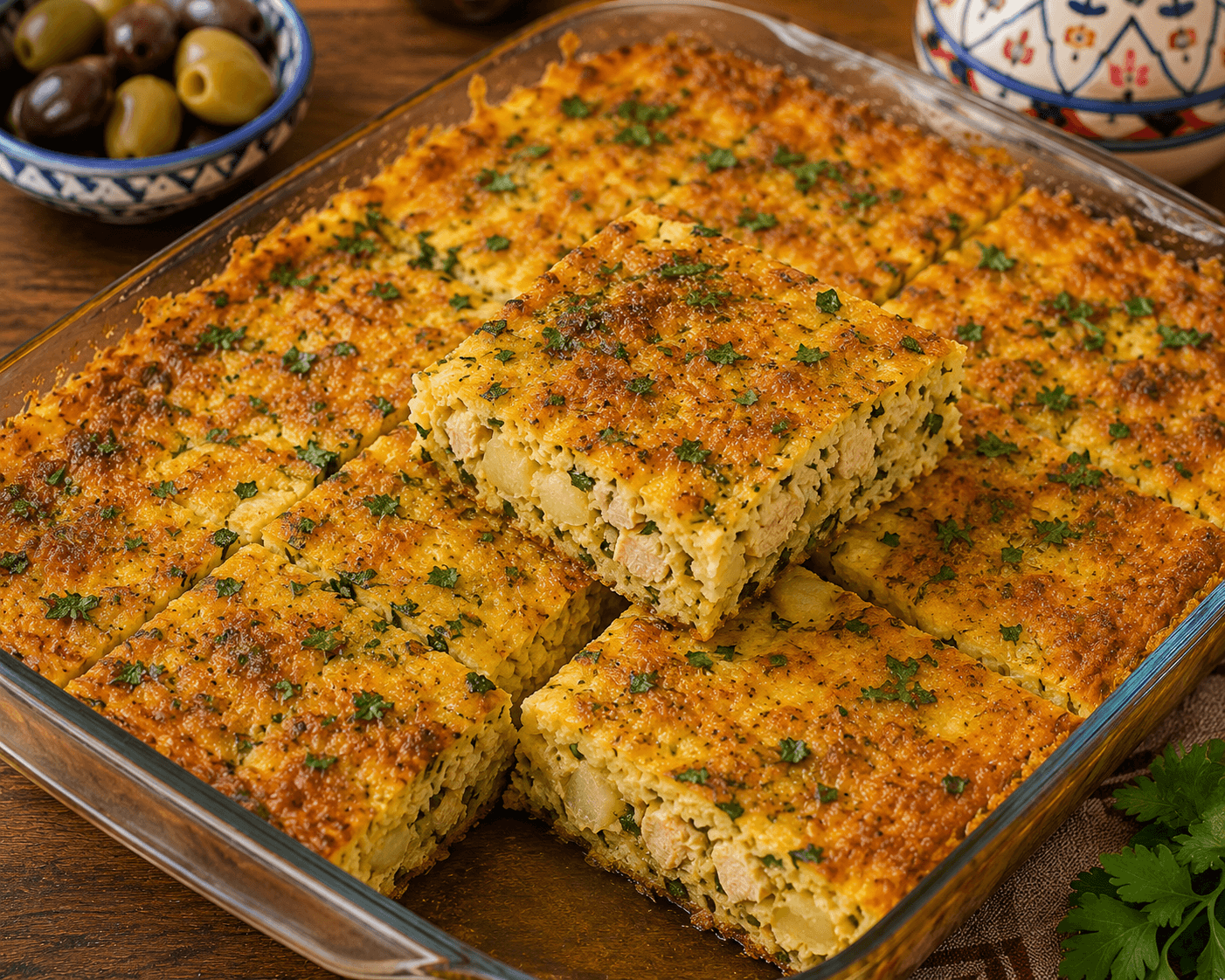
One day, a butcher pressed cubes of lamb into our hands and told us to try them in tajin. But this wasn’t the Moroccan clay pot we imagined — Tunisian tajin is more like a baked omelette or crustless quiche, made with eggs, cheese, herbs, and whatever protein you have. Sometimes chicken, sometimes lamb, and along the coast, even tuna. It’s the kind of dish that ends up at family picnics, holiday tables, and quick marina lunches.

Couscous: Meat or Fish, Always Tradition
If tajin is the picnic food, then couscous is the soul of Tunisia. On Fridays, markets are alive with people buying meat or fish for their couscous.
We were invited once to a family meal: fluffy couscous heaped with chickpeas, zucchini, and carrots, crowned with tender lamb. Another time, on the coast, it was fish couscous that stole the show — a whole fish simmered in a tomato broth with cumin, garlic, and of course harissa.
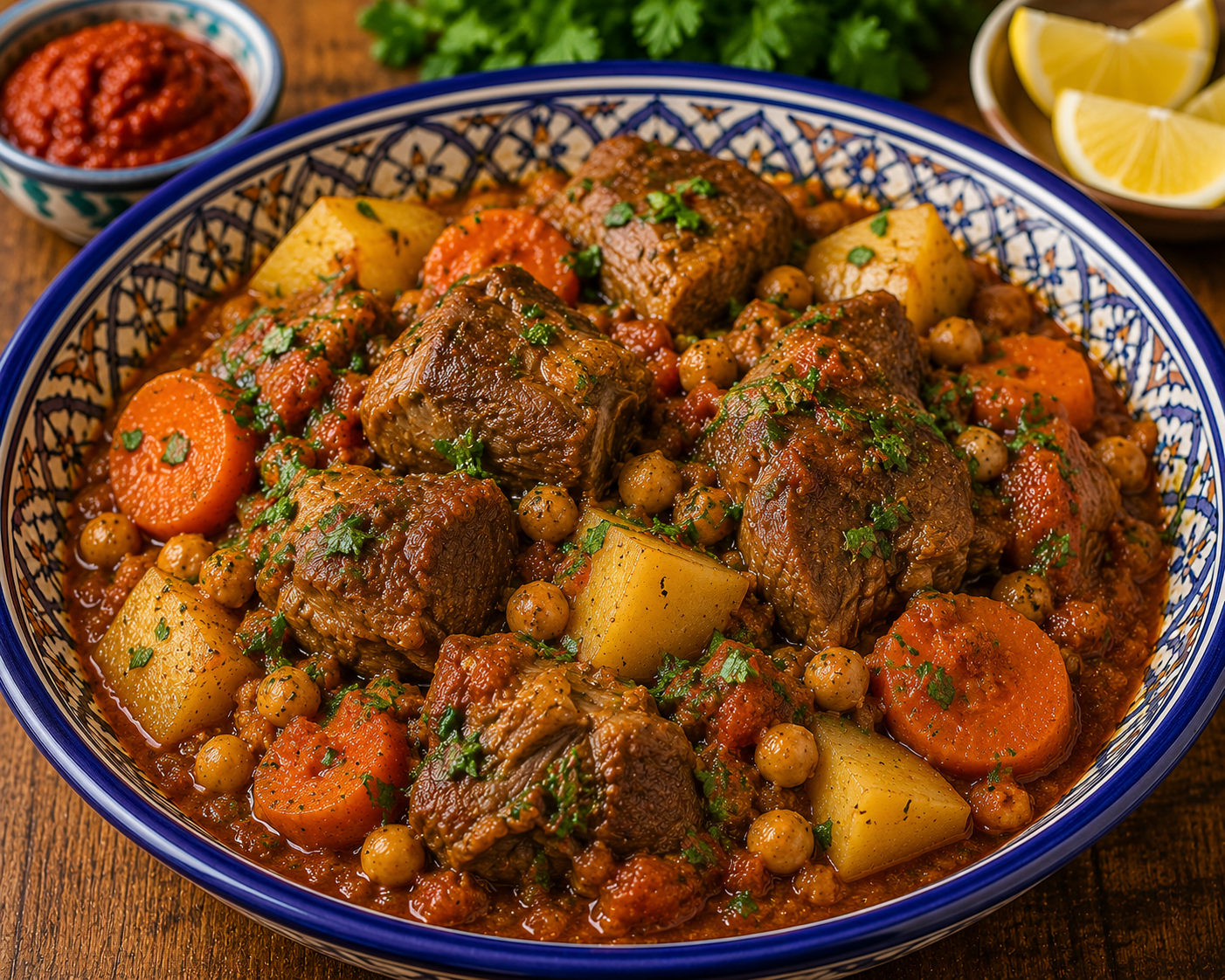
Marqa and Kabkabou
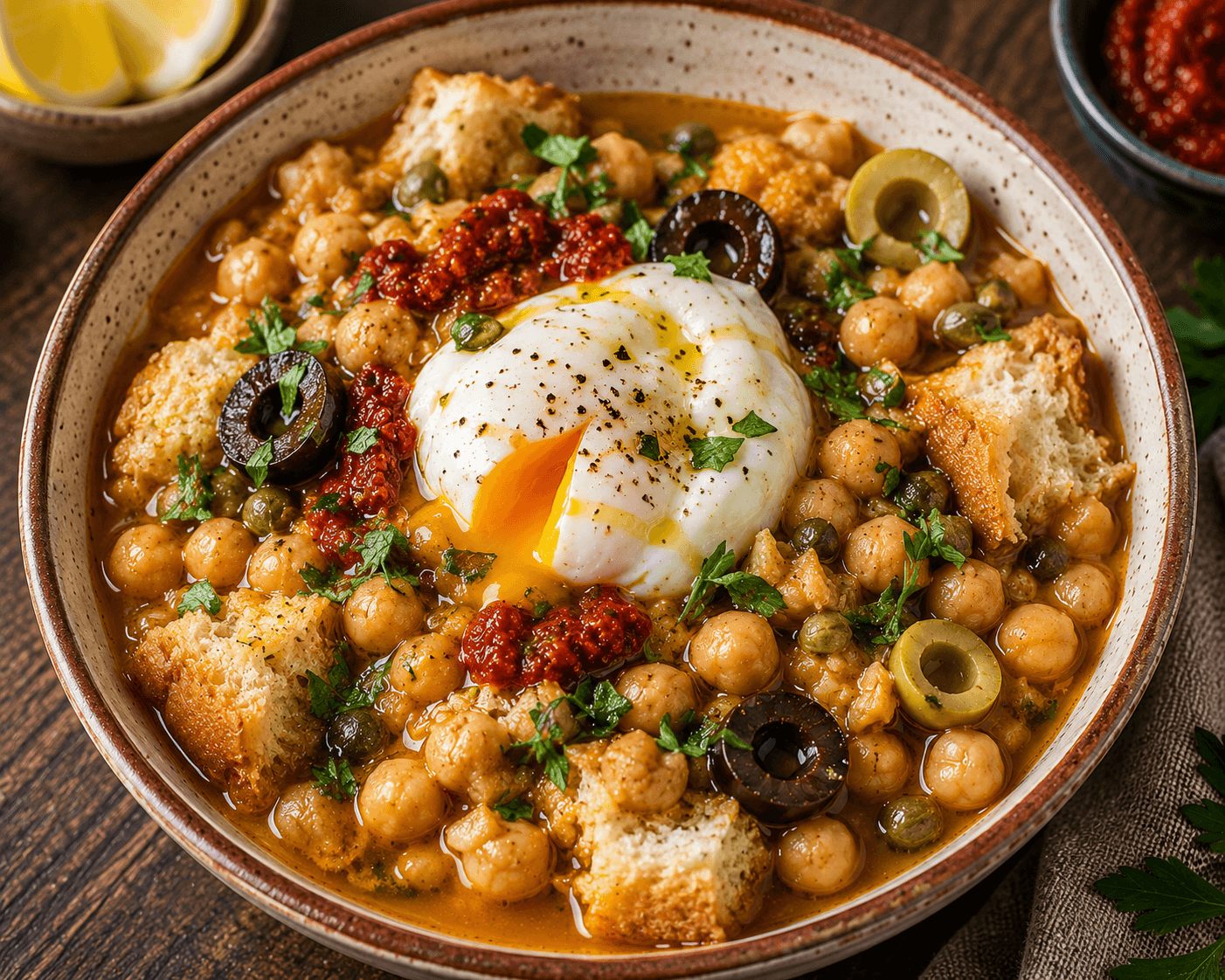
Tunisians know how to make a sauce sing. Marqa is the word for rich stews, usually with lamb or chicken, simmered with chickpeas, onions, and vegetables in a tomato base. Along the coast, the same technique transforms into Kabkabou — fish simmered with tomatoes, olives, and capers until the sauce is tangy, briny, and full of depth. Both are eaten with bread close at hand, wiping the bowl clean.
Grilled in the Streets: Merguez and Sardines
By nightfall, the air fills with smoke and the smell of grilling. Merguez sausages spit and crackle on open flames, while sardines are laid across simple wire grills, brushed with oil and sprinkled with salt, their skin blistering until crisp. Both are eaten the same way — tucked into bread with a squeeze of lemon and a smear of harissa.
Cook it at home
Tunisian Recipes to Try

A Shared Table
What struck us most in Tunisia was how seamlessly meat and fish shared the same space — in the markets, on the grills, and at the table. One day it might be lamb tajin, the next fish couscous, the next sardines sizzling on a street corner.
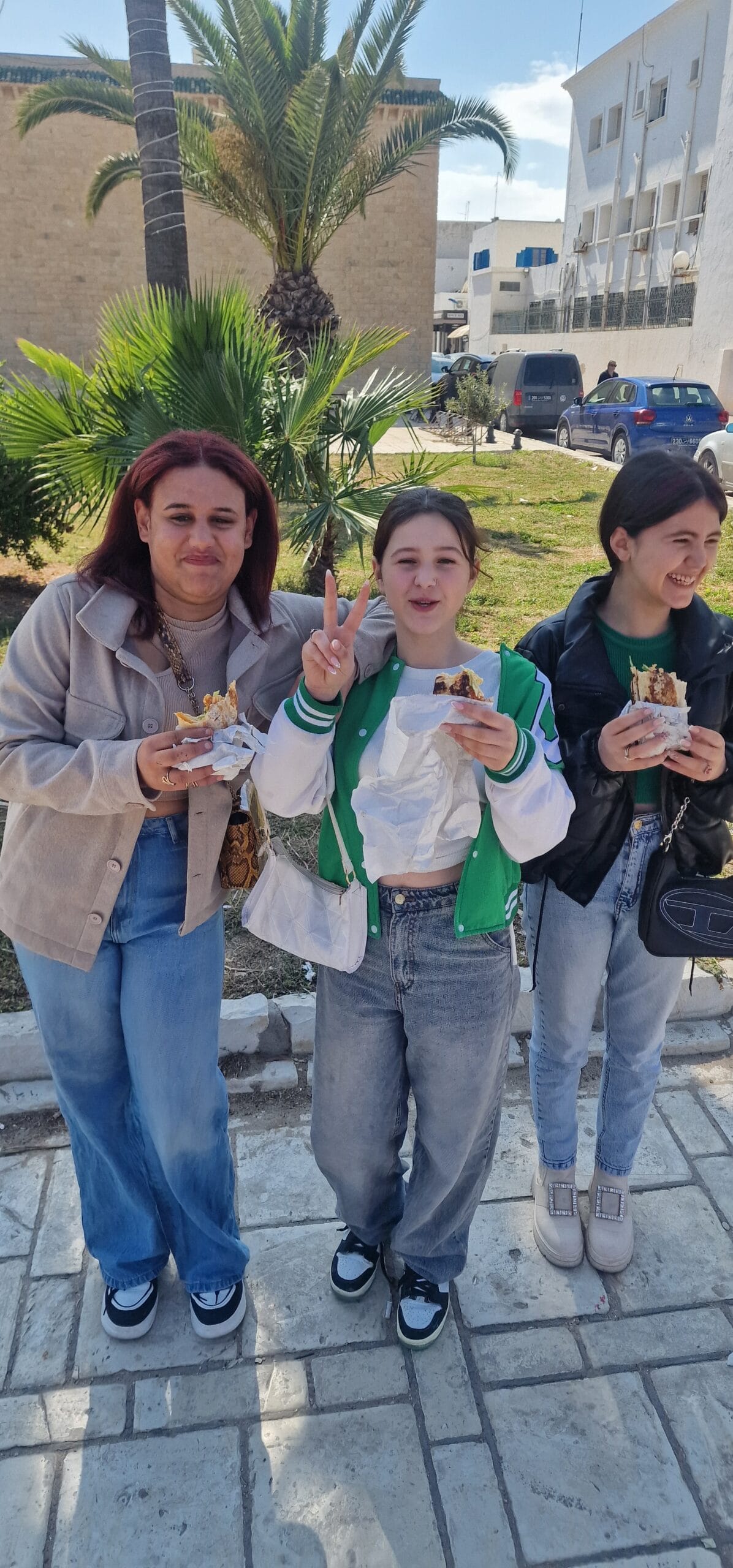
But beyond the flavors, it was the way Tunisians shared food that stayed with us. A sandwich bought from a stall wasn’t just handed over — it came with a smile, a quick chat, sometimes even an extra olive tucked in for good measure. As sailors, we came to Tunisia looking for a winter base. What we found was a country that fed us in more ways than one.
More from Tunisia
Markets, medinas and a winter spent living aboard
Destination guide
Tunisia Travel & Food Guide
Food
Tunisian Street Food
Travel
Top Attractions in Tunisia