

Travel guide Corfu, Greece
Corfu Travel Guide: Old Town, Beaches, Where to Stay and What to Eat
The Old Town, the beaches, where to base yourself and what to eat on Greece’s greenest Ionian island.
Best months
May–June, September
Busiest
July–August
Base for culture
Corfu Town
Base for beaches
West & northeast coast
On this page: Best time · Where to stay · Old Town · Things to do · Beaches · Food · Getting around · FAQ
Corfu is the greenest of the big Greek islands and the one with the most layered history. It sits in the Ionian Sea, just off the coast of Albania and mainland Greece, and spent centuries under Venetian, French and British rule before joining Greece in 1864.
That history is what makes this Tone & Taste Corfu travel guide a little different from a beach list. The Old Town looks more Italian than Greek, the locals play cricket on the main square, and the island’s signature dishes are slow-cooked in wine and spices rather than grilled. Add olive groves, a mountainous north and some of the clearest water in the Mediterranean, and you have an island that rewards more than a week by the pool.
Below: when to go, which part of the island to stay in, what to see in Corfu Town, the beaches worth the drive, what to eat and how to get around.
Explore the Greece hub
Planning a Corfu trip?
Pin this so the areas, beaches and dishes are ready when you book.
Best Time to Visit Corfu
May and June
The island is at its greenest, the wildflowers are out and the sea is warming up. Beaches and the Old Town are busy but not packed, and prices are lower than in high summer. For most people this is the sweet spot.
July and August
Hot, lively and fully booked. Every taverna and beach bar is open, the sea is at its warmest and the island runs at full speed. Book accommodation and car hire early, and plan beach days for the morning or late afternoon.
September to mid-October
The sea is still warm from the summer and the crowds thin out after the school holidays. Evenings get cooler, which makes it a good time for walking and exploring the villages inland.
Easter and winter
Corfu’s Orthodox Easter is famous across Greece, with brass bands, processions and the pot throwing on Holy Saturday. From November to March many resort hotels close, it rains more and the island belongs to the locals. Corfu Town stays open all year.
In short: go in late May, June or September for warm sea without the peak-season crush. Pick Easter if you care more about culture than swimming.
Where to Stay in Corfu
Corfu is bigger than it looks on the map, and the roads are narrow and winding. Where you stay decides what kind of trip you have, so pick your base by what you want to do most.
Corfu Town
Best for culture, food and a first visit. You can walk the Old Town, eat well every night and reach the airport and ferry port in minutes. The trade-off: no beach on your doorstep, so plan on a car or bus for swimming days.
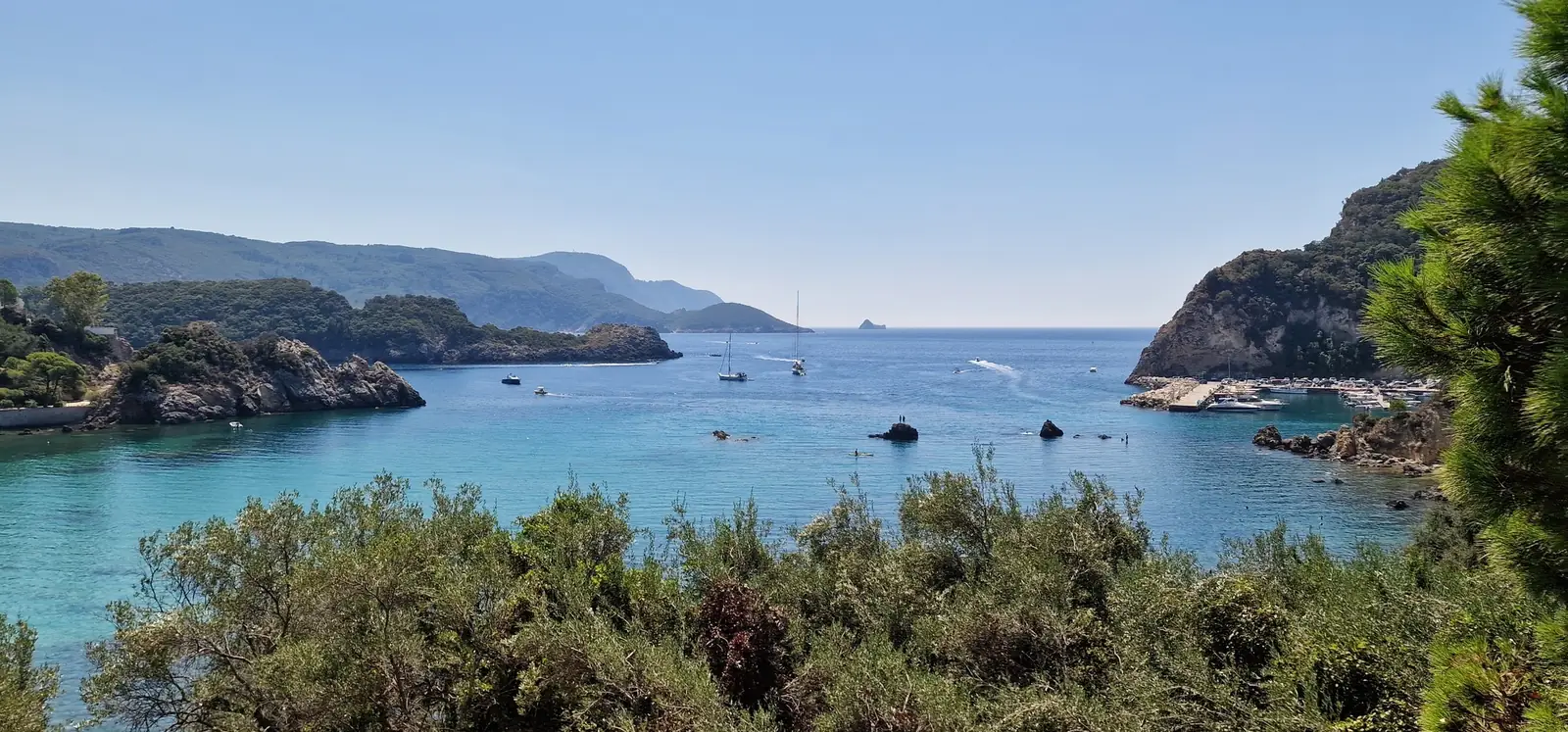
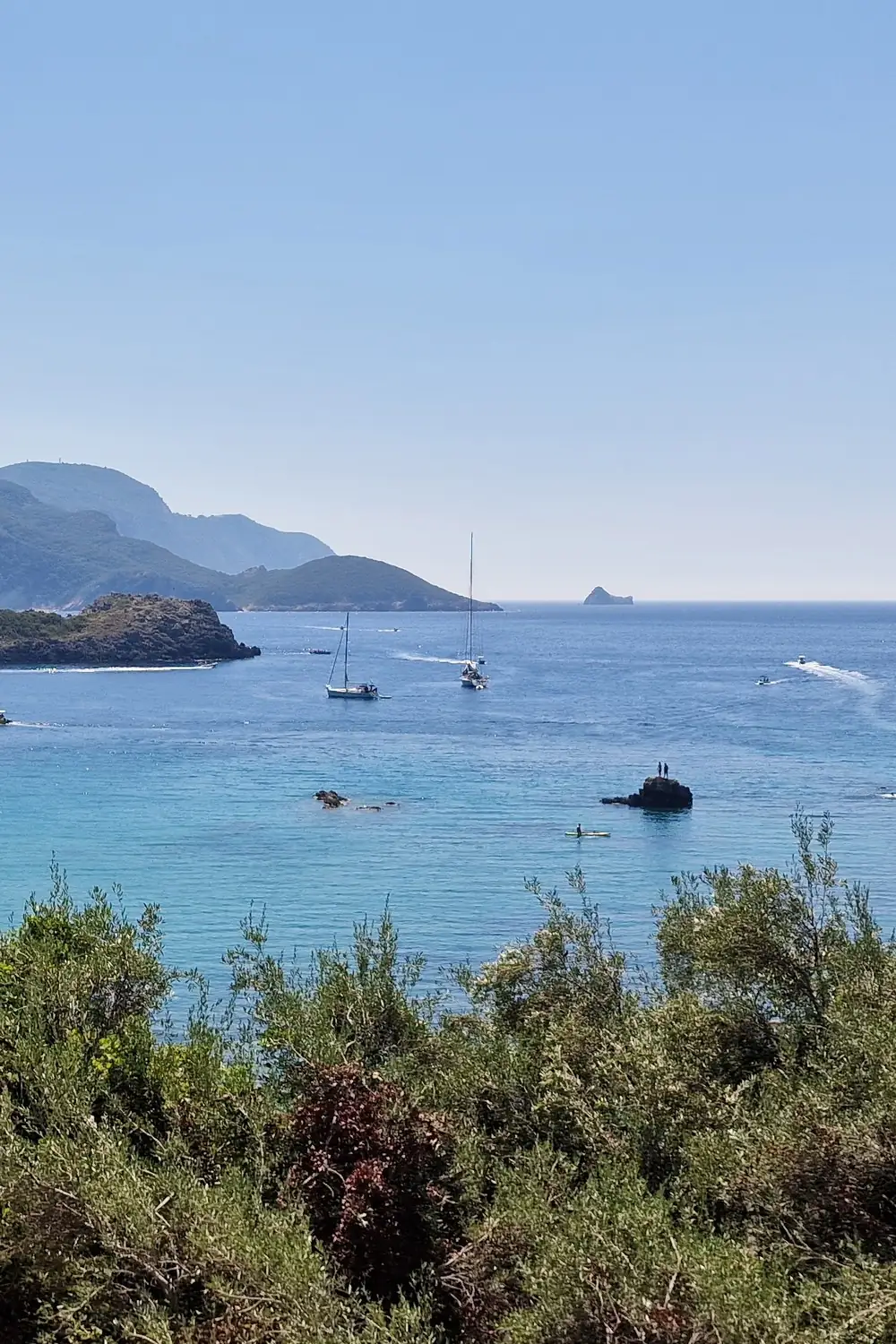
Paleokastritsa
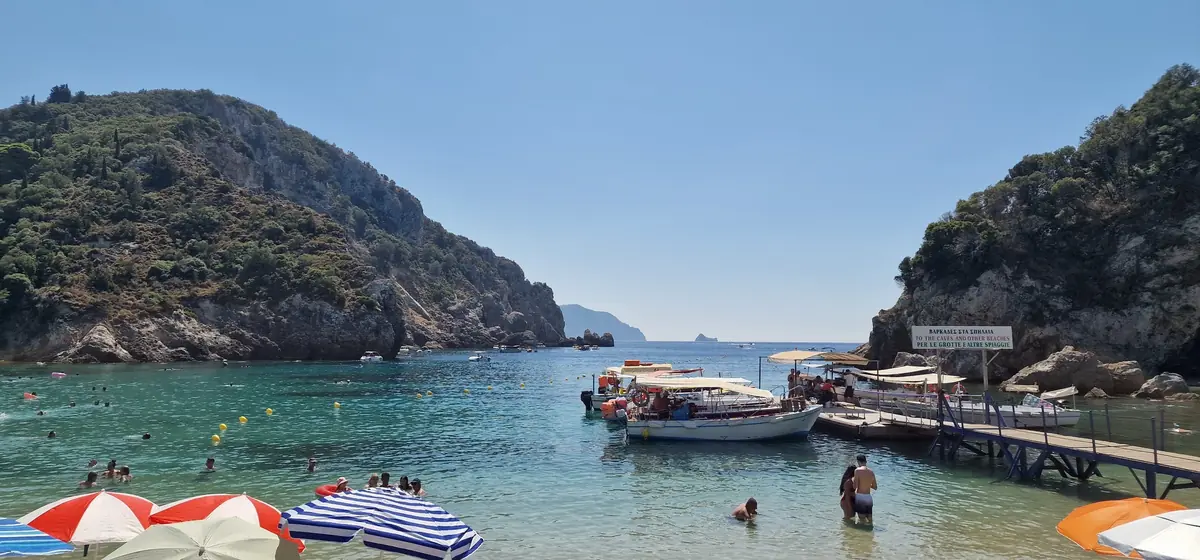
The postcard west coast: steep green hills, small coves and very clear, cold water. Good for couples and anyone who likes boat trips and snorkelling more than long sandy beaches.
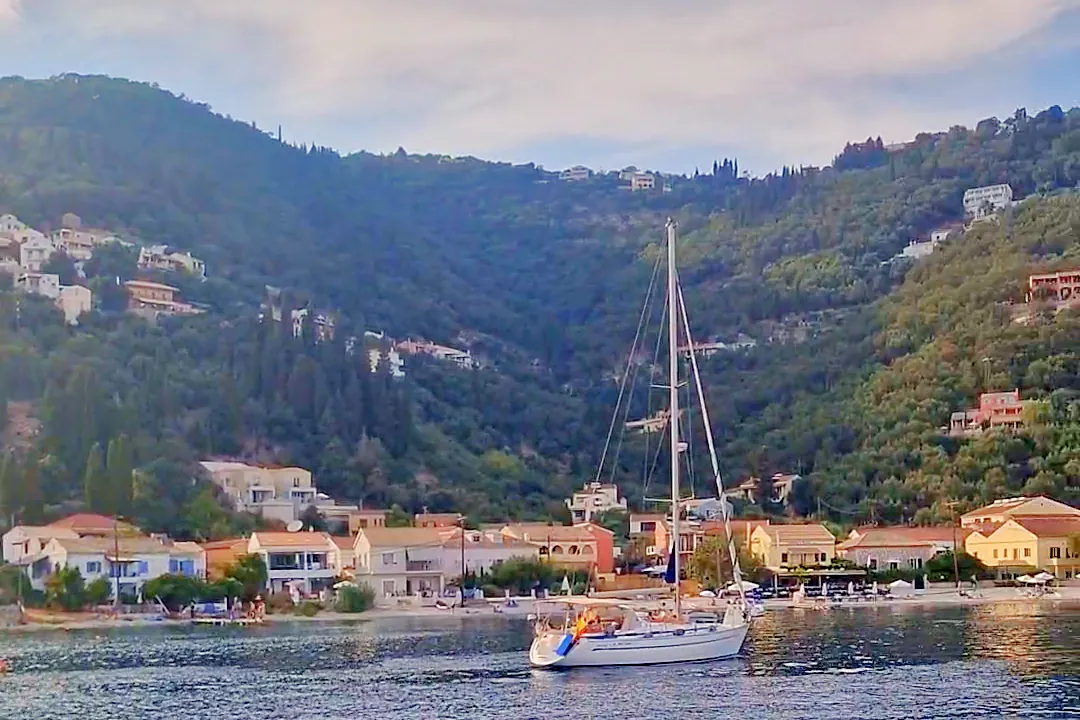
Northeast coast
Kassiopi, Kalami and Agios Stefanos Sinion sit on a quieter coastline of pebble coves facing Albania. Calm water, villas and tavernas by the sea. Popular with families and slower travellers.
Glyfada and Pelekas
On the west coast, close to some of the island’s best sandy beaches and the sunset viewpoint known as the Kaiser’s Throne above Pelekas. A good middle ground between town and beach.
Sidari and Acharavi
The north coast resorts. Sidari is lively and package-holiday focused, with the Canal d’Amour rock formations nearby. Acharavi has a long beach and a more relaxed feel. Good value for families.
The south
Kavos is known for its nightlife and not much else. The rest of the south, around Lefkimmi and Agios Georgios, is flatter and quieter, with long beaches and fewer visitors.
Corfu Old Town
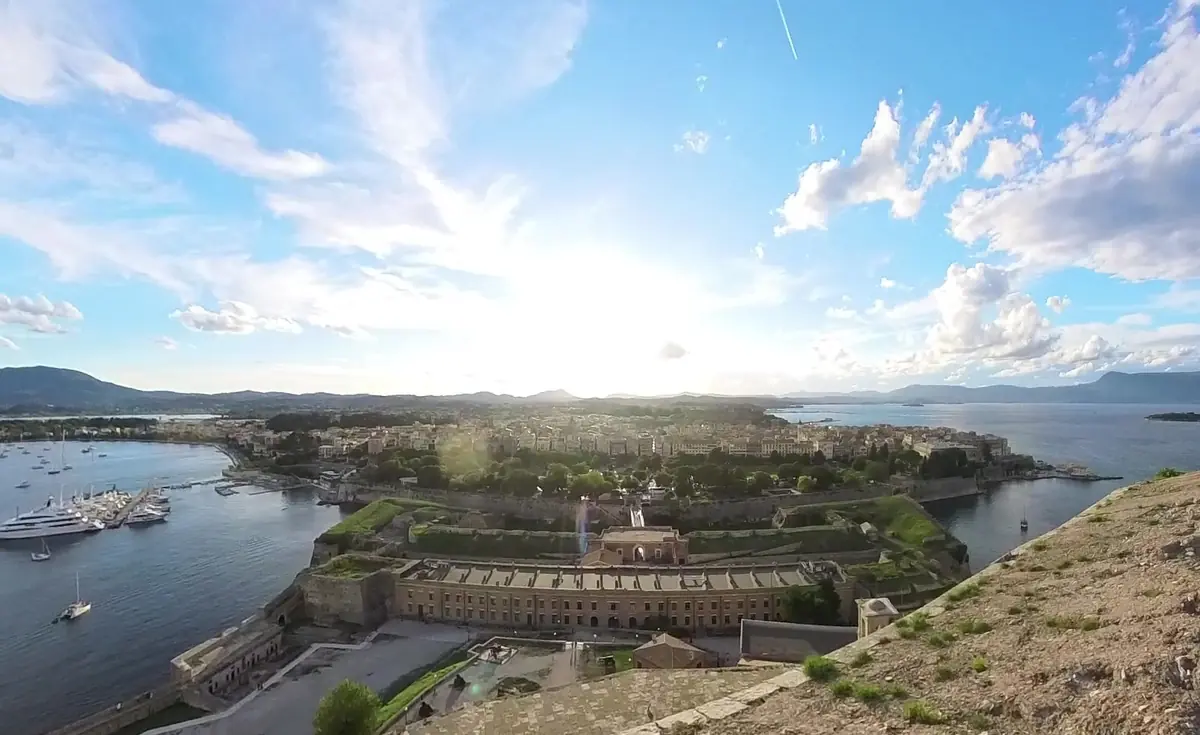
The Old Town of Corfu has been a UNESCO World Heritage Site since 2007. It is a dense maze of narrow lanes (called kantounia), tall pastel houses with green shutters and laundry strung between balconies, squeezed between two Venetian fortresses.
Spianada and the Liston
The Spianada is the huge open square at the edge of the Old Town, with a cricket pitch that dates from British rule. Along one side runs the Liston, an arcade built under French rule and modelled on the Rue de Rivoli in Paris. Today it is lined with cafés: expensive, but the place for a coffee and some people-watching.
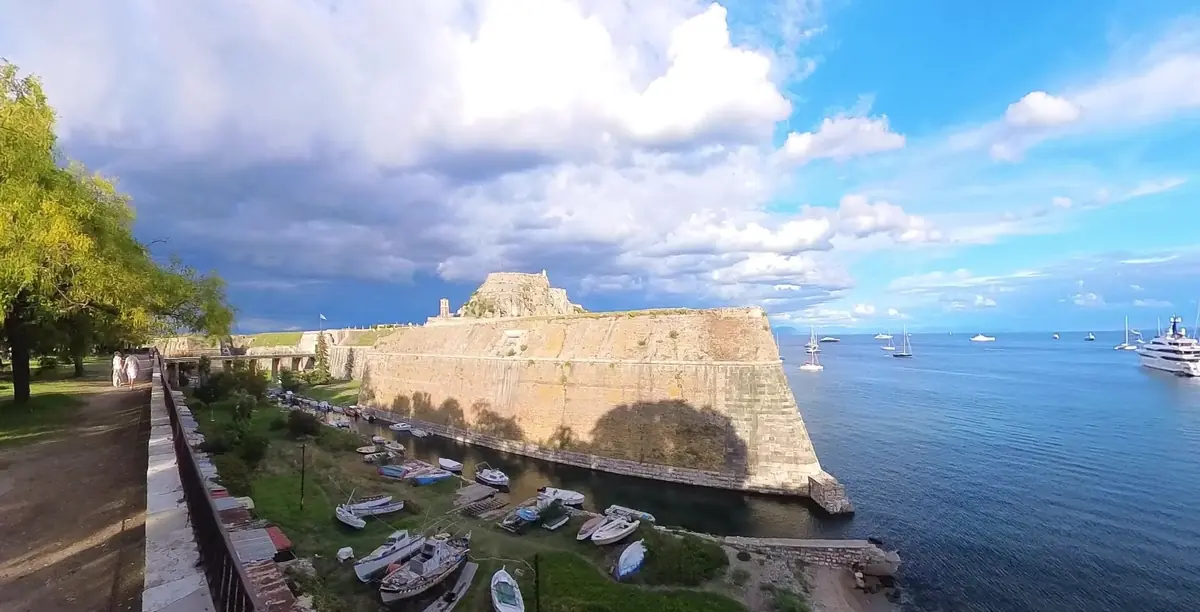
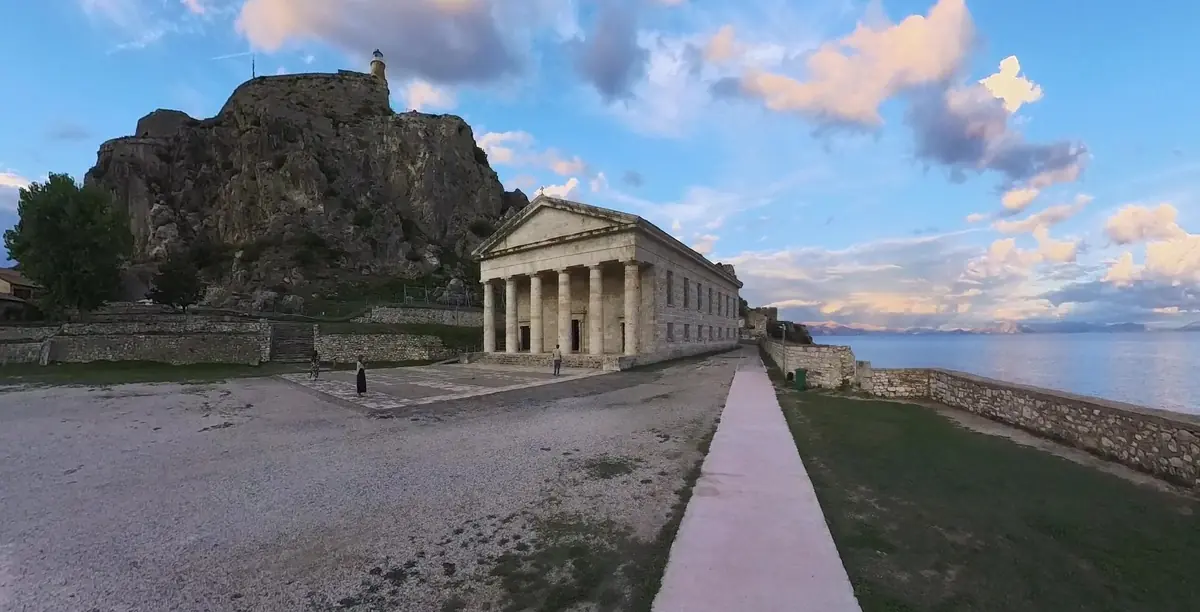
The Old and New Fortress
The Old Fortress sits on a rocky headland cut off from the town by a sea moat. Walk up to the lighthouse for the best view over the rooftops. The New Fortress, also Venetian, looks over the old harbour on the other side of town.
Agios Spyridon
The church of Corfu’s patron saint, with the red-domed bell tower you see from everywhere in town. Saint Spyridon’s relics are carried through the streets in procession several times a year, including at Easter.
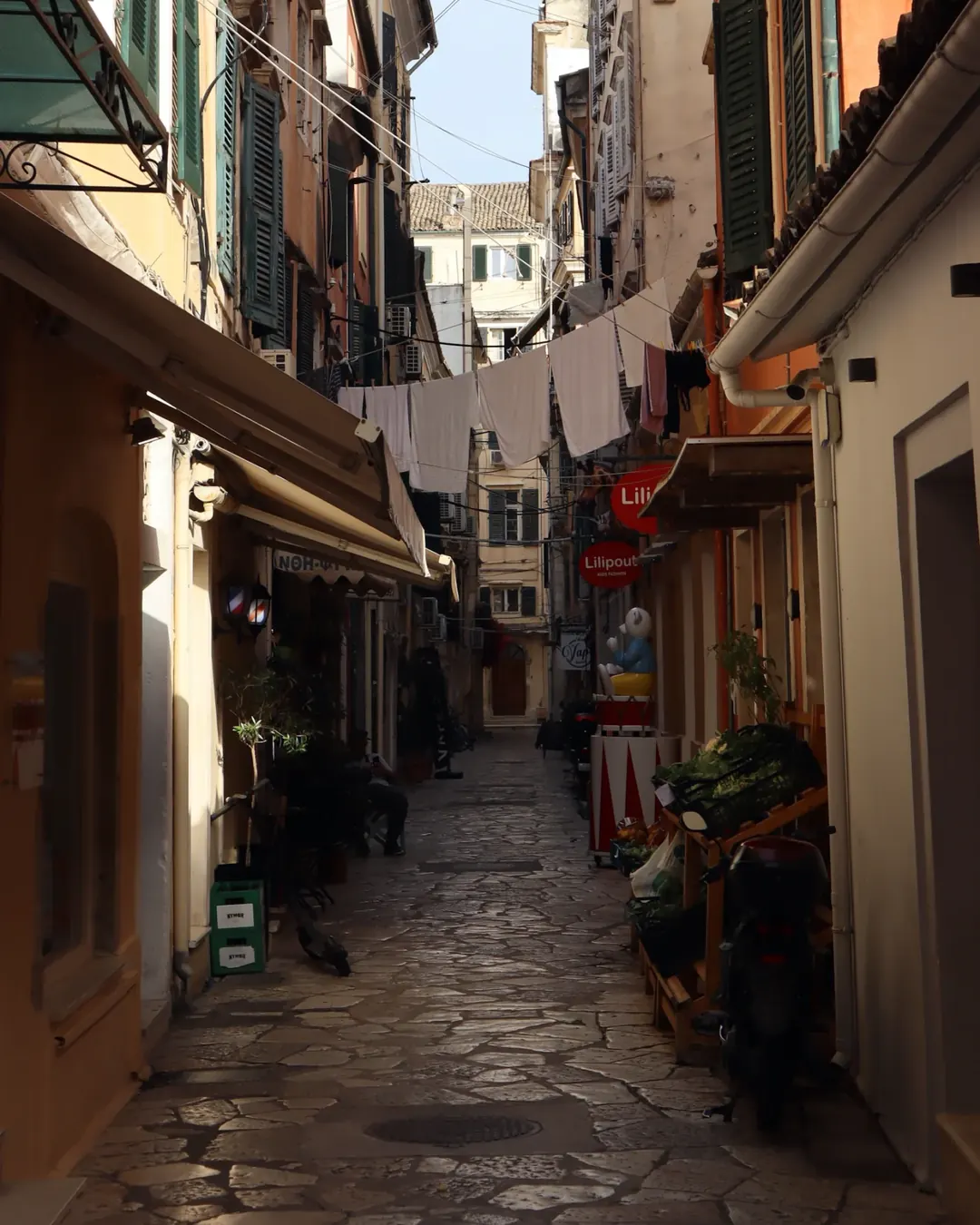
Just wander
The best way to see the Old Town is to put the map away. Walk the backstreets in the morning before the cruise crowds arrive, then come back in the evening when the lanes fill with locals and the tavernas set their tables outside.
Things to Do on Corfu
Achilleion Palace
A neoclassical palace in the village of Gastouri, built in the 1890s for Empress Elisabeth of Austria, better known as Sisi. The gardens look out over the east coast and the statues of Achilles give the palace its name.
Kanoni and Mouse Island
From the Kanoni peninsula south of town you look down on the little Vlacherna monastery on its causeway, with Pontikonisi (Mouse Island) just behind it. Planes landing at the airport pass close overhead, which is part of the show.
Mount Pantokrator
The island’s highest point at around 900 metres, with a monastery at the top. On a clear day you can see across to Albania and the mainland. The drive up through old stone villages is half the reason to go.
Paleokastritsa Monastery
A working monastery on a headland above the bays of Paleokastritsa. Dress modestly (shoulders and knees covered) and go early for the light and the quiet.
A boat day
Hiring a small motorboat for the day is the easiest way to reach coves without road access, especially on the northeast and west coasts. Rental companies offer small boats that need no licence; ask them about the wind before you set off.
Easter in Corfu
If you are there over Orthodox Easter, the botides tradition is worth planning around: on Holy Saturday morning, locals throw clay pots full of water from balconies in the Old Town to mark the first resurrection. Arrive early for a spot.
Best Beaches in Corfu
The west coast has the sand and the sunsets, the northeast has calm pebble coves, and the north has long resort beaches. A few worth the drive:
Paleokastritsa
Several small coves backed by green cliffs. The water is famously clear and noticeably cold. Take a boat to the sea caves nearby.
Glyfada
A long sandy beach on the west coast with clear water and sunbeds. Busy in summer, but big enough to find space.
Canal d’Amour, Sidari
Not a big beach, but the sandstone cliffs and channels carved by the sea make it one of Corfu’s most photographed spots.
Agios Gordios
A wide sandy bay on the west coast framed by steep hills, with a striking rock pinnacle at the southern end.
Kalami and Kassiopi
The calm, clear water of the northeast coast. Pebbles rather than sand, ideal for snorkelling and families with young children.
Issos and Halikounas
Long, wild stretches of sand and dunes in the southwest, next to Lake Korission. Exposed to the wind, which makes them popular with kitesurfers.
Eat like a local
What to Eat in Corfu
Corfiot food has its own accent. Four centuries of Venetian rule left spices, pasta and slow-cooked sauces, and the British left ginger beer and a taste for kumquats. Look for these on taverna menus:
Pastitsada
The island’s Sunday dish: rooster or beef slow-cooked in a tomato sauce spiced with cinnamon, cloves and sweet paprika, served over thick pasta.
Sofrito
Thin slices of veal cooked gently in white wine, garlic, vinegar and parsley. Simple and very Corfiot.
Bourdeto
A fiery fish stew of white fish cooked with onion, olive oil and plenty of red pepper. Traditionally made with scorpionfish.
Kumquat
Grown on the island since the early 20th century and now a Corfu speciality. You will find it as liqueur, spoon sweet and candied fruit in every gift shop.
Tsitsibira
Corfiot ginger beer, a leftover from British rule. Fresh, cloudy and not very sweet. Try it on a hot afternoon on the Liston.
Olive oil
Corfu is covered in olive trees, many of them centuries old. Local oil is everywhere and it is worth taking a bottle home.
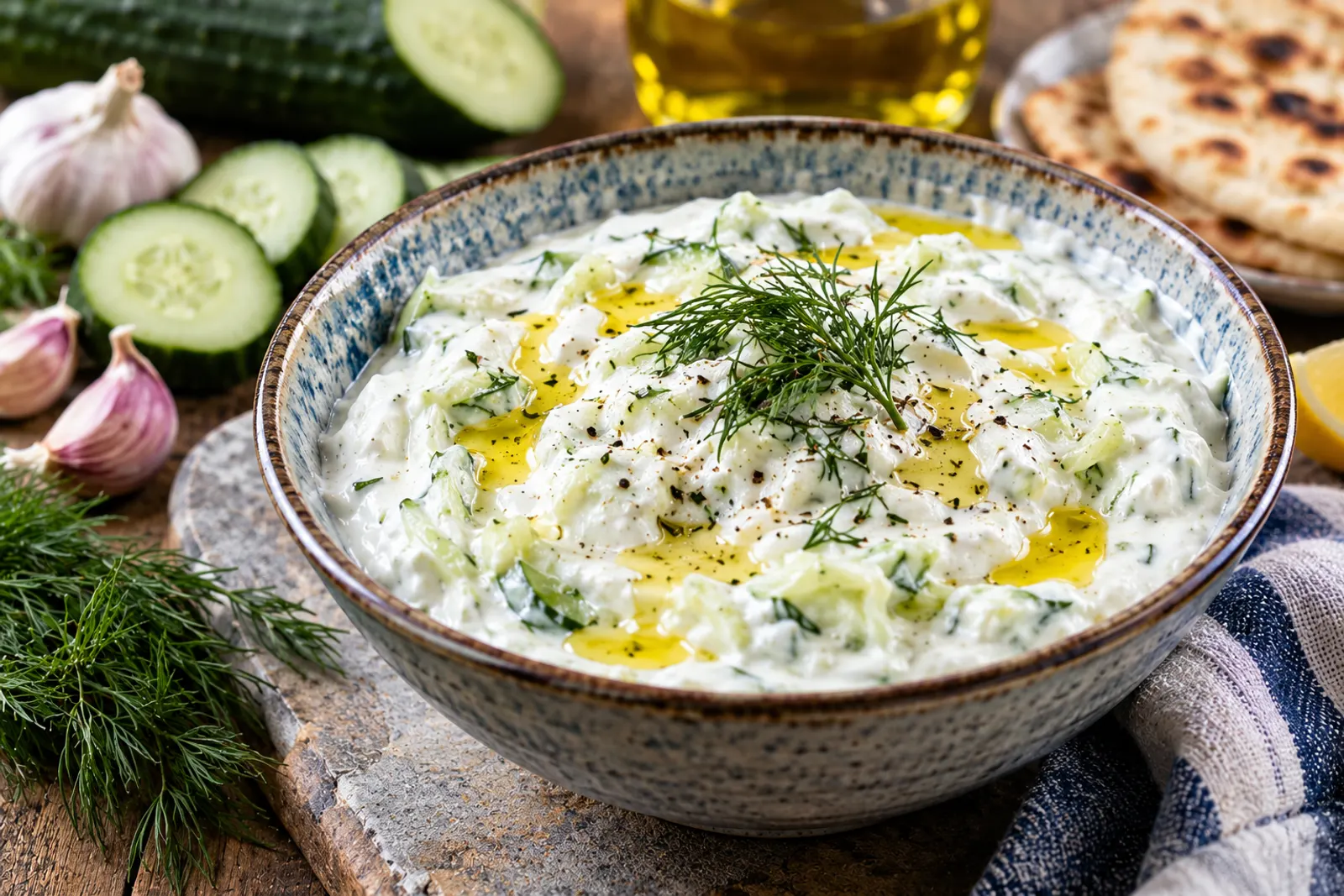
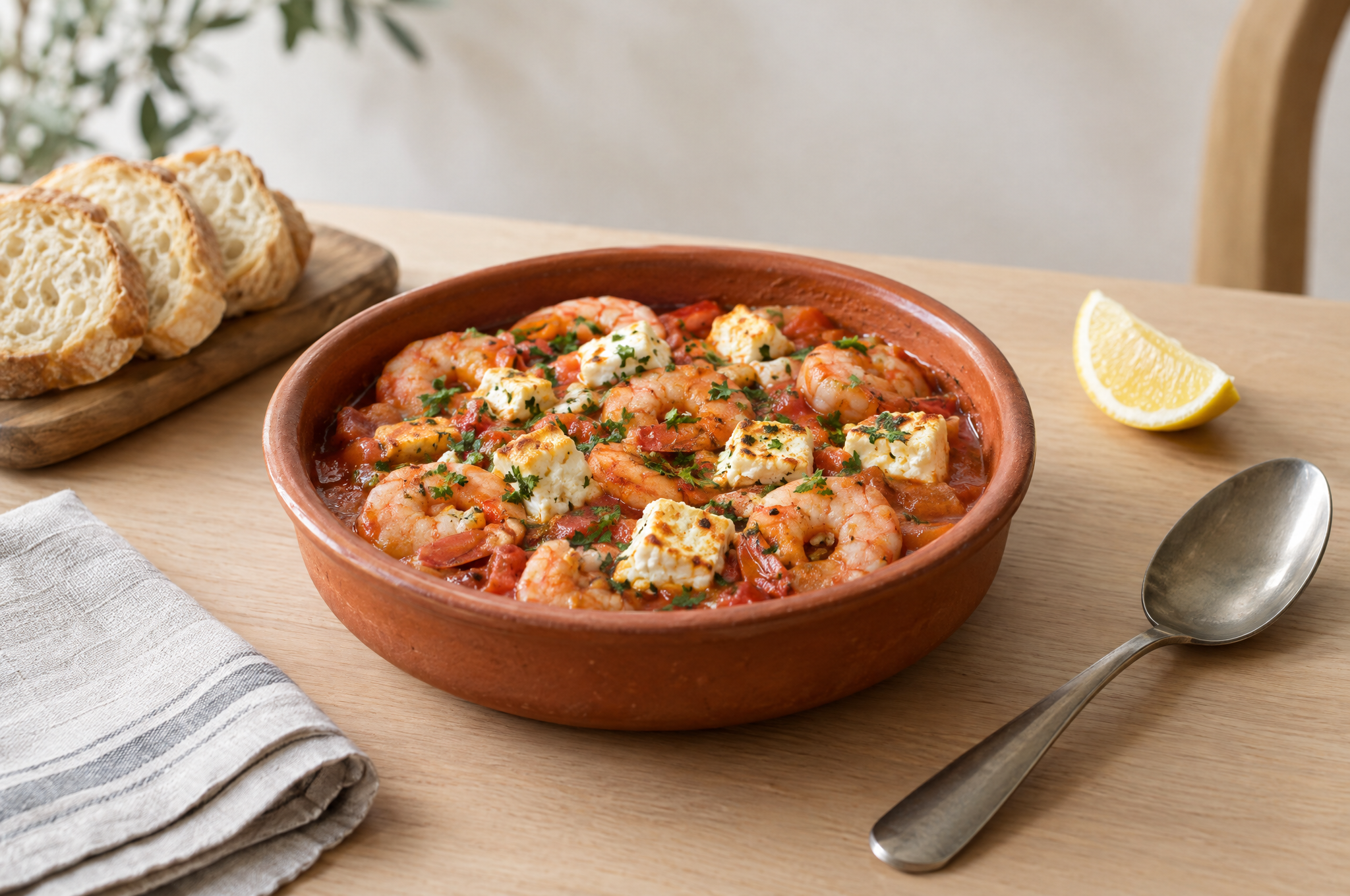
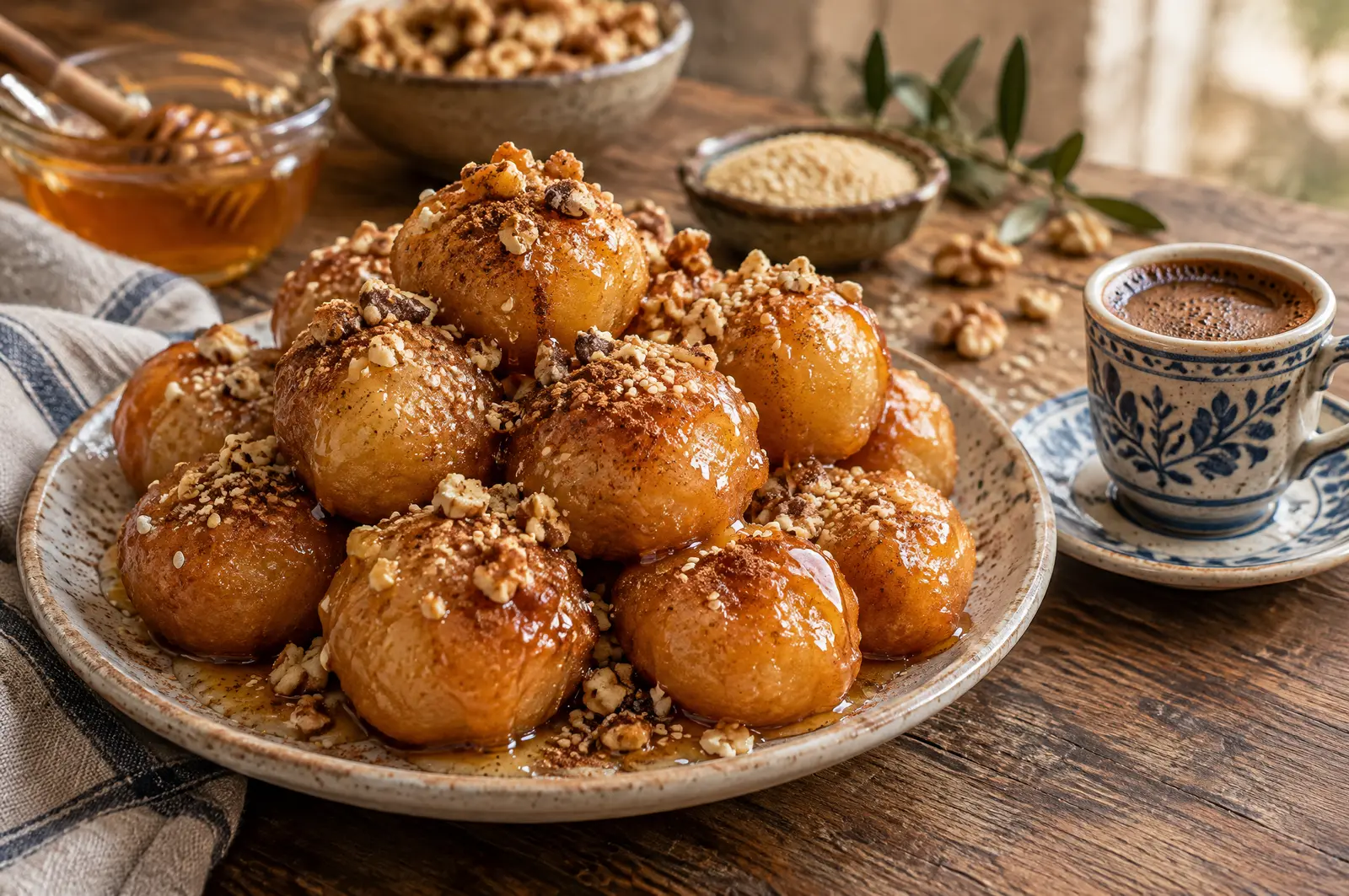
Cook Greek at home

Getting to and Around Corfu
By air
Corfu International Airport (Ioannis Kapodistrias) is right on the edge of Corfu Town, a short taxi or bus ride from the Old Town. In summer there are direct flights from much of Europe; in winter you usually connect via Athens.
By ferry
Ferries run several times a day from Igoumenitsa on the mainland, and there are international routes from Italian ports. Ferries and fast boats also link Corfu with Paxos, which makes an easy island-hop south.
Buses
The green KTEL buses connect Corfu Town with the resorts and villages; the blue city buses cover the town and nearby suburbs, including the airport. Cheap and useful, but services on the long routes can be infrequent.
Car or scooter
The easiest way to explore. Roads are narrow, steep and winding, especially in the north and west, so take your time, rent a small car and expect slow going. Parking in Corfu Town is tight in summer.
Corfu Travel FAQ
How many days do you need in Corfu?
Plan at least five days to see Corfu Town and a few beaches without rushing. With a week or more you can split your stay between town and a coast, and add a day trip to Paxos.
Is Corfu better for beaches or culture?
Both, which is why it works so well. Corfu Town has some of the best-preserved Venetian architecture in Greece, and the west and northeast coasts have excellent beaches within an hour’s drive.
Do you need a car in Corfu?
Not if you stay in Corfu Town and only want a couple of beach days, since buses cover the main routes. To explore the coves, mountain villages and west coast beaches properly, a car makes things much easier.
When is it too cold to swim in Corfu?
The sea is usually warm enough from late May to early October. Outside that window most visitors find it too cold, and the west coast stays cooler than the sheltered northeast.
What is Corfu famous for food-wise?
Pastitsada, sofrito and bourdeto, the island’s Venetian-influenced slow-cooked dishes, plus kumquat liqueur and tsitsibira ginger beer.
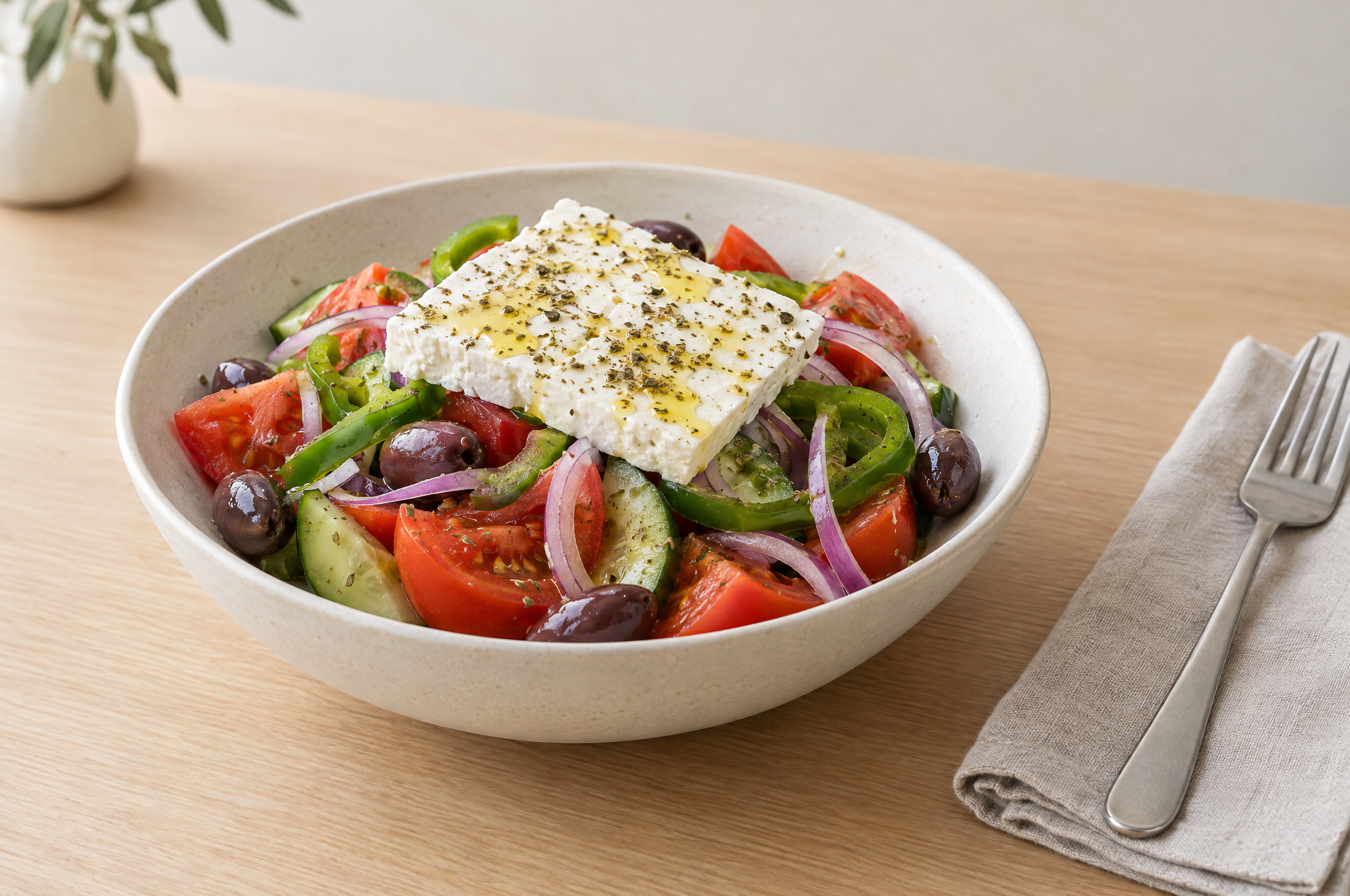
Planning more of Greece? Start with our Greece Travel & Food Guide, and bring a taste of the islands home with our Greek recipes.
More from Greece
Islands, tavernas and the dishes to cook at home
Destination guide
Greece Travel & Food Guide
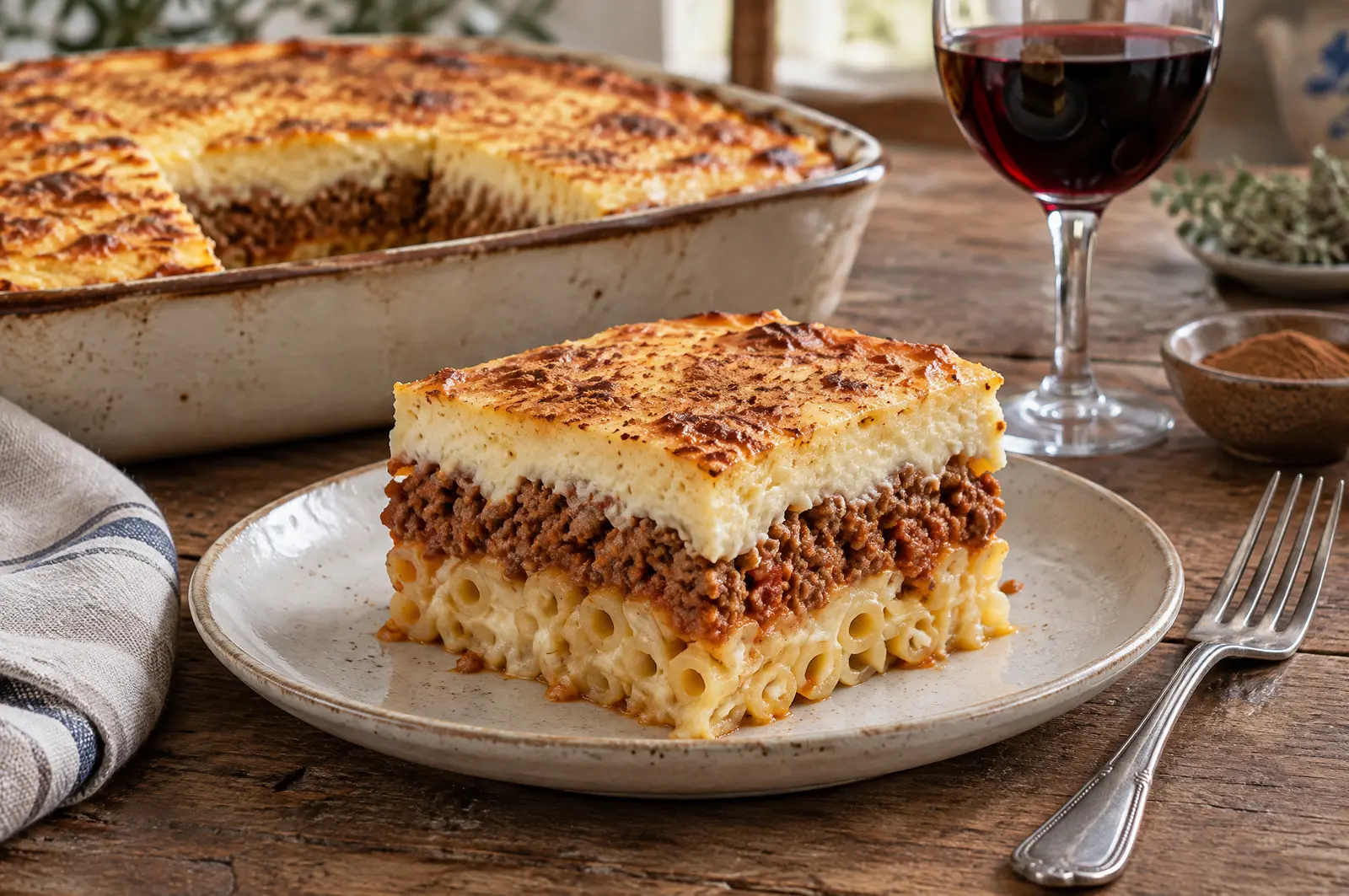
Food
Greek Food Guide: What to Eat
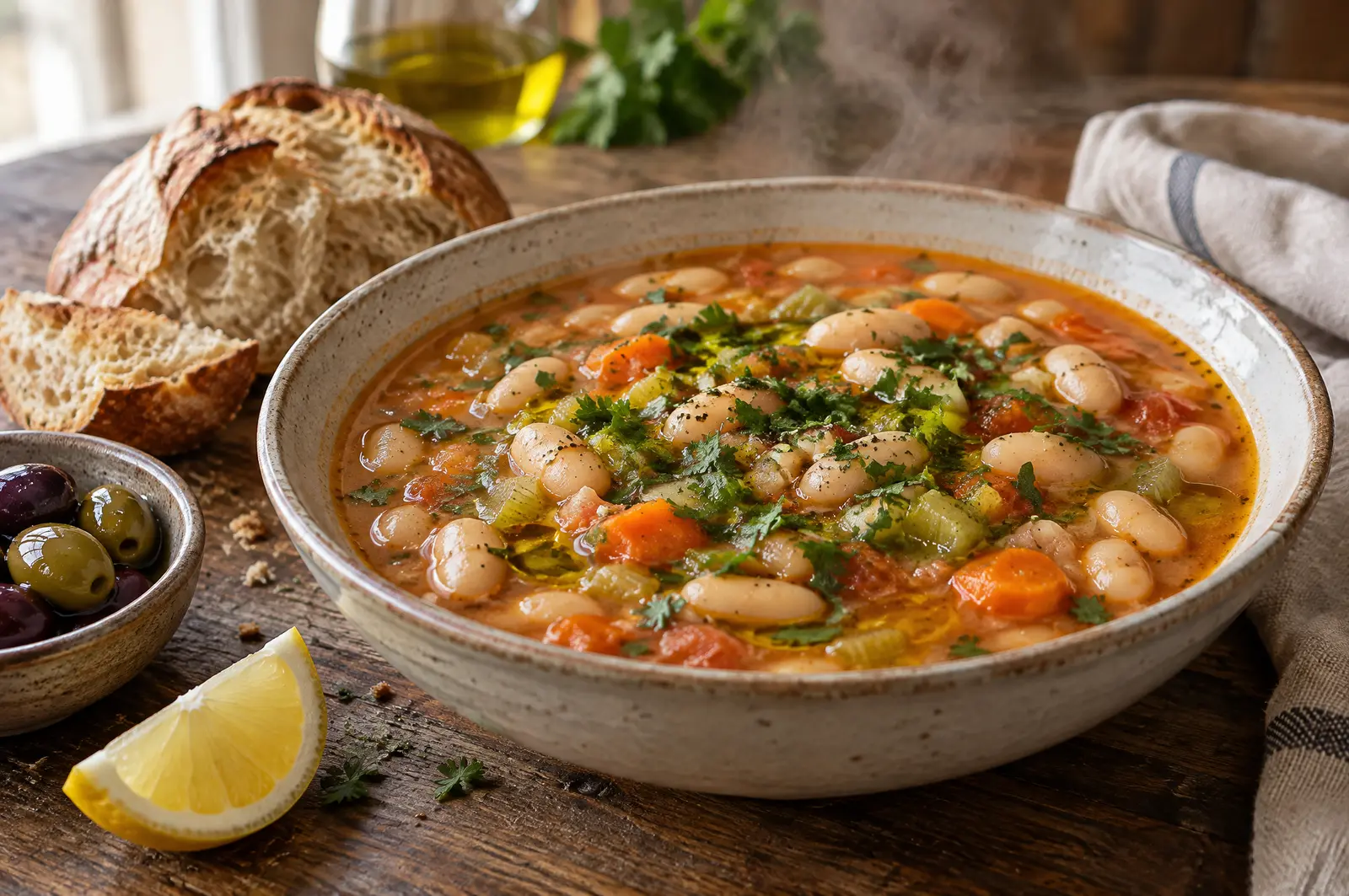
Recipes
All Greek Recipes