

Greek Food Sides & Sauces
Tzatziki: Thick, Creamy Greek Yoghurt Dip Recipe
Thick Greek yoghurt, squeezed cucumber, garlic and dill: the cool, garlicky dip that belongs on every Greek table.
Serves
6
Calories
150 kcal
Cuisine
Greek
On this page: What is it · History · What you need · Step by step · Serving & storage · Recipe card
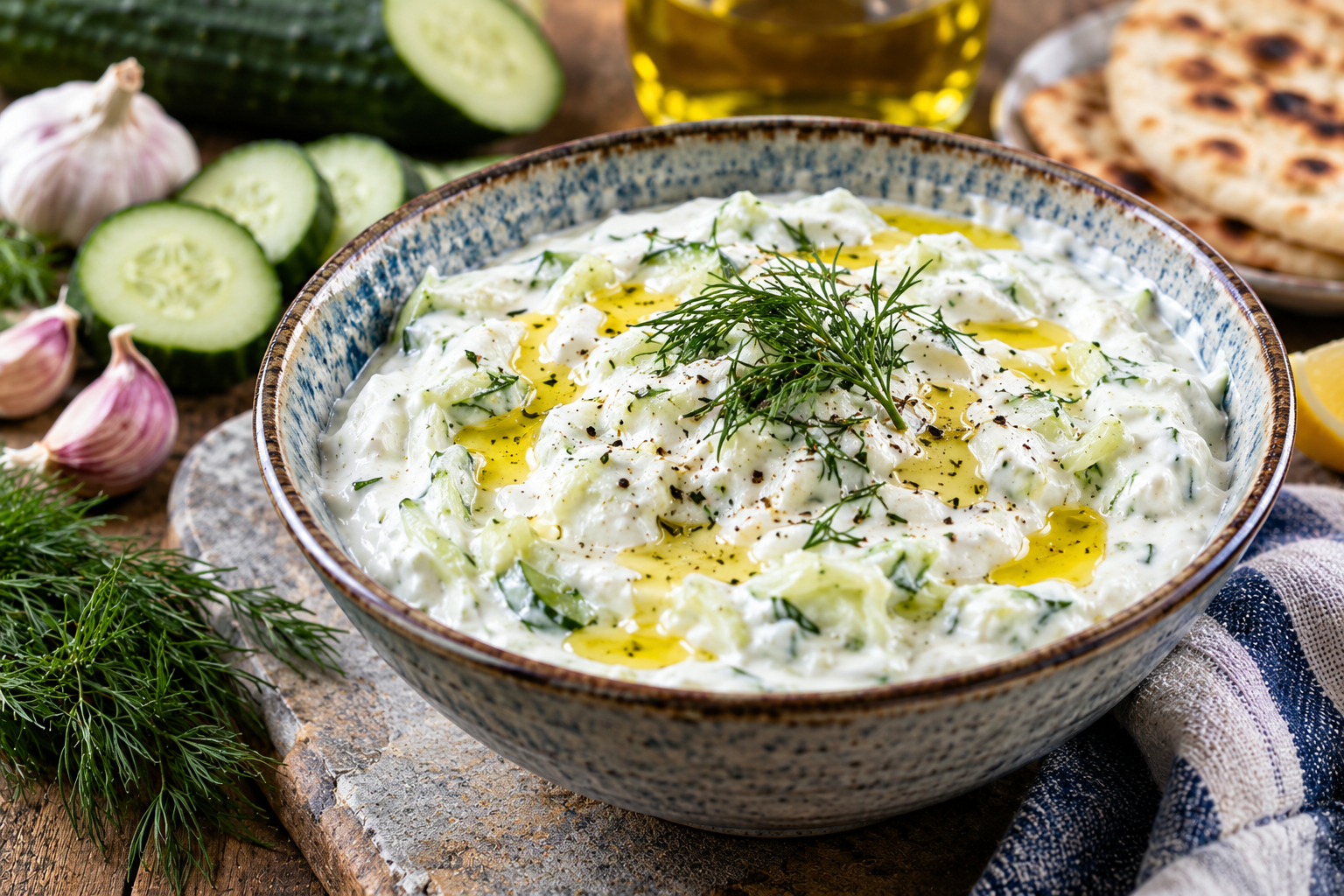
Tzatziki is the cool, garlicky yoghurt dip that turns up on almost every table in Greece, next to grilled meat, fish, fried vegetables and a basket of bread. It takes fifteen minutes, a handful of ingredients and one simple trick: get the water out of the cucumber.
We ate it every day in Greece, and when we got back to our own kitchen we kept making it every day. It is the first thing we put on the table for a Greek-style dinner, and the one dip that disappears before anything else.
Good tzatziki is thick enough to hold a spoon upright, fresh with cucumber, sharp with garlic and rounded off with good olive oil. This recipe gets you there.
What Is It?
Tzatziki (τζατζίκι) is a Greek dip and sauce made from strained yoghurt, grated cucumber, garlic, olive oil and a little vinegar or lemon, usually finished with dill or mint. It is served cold as part of a meze spread, spooned onto souvlaki and gyros, or eaten simply with bread.
The texture is what separates a good tzatziki from a disappointing one. Greek yoghurt is already strained, so it starts thick. Grated cucumber is full of water, and if you skip the salting and squeezing, that water leaks into the dip and thins it within an hour.
It is also one of the easiest ways into healthy Greek food: high in protein from the yoghurt, light, and full of flavour without any cooking.
A Little History
Yoghurt and cucumber dips are found across the eastern Mediterranean, the Balkans and the Middle East, from Turkish cacık to Persian mast-o-khiar. The Greek name comes from the Turkish word cacık, and the dish shares that common root.
In Greece, tzatziki became a taverna staple and a natural partner to grilled meat: souvlaki, gyros and keftedes are rarely served without it. Thick, strained yoghurt is what defines the Greek version and makes it richer and denser than many of its neighbours.
Every family has its own balance of garlic, and the debate between dill and mint is a regional one. Both are traditional.
At a glance
Serves
6
Calories
150 kcal
Protein
6 g
Course
Dip, Side
Why it works
01 Ready in 15 minutes, no cooking
02 Thick, never watery, thanks to one step
03 High-protein dip that keeps for 3 days
Cooking this later?
Save it to your Pinterest board so it’s there when you need it.
What You Need
Exact amounts are in the recipe card
For the Cucumber
- cucumber, about 300 g
- fine sea salt
For the Dip
- full-fat Greek yoghurt, strained, 10% fat
- garlic cloves, finely grated
- white wine vinegar, or lemon juice
- extra virgin olive oil, plus extra to serve
- fresh dill, finely chopped, or mint
- salt and black pepper, to taste
Step-by-Step Instructions
Tzatziki is mostly about preparation. Spend a few minutes on the cucumber and garlic, then everything comes together in one bowl.
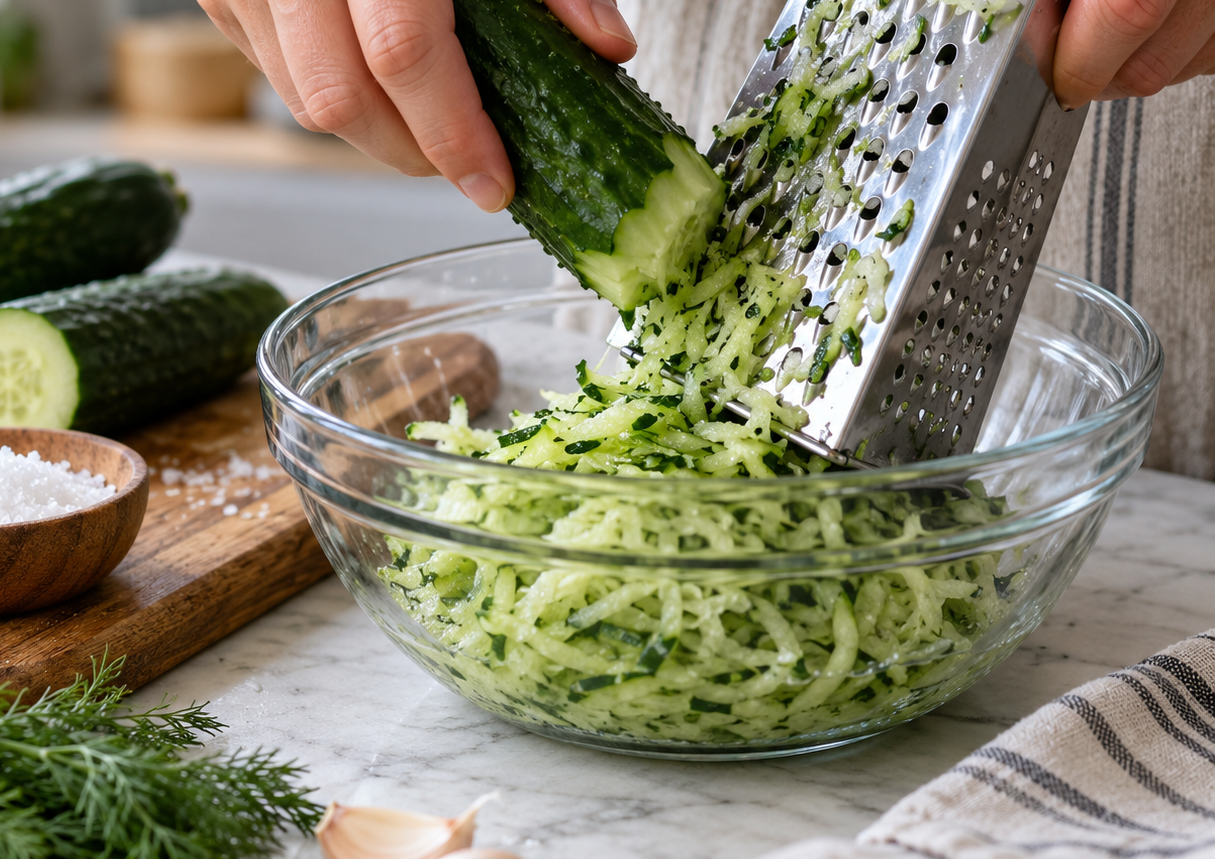
1. Grate and salt the cucumber
Grate the cucumber on the coarse side of a box grater, skin and all. Toss with the salt and leave it in a sieve for 10 minutes so it releases its water.
Tip: Leave the seeds in if your cucumber is small and firm. With a large, watery cucumber, scrape out the seeds with a teaspoon before grating.
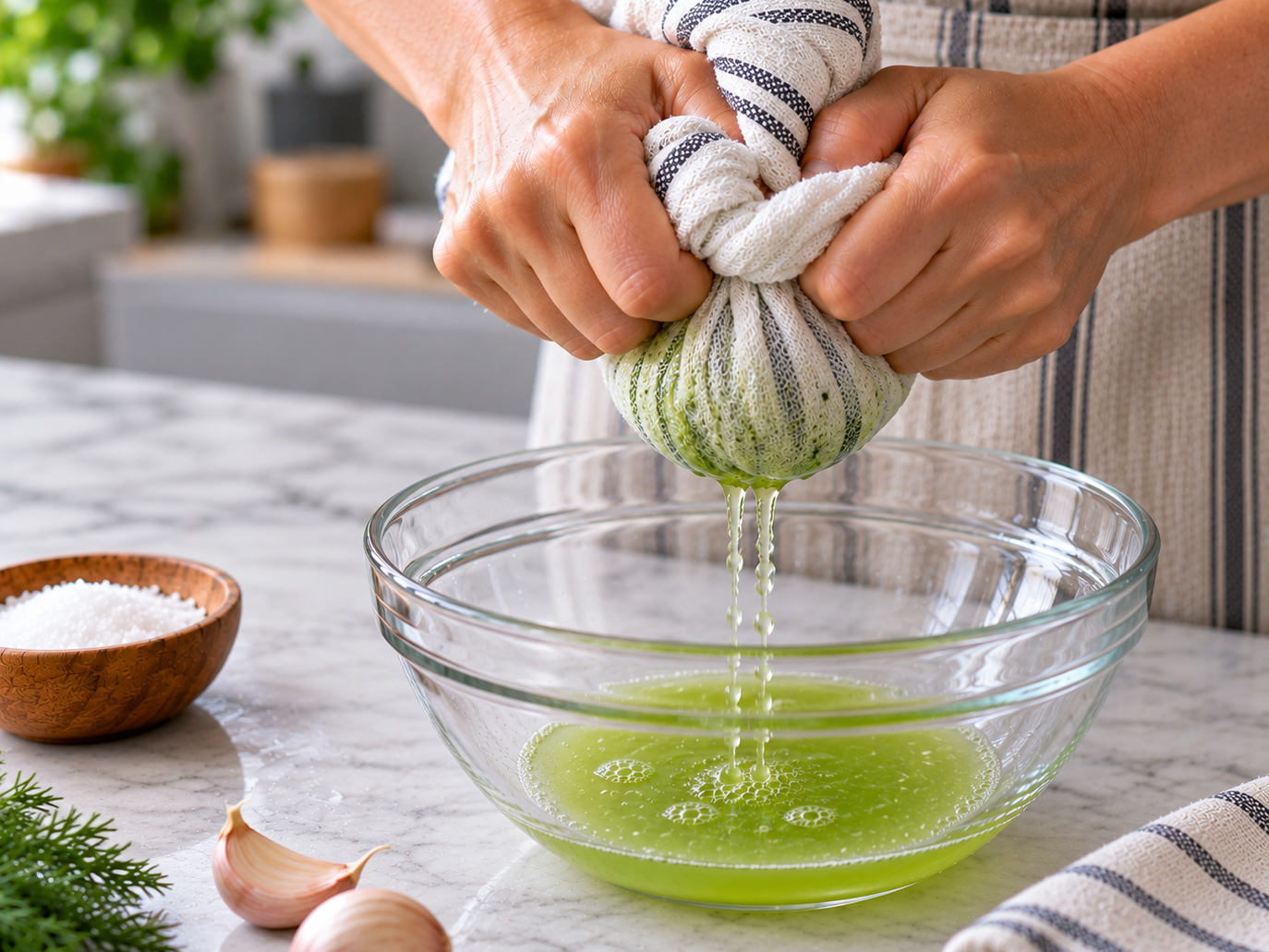
2. Squeeze out the water
Tip the cucumber into a clean tea towel, twist it tightly and squeeze out as much liquid as you can. You should end up with a compact ball of cucumber about half its original volume.
Tip: This is the step that keeps your tzatziki thick. Don’t skip it.
3. Mellow the garlic
Grate the garlic finely into a large bowl and stir in the vinegar. Let it sit for a few minutes while you prepare the rest.
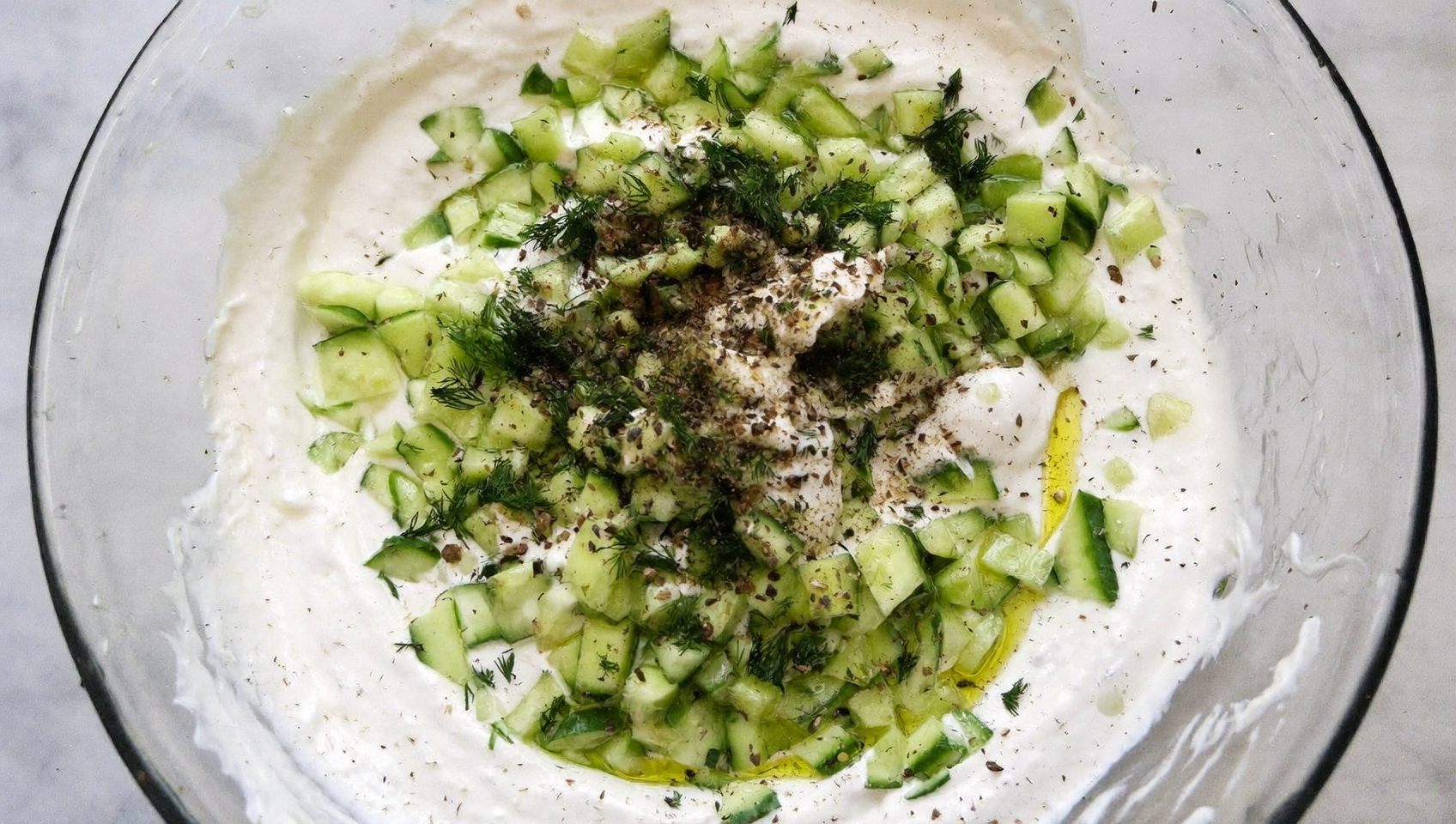
4. Mix the dip
Add the yoghurt, squeezed cucumber, olive oil and dill to the bowl. Stir until combined, then season with salt and black pepper to taste.
5. Chill and serve
Cover and chill for at least 30 minutes so the garlic and dill can settle into the yoghurt. Serve with a drizzle of olive oil and a few dill fronds on top.
Serving & Storage
Serving
Serve tzatziki cold with warm pita or crusty bread as part of a meze spread, or next to grilled meat and fish. It is the classic sauce for chicken souvlaki and gyros, and it works just as well with Greek lemon potatoes or fried courgettes.
For a simple lunch, spoon it over a bowl of grilled vegetables and chickpeas, or serve it with a Greek salad and good bread.
Storing Leftovers
Keep tzatziki in an airtight container in the fridge. A little liquid may collect on top; just stir it back in or pour it off.
| Tzatziki | up to 3 days |
| Squeezed cucumber | 1 day |
| Freezer | not recommended |
The garlic gets stronger the longer it sits, so day-two tzatziki is punchier than day one. Freezing changes the texture of the yoghurt.
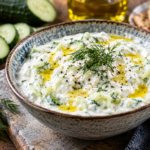
Tzatziki
Equipment
- Box grater
- Clean tea towel or fine sieve
- Spatula
Ingredients
Cucumber
- 1 cucumber about 300 g
- 1/2 tsp fine sea salt
Dip
- 500 g full-fat Greek yoghurt strained, 10% fat
- 2 garlic cloves finely grated
- 1 tbsp white wine vinegar or lemon juice
- 2 tbsp extra virgin olive oil plus extra to serve
- 2 tbsp fresh dill finely chopped, or mint
- salt and black pepper to taste
Instructions
- Grate the cucumber on the coarse side of a box grater, skin and all. Toss with the salt and leave it in a sieve for 10 minutes so it releases its water.
- Tip the cucumber into a clean tea towel, twist it tightly and squeeze out as much liquid as you can. You should end up with a compact ball of cucumber about half its original volume.
- Grate the garlic finely into a large bowl and stir in the vinegar. Let it sit for a few minutes while you prepare the rest.
- Add the yoghurt, squeezed cucumber, olive oil and dill to the bowl. Stir until combined, then season with salt and black pepper to taste.
- Cover and chill for at least 30 minutes so the garlic and dill can settle into the yoghurt. Serve with a drizzle of olive oil and a few dill fronds on top.
Made this tzatziki?
Rate it with the stars in the recipe card and tell us how it went in the comments: how much garlic you used, dill or mint, and what you served it with.
Products we use
Our kitchen kit for this recipe
More to cook
More Greek recipes from our kitchen
Greece
Chicken Souvlaki
Greece
Greek Pork Gyros
Greece
Greek Lemon Potatoes