

Food guide Greece
Greek Food Guide: What to Eat in Greece
Sizzling saganaki, tomatoes as sweet as sugar and tzatziki every day: the Greek food we loved, from the Ionian islands to Crete, Kalamata and Athens.
Must eat
Saganaki
Every day
Tzatziki
Always ordered
Greek salad
From the grill
Sardines
On this page: First flavours · Healthy Greek food · Regional kitchens · Classic dishes · Recipes
Greek food is the Mediterranean diet in its most natural form, and it is not complicated, which is the point. A few things done properly: tomatoes picked ripe, olive oil poured generously, feta cut in a thick slab, fish grilled with nothing more than salt and lemon. Travelling through the Ionian islands, Crete, Kalamata and Athens, we ate the same handful of dishes again and again, and never got tired of them.
This guide covers the flavours that won us over first, why healthy Greek food is simply everyday Greek food, how the cooking changes from region to region, and the classic dishes we kept coming back to. Every one of them has a recipe so you can cook it at home. For the tavernas and the meals behind these dishes, see where we ate best in Greece.
Cooking Greek at home?
Pin this guide so the dishes are ready when you cook.
The Flavours We Met First
Greek Salad: Tomatoes as Sweet as Sugar
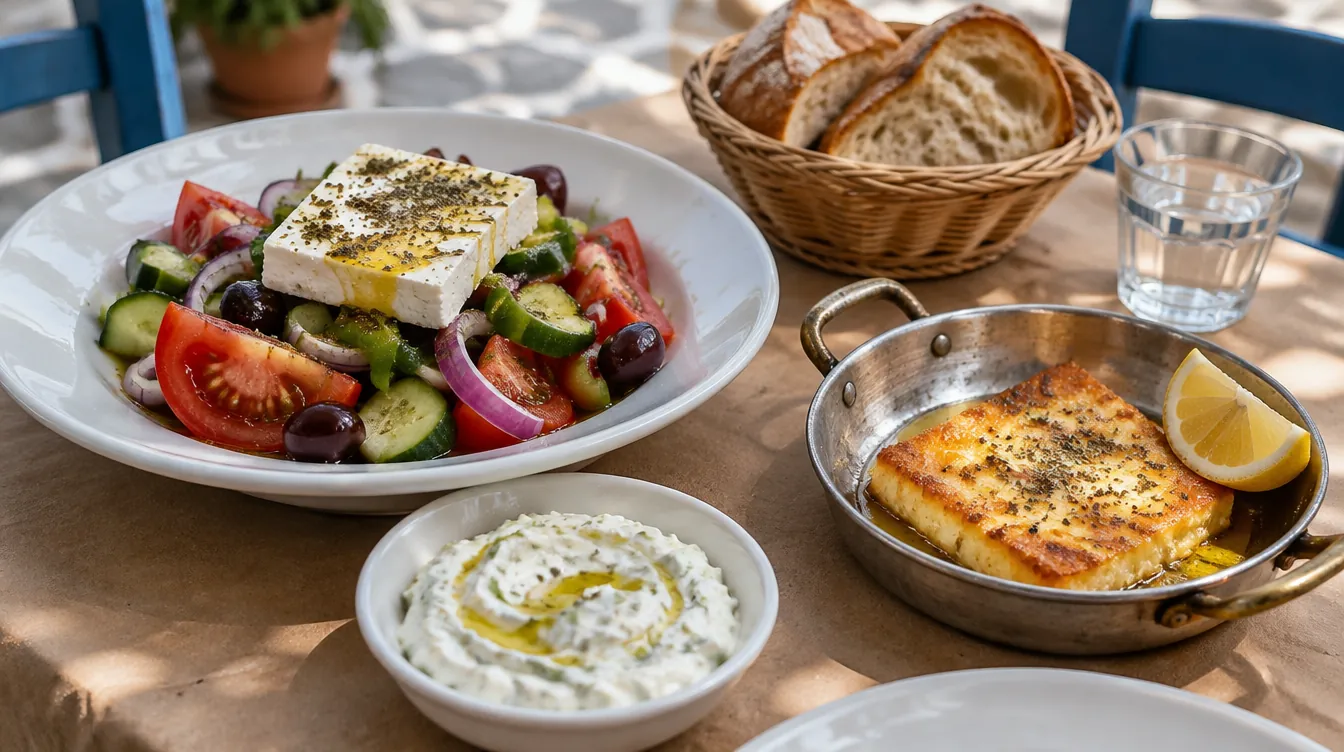
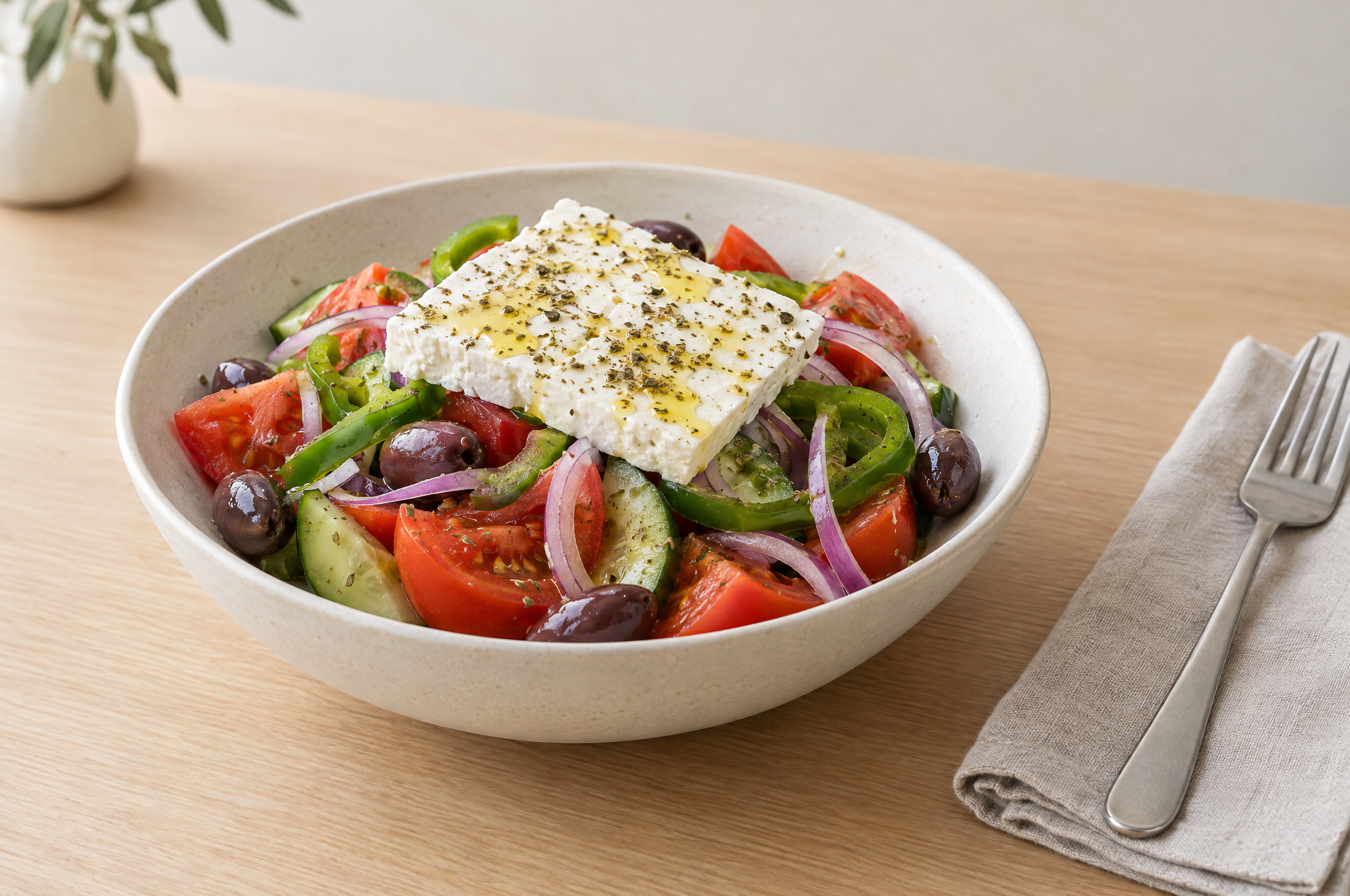
If one dish sums up Greece for us, it’s the Greek salad. The real one, horiatiki, has no lettuce: just tomato, cucumber, red onion, green pepper, olives and a thick slab of feta, finished with dried oregano and plenty of olive oil.
What made it unforgettable were the tomatoes. Sun-ripened, deep red and as sweet as sugar, they turned a simple salad into the best thing on the table. We ordered one with almost every meal, and the best part was always mopping up the oil and tomato juice at the bottom of the bowl with bread.
Saganaki: Our Must Eat
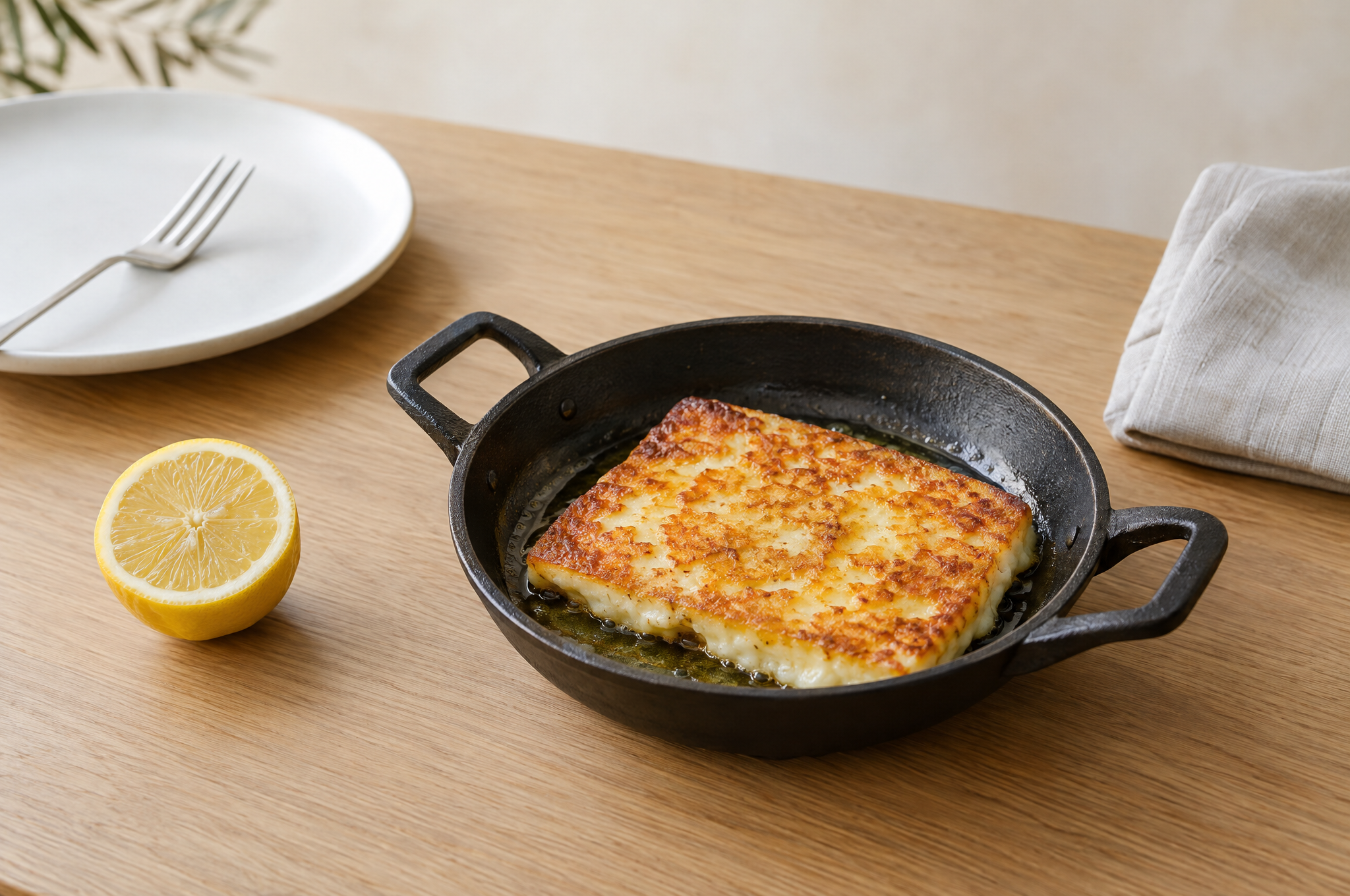
Saganaki is named after the small two-handled pan it’s cooked in. A thick slice of firm cheese, such as kefalograviera or kasseri, is dusted in flour and fried until golden and crisp outside and soft inside, then served straight from the pan with a squeeze of lemon.
It arrives sizzling, it disappears in minutes, and it was the one dish we ordered every chance we got. If you only try one thing in a Greek taverna, make it this.
Tzatziki: Every Single Day
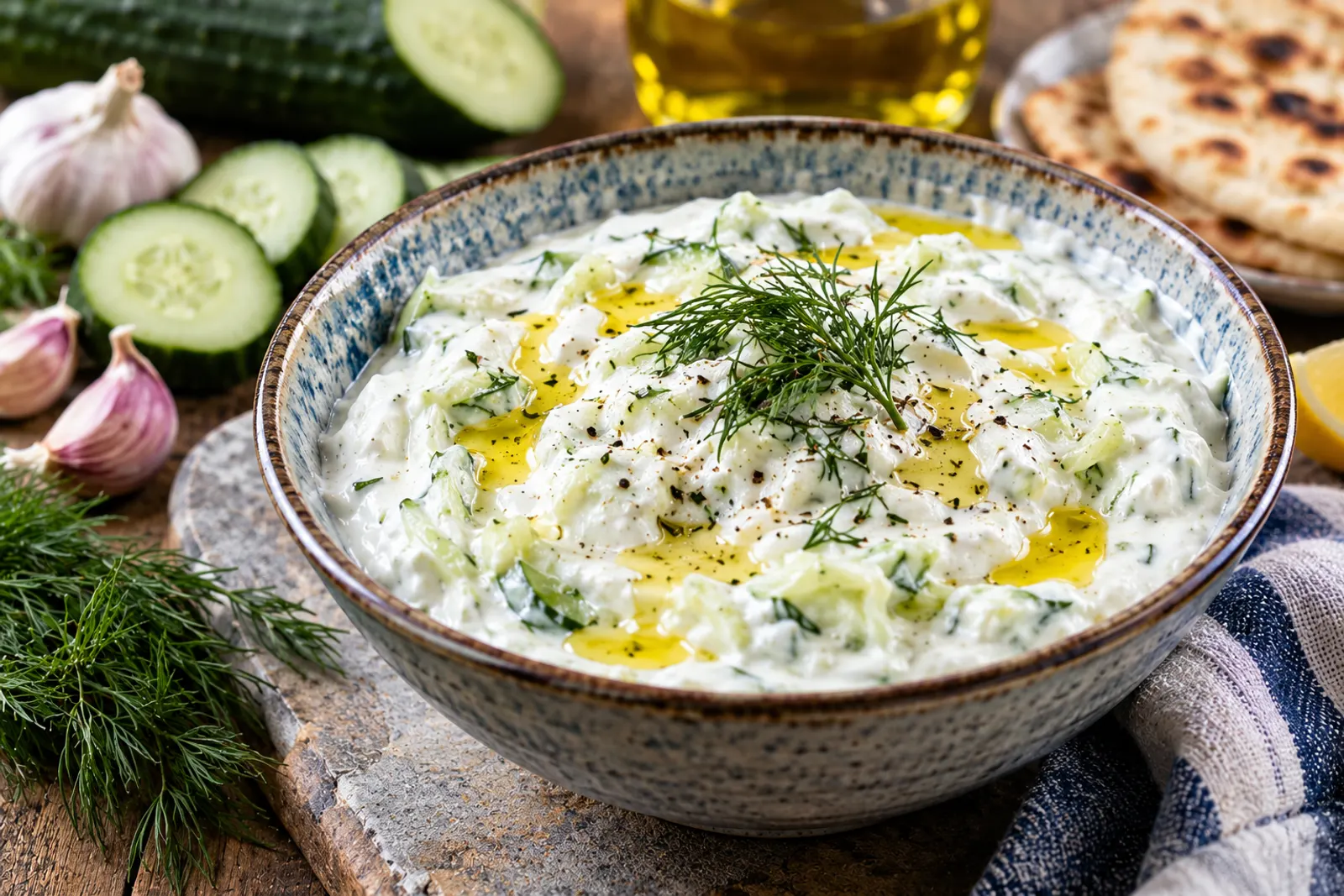
Thick strained yoghurt, grated cucumber, garlic, olive oil and a little dill or mint. Tzatziki is on every taverna table, next to grilled meat, fish, bread and fried vegetables.
We loved it so much that we made it ourselves every day. The secret is squeezing the water out of the cucumber so it stays thick and creamy, never watery.
Olive Oil & Olives
Greek cooking starts and ends with olive oil. It’s poured over salads, used for frying, drizzled over beans and baked into pies. Around Kalamata the olive groves run all the way to the mountains, and the dark, almond-shaped Kalamata olive is one of Greece’s best-known products.
On Crete, olive oil is a point of pride, and you taste the difference in everything from the salads to the rusks.
Healthy Greek Food: The Mediterranean Diet at Home
Traditional Greek food is one of the foundations of the Mediterranean diet. Meals lean on vegetables, beans and lentils, olive oil, fish, herbs, lemon and Greek yoghurt, with meat and sweets in smaller amounts. Nobody in Greece calls it health food. It is just lunch.
Greek Yoghurt
Real Greek yoghurt is strained until it is thick enough to hold a spoon, which gives it more protein and a richer texture than regular yoghurt. It is the base of tzatziki, eaten for breakfast with honey and walnuts, and spooned next to grilled meat and vegetables.
Fish, Herbs & Lemon
Small fish like sardines and anchovies are grilled simply and finished with lemon and olive oil. Oregano, dill, mint and wild greens add flavour without heavy sauces, which keeps everyday Greek food light.
Ladera & Pulses
Ladera are vegetables slow-cooked in olive oil and tomato, such as green beans or okra. Add bean soups, lentils and giant baked beans, and you have the everyday, healthy side of Greek cooking.
Regional Kitchens: One Country, Four Tables
Greek food changes as you move around the country. The basics stay the same, but every region adds its own ingredients and dishes.
Crete
Crete has one of the strongest food identities in Greece. Look for dakos (a barley rusk topped with grated tomato, soft cheese and olive oil), wild greens called horta, snails, mountain herbs and tsikoudia, the local spirit often served after a meal.
Kalamata & Messinia
Olive country. Besides the famous olives and oil, the Peloponnese is known for its figs, honey and pork dishes, and Kalamata’s market is a good place to see what the region grows.
The Ionian Islands
Centuries of Venetian rule shaped the cooking here. On Corfu you’ll find pastitsada (meat slow-cooked in a spiced tomato sauce), sofrito (veal in garlic and wine) and bourdeto (spicy fish stew).
Athens
Athens eats on the go and late at night. Souvlaki and gyros wrapped in pita, sesame-crusted koulouri bread rings for breakfast, and the Varvakios central market, where butchers and fishmongers work side by side.
The Dishes We Kept Coming Back To
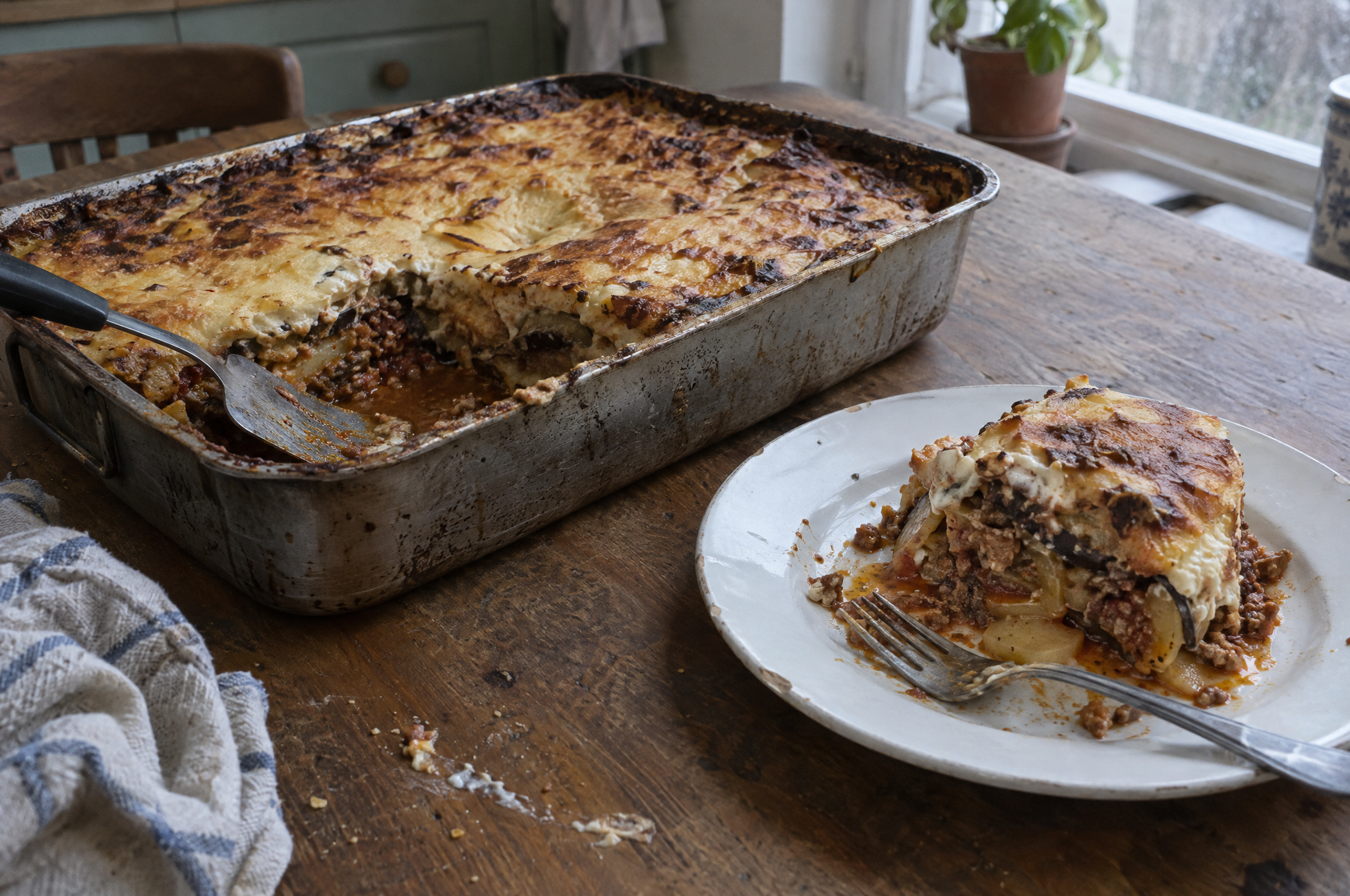
Moussaka: The Comfort Bake
Layers of fried aubergine and potato, a meat sauce warmed with cinnamon, and a thick béchamel baked until golden. Moussaka is a dish for long lunches, and it tastes even better the next day.
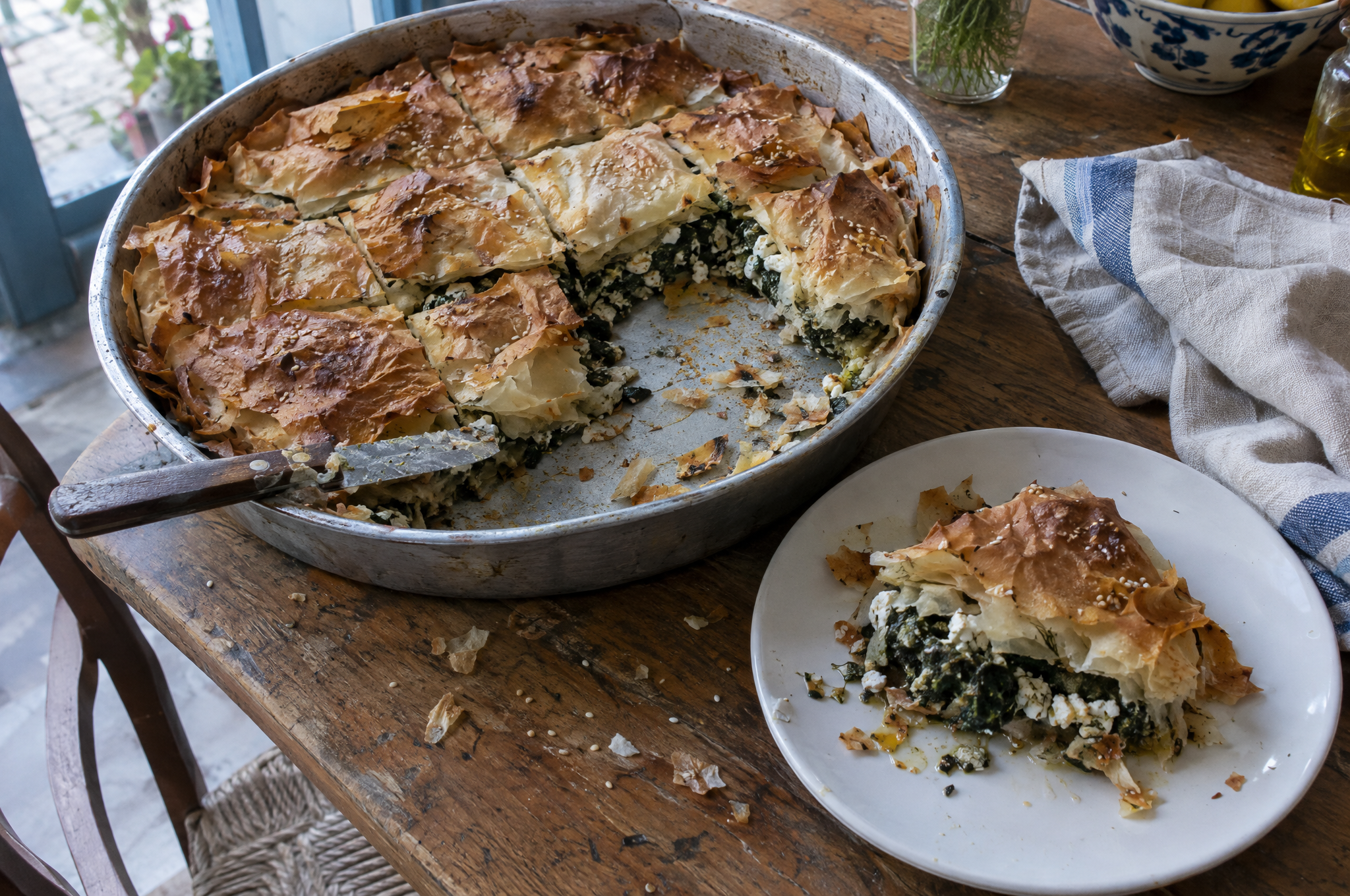
Spanakopita: Greece in a Pie
Spinach, feta, spring onion and dill wrapped in crisp layers of filo. Bakeries sell it by the slice all over Greece, and it was our go-to for a quick lunch on the move.
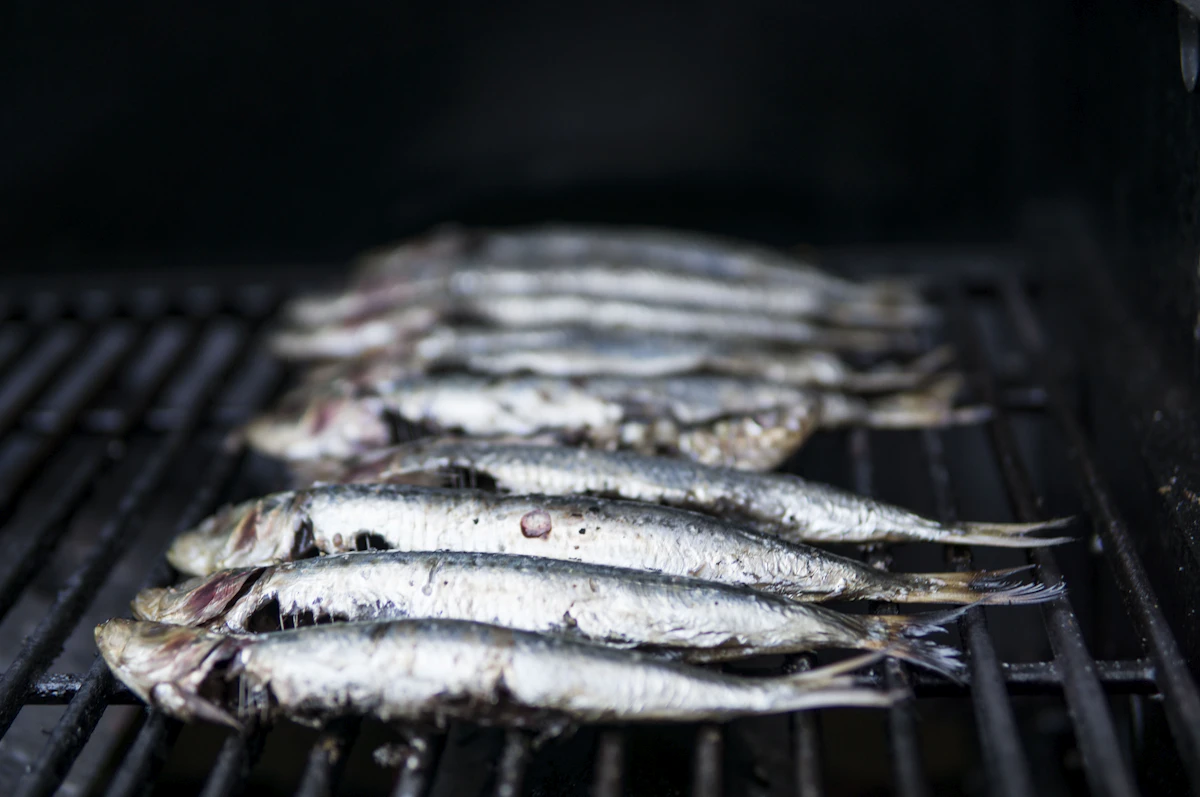
Sardines from the Grill
Fresh sardines, salted and grilled until the skin blisters, then finished with lemon and olive oil. Simple, cheap and exactly what you want to eat by the sea.
Meze: A Table Full of Small Plates
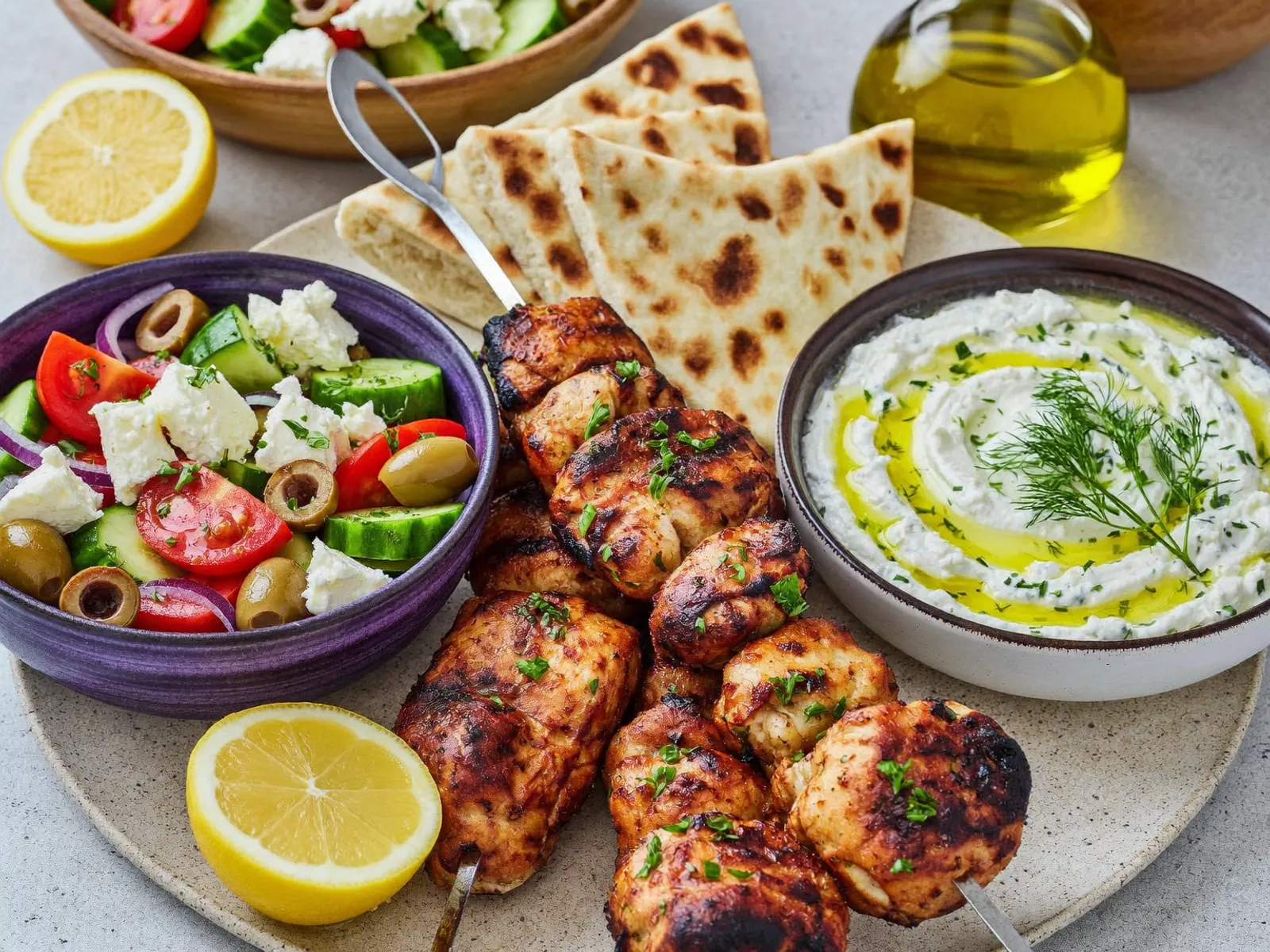
Greeks rarely order one dish each. A table fills with small plates to share: tzatziki, saganaki, salad, grilled fish, fried vegetables and bread. That’s how we ate most of the time, and it’s the best way to try a bit of everything.
Cook it at home
Greek Recipes to Try
These are the dishes from this guide, written to work in a real home kitchen. Start with tzatziki and a Greek salad, and you have the beginning of a Greek table.
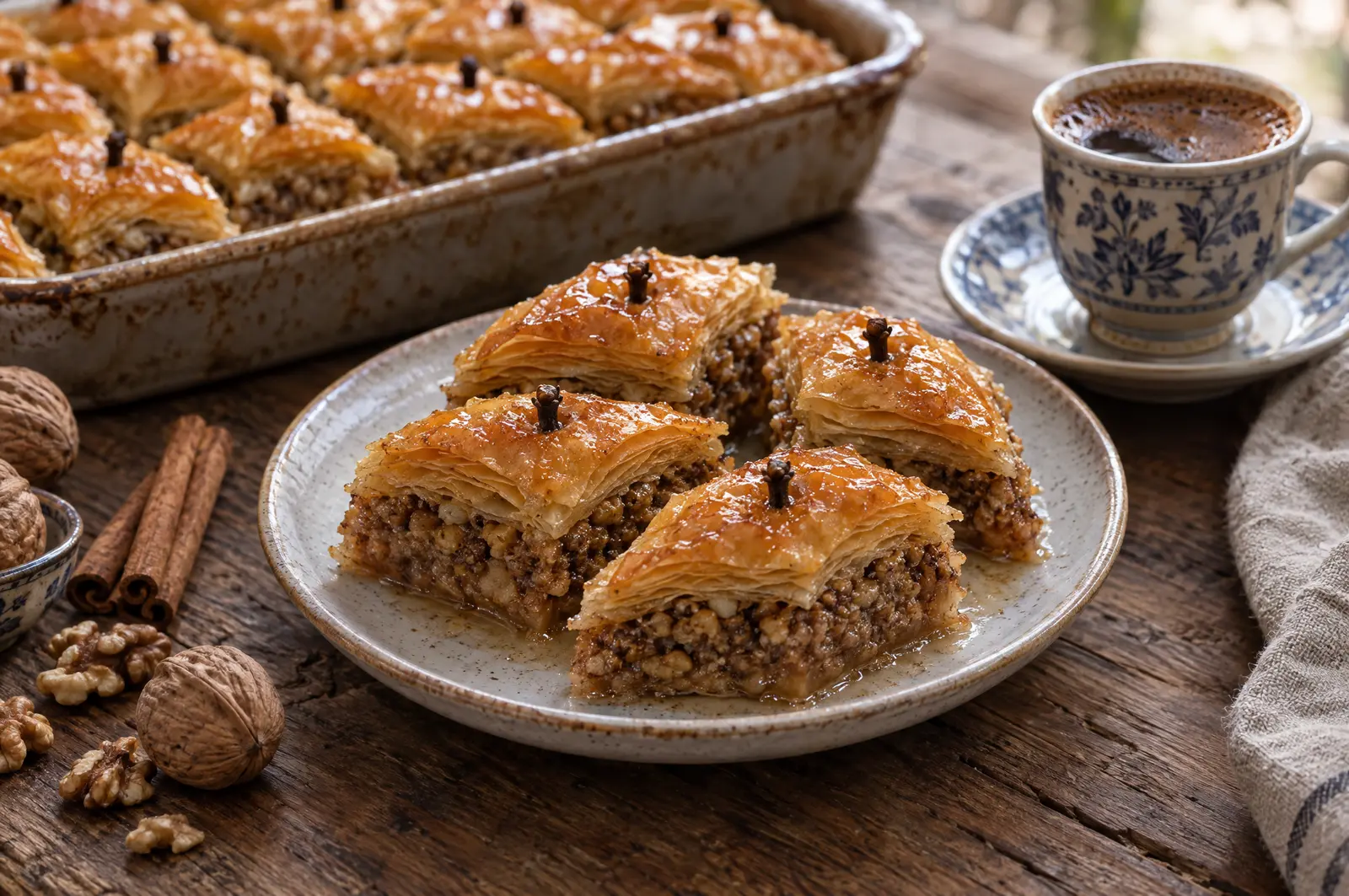
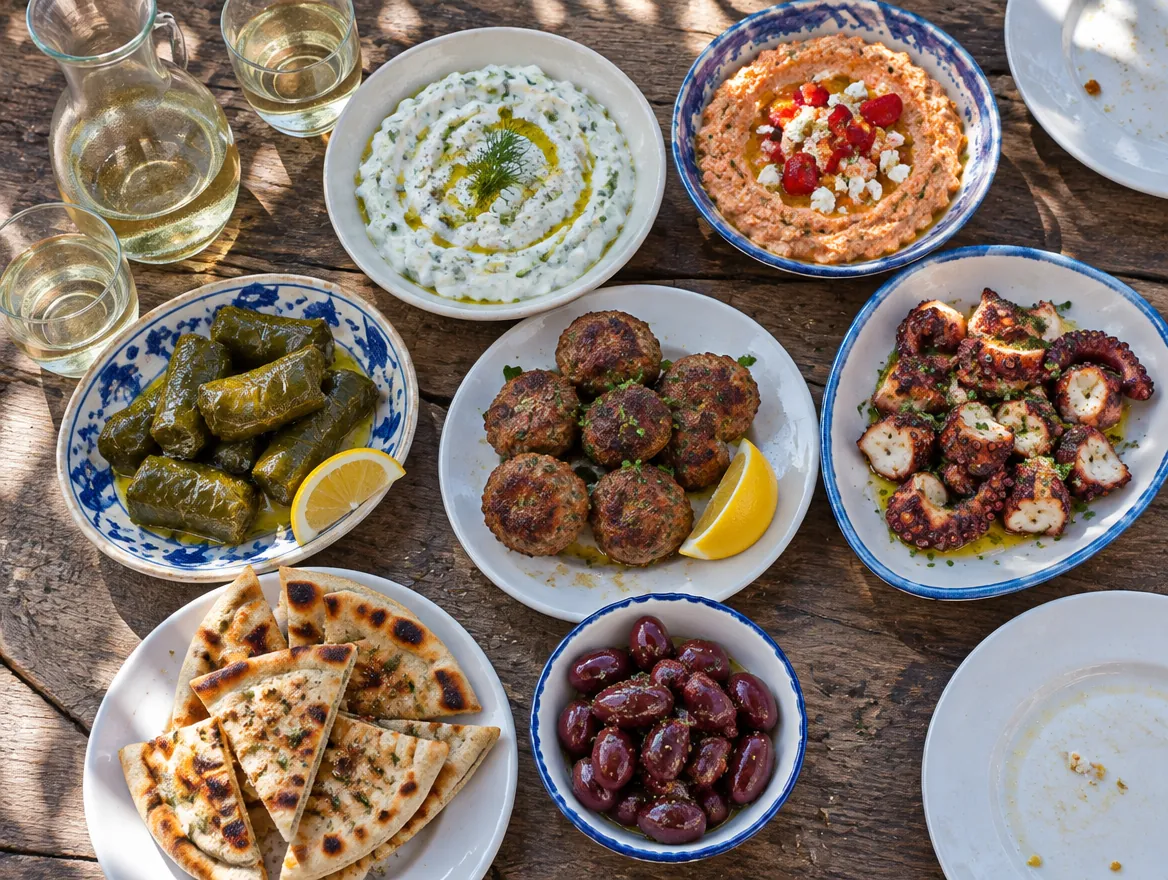
A Table Built for Sharing
What stayed with us most about Greek food was how it’s eaten. Nobody orders a plate just for themselves. The table fills up, everyone reaches across it, and the meal lasts as long as the conversation does.
That’s the easiest part of Greece to bring home. Make a bowl of tzatziki, slice some really ripe tomatoes, fry a slab of cheese and put it all in the middle of the table.
More from Greece
Food and travel guides from the places we’ve lived and travelled
Destination guide
Greece Travel & Food Guide

Destination guide
Malta Travel & Food Guide

Destination guide
Tunisia Travel & Food Guide