

Greek Food Mains
Classic Greek Moussaka Recipe with Béchamel
Layers of aubergine and potato, a cinnamon-warmed meat sauce and a thick, golden béchamel. Greece’s great comfort bake.
Serves
8
Calories
560 kcal
Cuisine
Greek
On this page: What is it · History · What you need · Step by step · Serving & storage · Recipe card
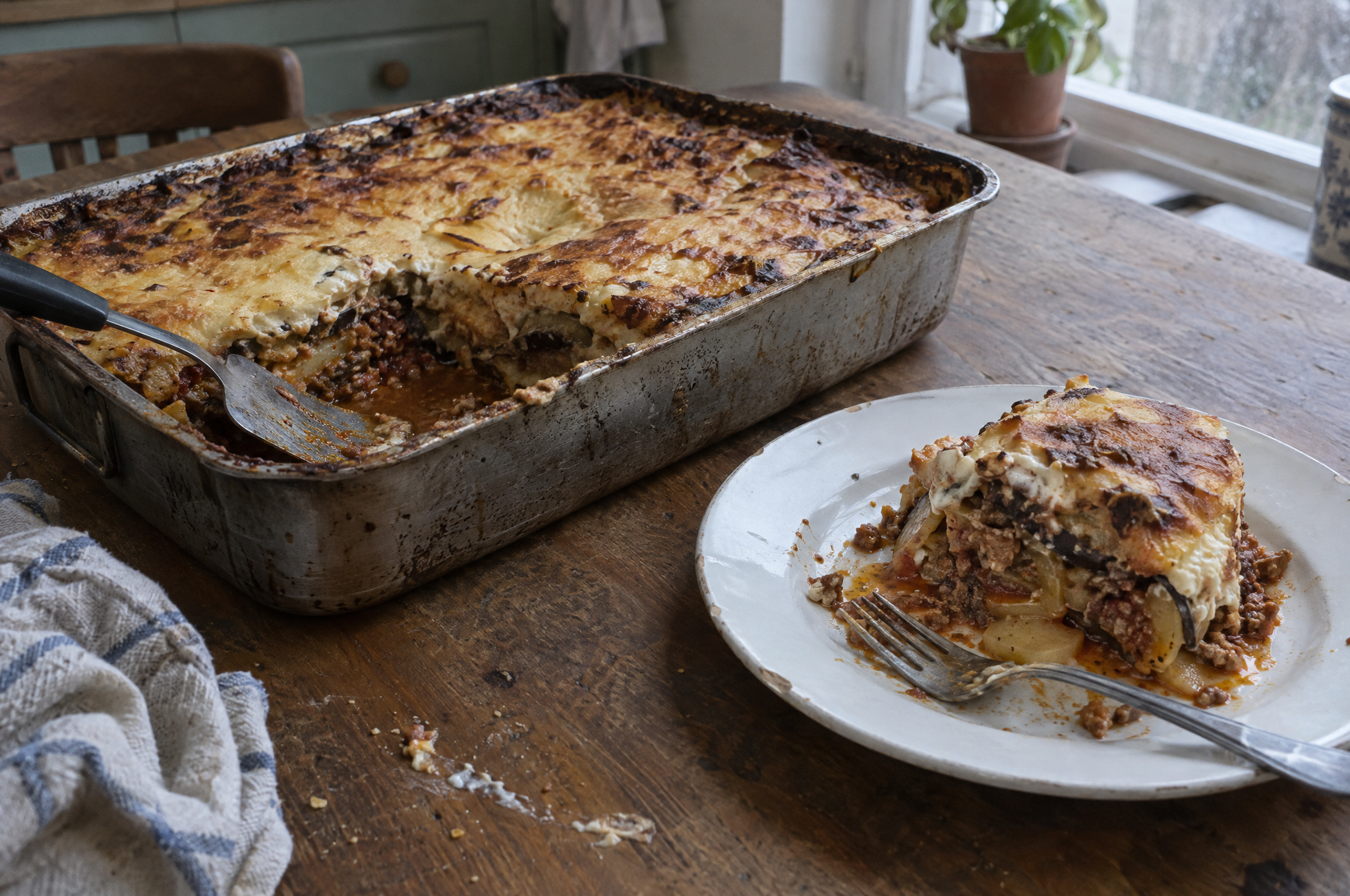
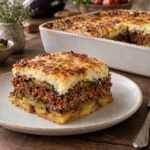
Moussaka is the dish we kept ordering in Greece: a deep tray of soft aubergine, potato and a meat sauce warmed with cinnamon, topped with a thick layer of golden béchamel. It is rich, generous and made for long lunches.
It is also a project, but not a difficult one. Each layer is simple, and most of the work can be done ahead. This version roasts the aubergine instead of frying it, which is lighter and far less work, without losing that silky texture.
Make it the day before if you can. Like most Greek oven dishes, it tastes even better the next day.
What Is Moussaka?
Greek moussaka (μουσακάς) is a layered oven bake of aubergine, often potato, and minced meat in a tomato sauce spiced with cinnamon and allspice, finished with a thick béchamel and baked until golden.
It belongs to the family of Greek ladera and magirefta, the slow-cooked, oven-baked dishes that tavernas prepare in the morning and serve through the day. In Greece it is usually eaten warm rather than piping hot, after resting long enough to slice into neat squares.
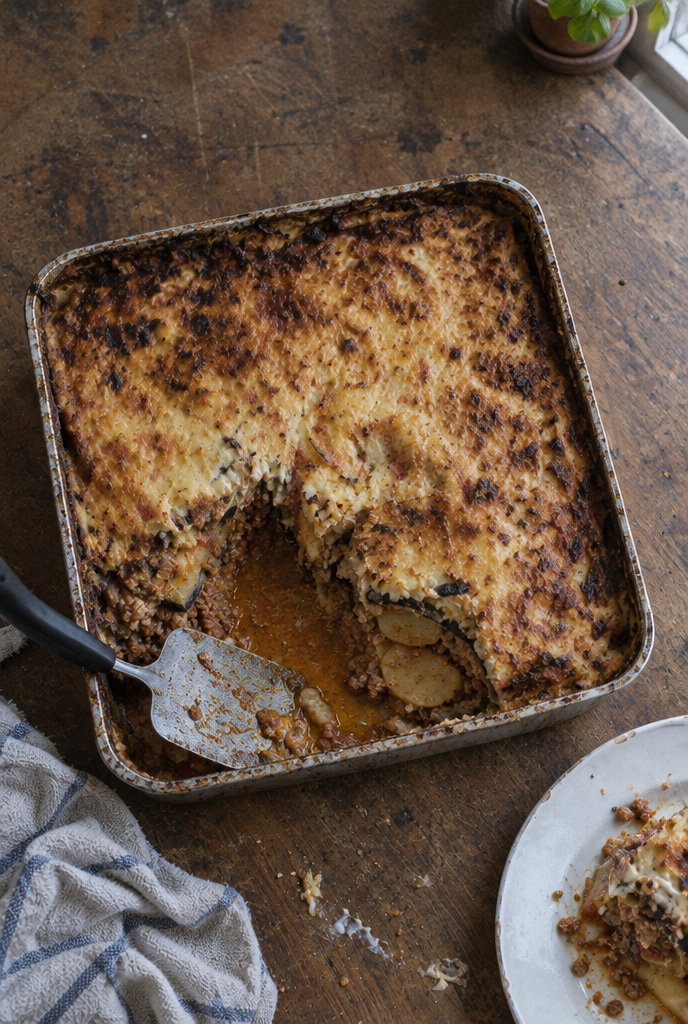
Beef, lamb or a mix of the two all work. The béchamel should be thick enough to sit on top like a custard rather than sink into the layers.
A Little History
Dishes of layered aubergine and meat exist across the Balkans and the Middle East, and the name moussaka is related to the Arabic word musaqqa‘a.
The Greek version as most people know it today was shaped in the 1920s by Nikolaos Tselementes, an influential Greek chef trained in Europe. He added the French-style béchamel topping, which turned moussaka into the layered bake now found in every Greek taverna.
Today it is one of the best-known Greek dishes in the world and a fixture of Sunday lunches and family gatherings in Greece.
At a glance
Serves
8
Calories
560 kcal
Protein
28 g
Course
Main
Why it works
01 Roasted aubergine: lighter than frying
02 Thick béchamel that sets in clean layers
03 Make ahead and freeze in portions
Cooking this later?
Save it to your Pinterest board so it’s there when you need it.
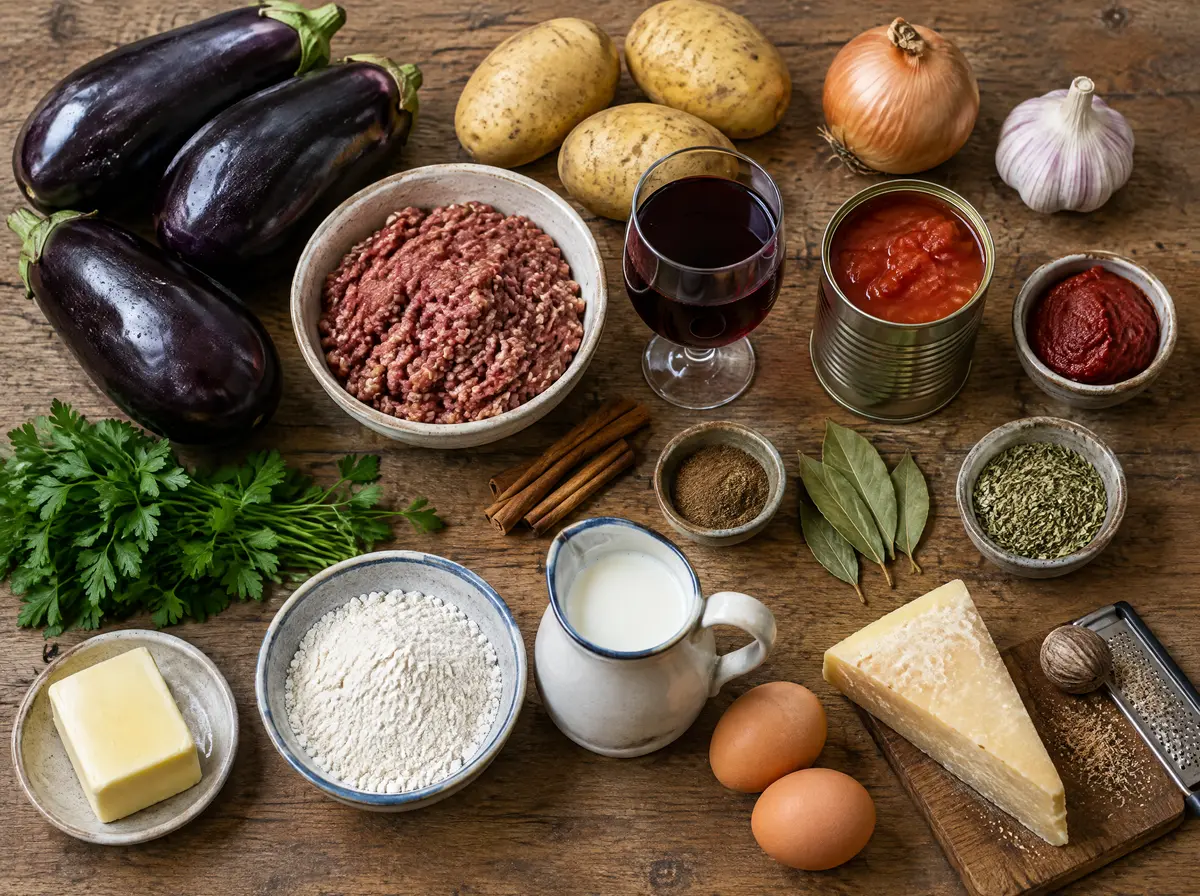
What You Need
Exact amounts are in the recipe card
For the Vegetables
- large aubergines, about 1.2 kg
- medium potatoes, about 600 g
- olive oil
- salt
For the Meat Sauce
- olive oil
- onion, finely chopped
- garlic cloves, finely chopped
- minced beef, or half beef, half lamb
- red wine
- chopped tomatoes, 1 tin
- tomato paste
- cinnamon stick, or 1/2 tsp ground cinnamon
- ground allspice
- bay leaf
- dried oregano
- salt and black pepper, to taste
- fresh parsley, chopped
For the Béchamel
- butter
- plain flour
- whole milk, warmed
- egg yolks
- kefalotyri or parmesan, grated
- nutmeg, freshly grated
- salt
Step-by-Step Instructions
Moussaka is built in layers, so work in stages: roast the vegetables while the meat sauce simmers, make the béchamel last, then assemble and bake.
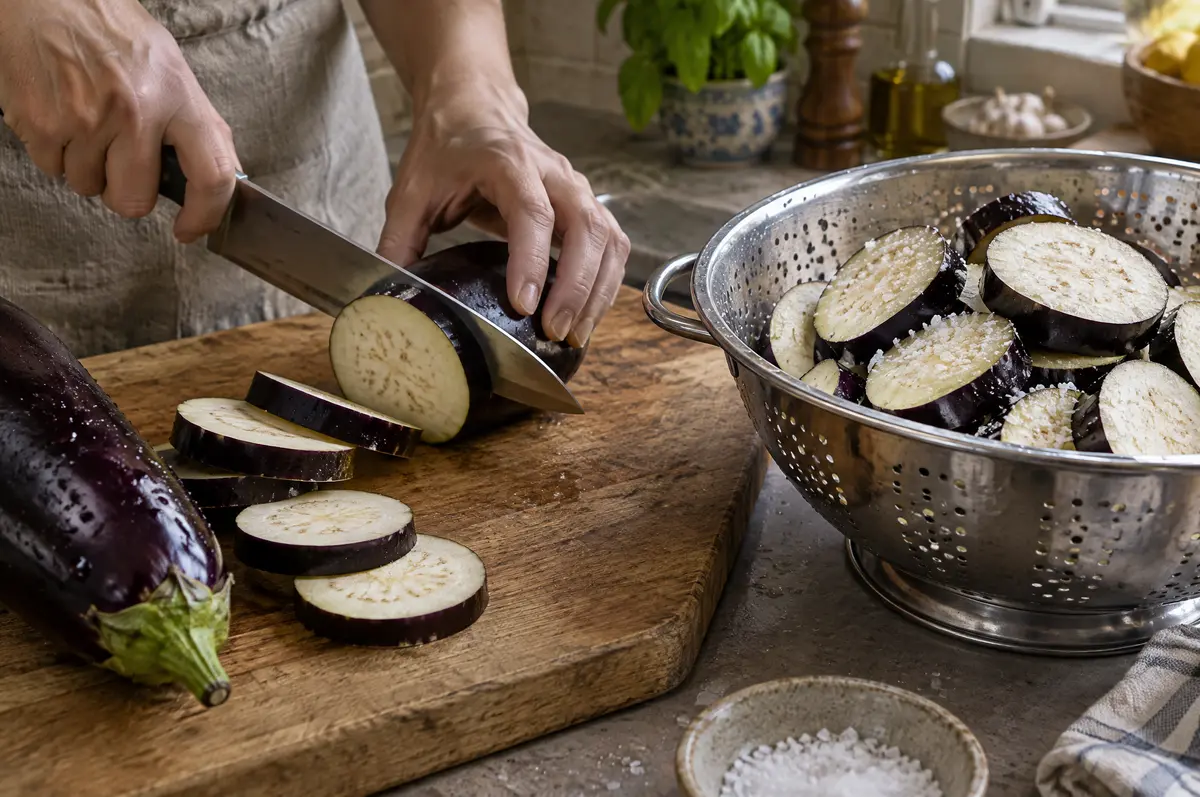
1. Prepare the aubergines
Slice the aubergines into 1 cm rounds, sprinkle with salt and leave in a colander for 30 minutes. Pat dry with kitchen paper.
Tip: Salting draws out moisture so the aubergine roasts silky rather than spongy.
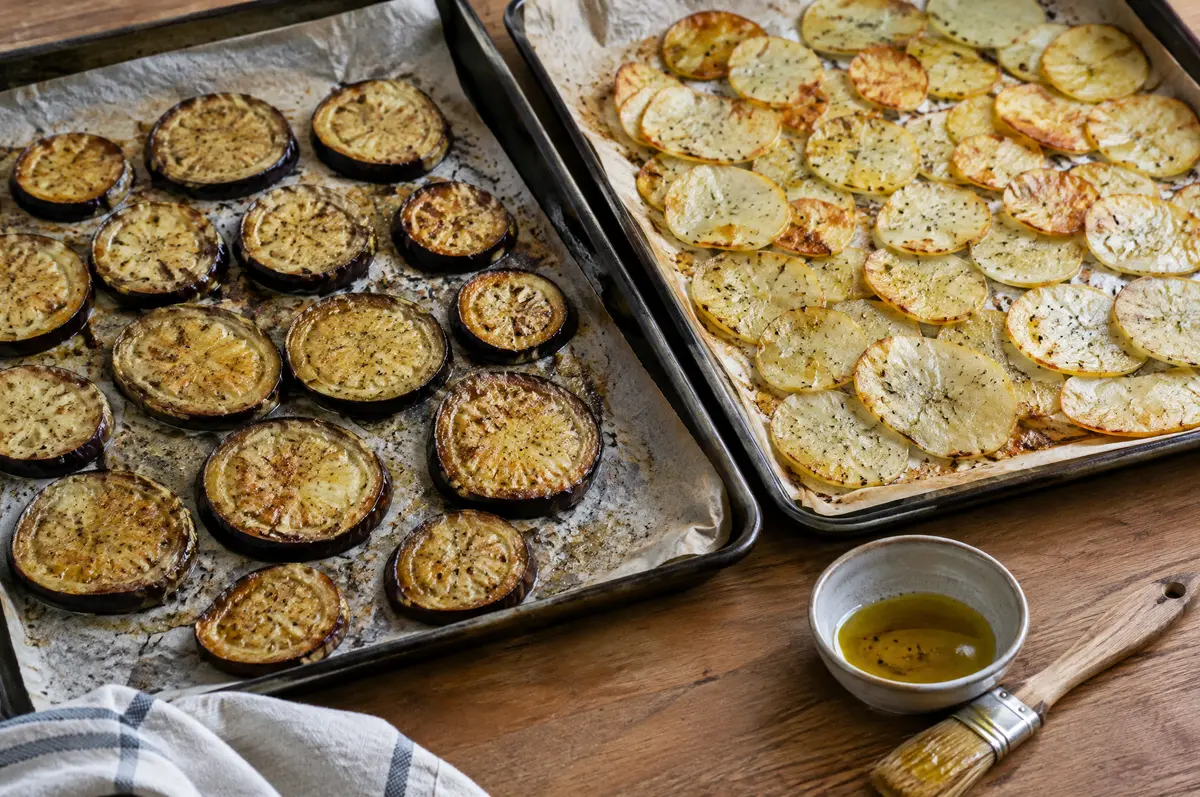
2. Roast the vegetables
Heat the oven to 200 °C (180 °C fan). Peel the potatoes and slice them 5 mm thick. Spread the aubergine and potato on lined baking trays, brush both sides with olive oil and roast for 20 to 25 minutes until soft and lightly golden.
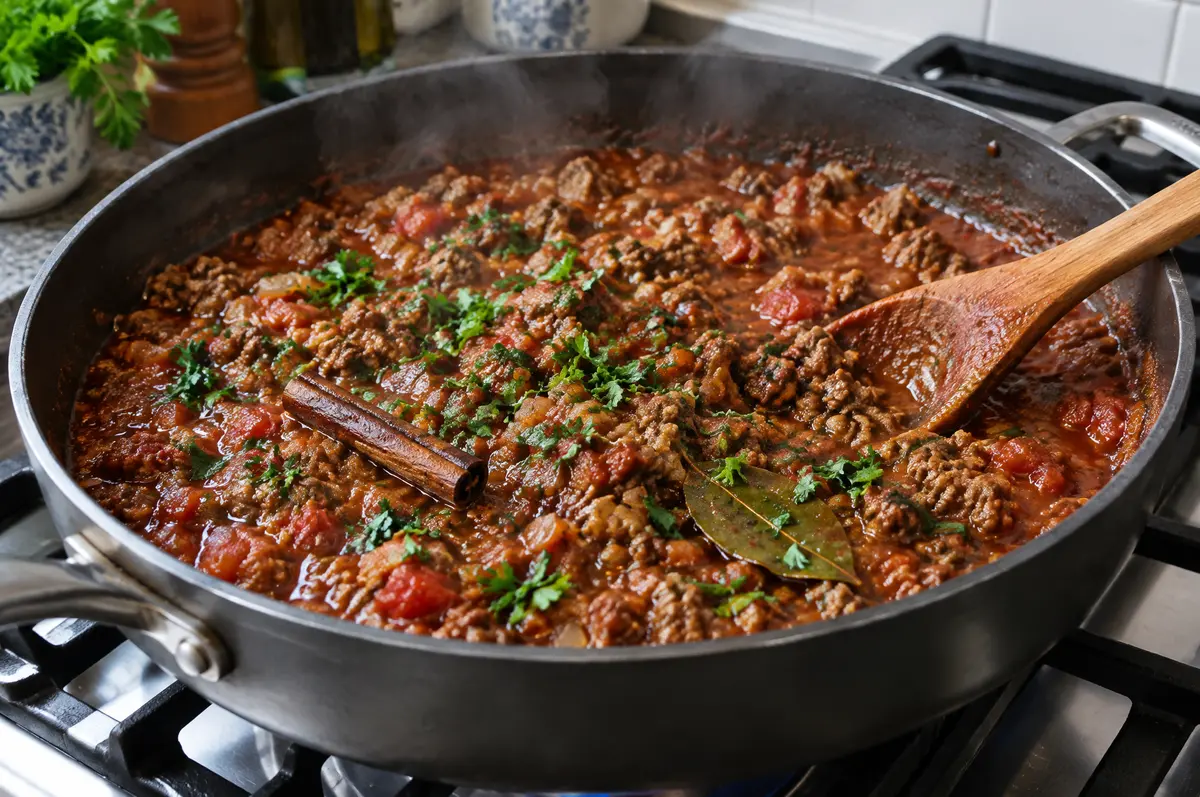
3. Make the meat sauce
Heat the olive oil in a large pan and soften the onion for 5 minutes. Add the garlic and minced meat and brown well. Pour in the wine and let it bubble for 2 minutes, then add the tomatoes, tomato paste, cinnamon, allspice, bay leaf and oregano. Simmer gently for 30 to 40 minutes until thick, season, remove the cinnamon stick and bay leaf, and stir in the parsley.
Tip: The sauce should be thick, not wet. If it is watery, the moussaka won’t hold its layers.
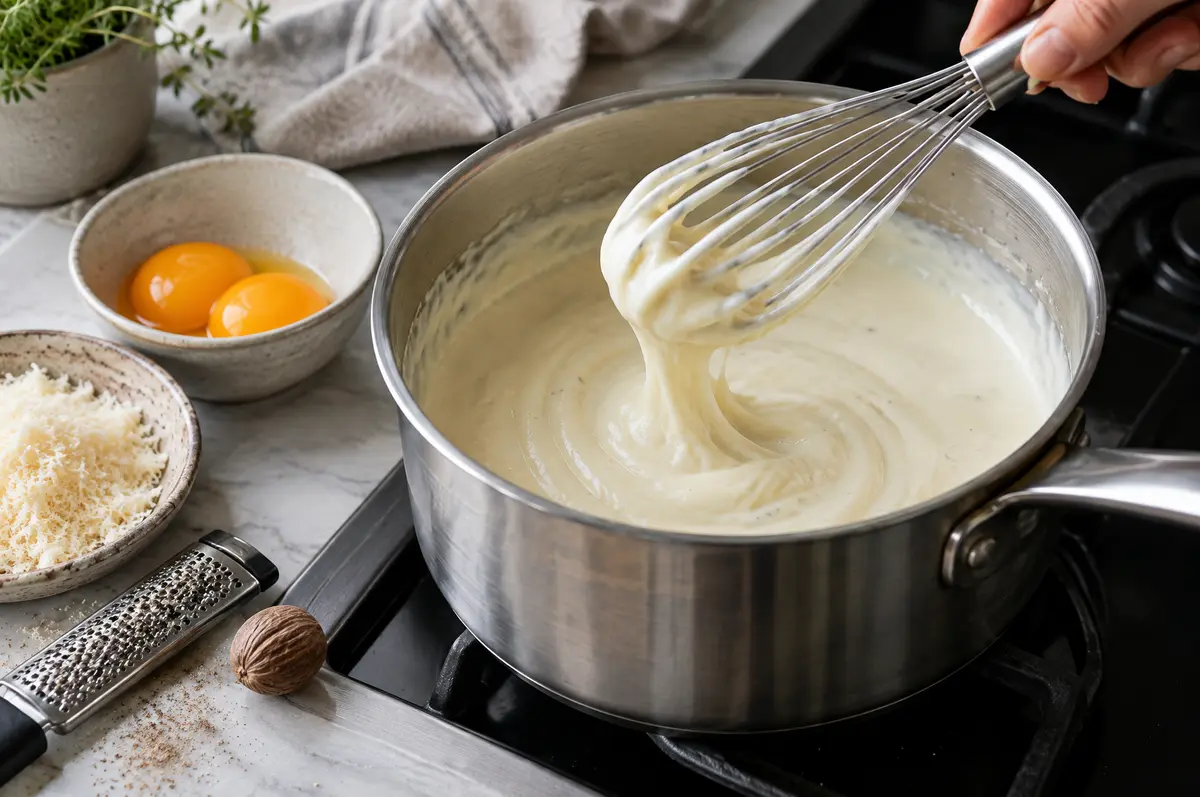
4. Make the béchamel
Melt the butter in a saucepan, stir in the flour and cook for 1 minute. Gradually whisk in the warm milk and cook, whisking, for 5 to 8 minutes until thick. Take off the heat, whisk in the egg yolks, half the cheese, the nutmeg and salt.
5. Assemble and bake
Lower the oven to 180 °C (160 °C fan). Layer the potatoes in the dish, then half the aubergine, all the meat sauce and the rest of the aubergine. Spread the béchamel over the top, sprinkle with the remaining cheese and bake for 45 to 50 minutes until deep golden. Rest for at least 30 minutes before cutting.
Serving & Storage
Serving
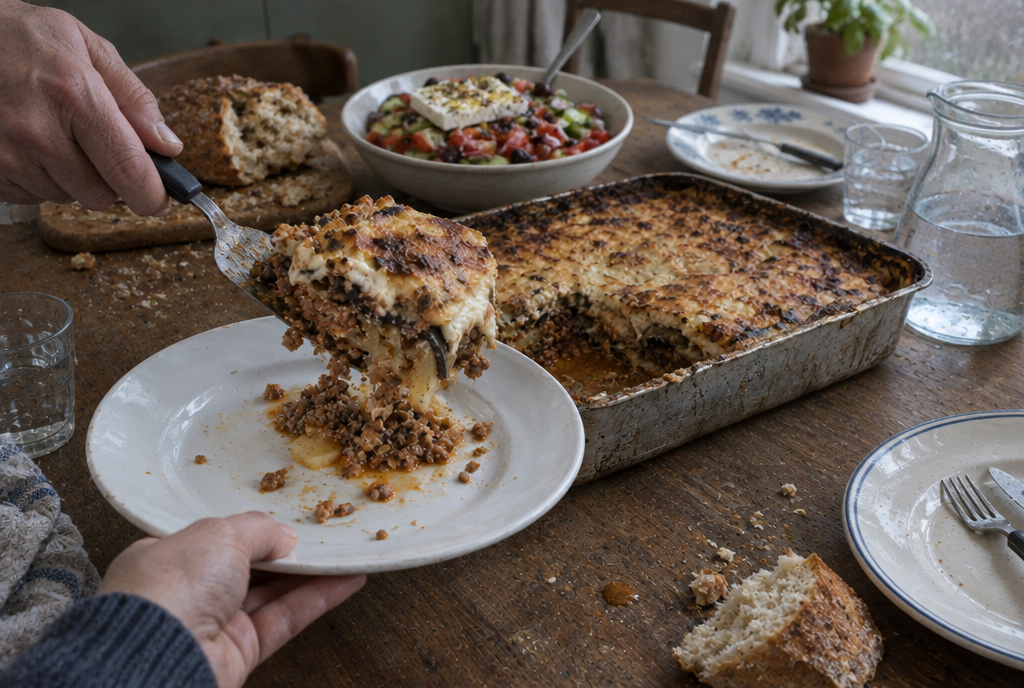
Serve moussaka warm rather than straight from the oven, with a Greek salad and crusty bread. Resting lets it set so it slices into clean squares.
It is a complete meal on its own, but tzatziki and a simple green salad dressed with lemon and olive oil are good on the side.
Storing Leftovers
Moussaka keeps very well and is a great make-ahead dish. Cool completely, then cover and refrigerate.
| Baked moussaka | up to 4 days |
| Meat sauce | up to 3 days |
| Freezer (baked, in portions) | up to 3 months |
Reheat covered with foil in a 180 °C oven for 20 to 30 minutes, removing the foil for the last 5 minutes. Thaw frozen portions overnight in the fridge first.
Greek Moussaka
Equipment
- 23 x 33 cm baking dish
- 2 baking trays
Ingredients
Vegetables
- 3 large aubergines about 1.2 kg
- 3 medium potatoes about 600 g
- 6 tbsp olive oil
- 1 tsp salt
Meat Sauce
- 2 tbsp olive oil
- 1 onion finely chopped
- 3 garlic cloves finely chopped
- 750 g minced beef or half beef, half lamb
- 120 ml red wine
- 400 g chopped tomatoes 1 tin
- 2 tbsp tomato paste
- 1 cinnamon stick or 1/2 tsp ground cinnamon
- 1/4 tsp ground allspice
- 1 bay leaf
- 1 tsp dried oregano
- salt and black pepper to taste
- 2 tbsp fresh parsley chopped
Béchamel
- 80 g butter
- 80 g plain flour
- 800 ml whole milk warmed
- 2 egg yolks
- 60 g kefalotyri or parmesan grated
- 1 pinch nutmeg freshly grated
- 1/2 tsp salt
Instructions
- Slice the aubergines into 1 cm rounds, sprinkle with salt and leave in a colander for 30 minutes. Pat dry with kitchen paper.
- Heat the oven to 200 °C (180 °C fan). Peel the potatoes and slice them 5 mm thick. Spread the aubergine and potato on lined baking trays, brush both sides with olive oil and roast for 20 to 25 minutes until soft and lightly golden.
- Heat the olive oil in a large pan and soften the onion for 5 minutes. Add the garlic and minced meat and brown well. Pour in the wine and let it bubble for 2 minutes, then add the tomatoes, tomato paste, cinnamon, allspice, bay leaf and oregano. Simmer gently for 30 to 40 minutes until thick, season, remove the cinnamon stick and bay leaf, and stir in the parsley.
- Melt the butter in a saucepan, stir in the flour and cook for 1 minute. Gradually whisk in the warm milk and cook, whisking, for 5 to 8 minutes until thick. Take off the heat, whisk in the egg yolks, half the cheese, the nutmeg and salt.
- Lower the oven to 180 °C (160 °C fan). Layer the potatoes in the dish, then half the aubergine, all the meat sauce and the rest of the aubergine. Spread the béchamel over the top, sprinkle with the remaining cheese and bake for 45 to 50 minutes until deep golden. Rest for at least 30 minutes before cutting.
Made this moussaka?
Rate it with the stars in the recipe card and tell us how it went in the comments: beef or lamb, with or without potatoes, and whether it lasted until the next day.
Products we use
Our kitchen kit for this recipe
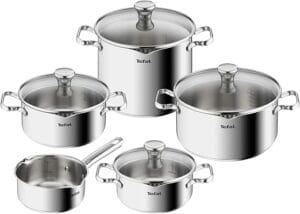
T-fal Stainless Steel Cookware Set (11-piece)
View in shop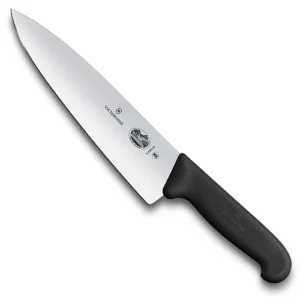
Victorinox Fibrox Pro Chef’s Knife (20 cm)
View in shopMore to cook
More Greek recipes from our kitchen
Greece
Pastitsio
Greece
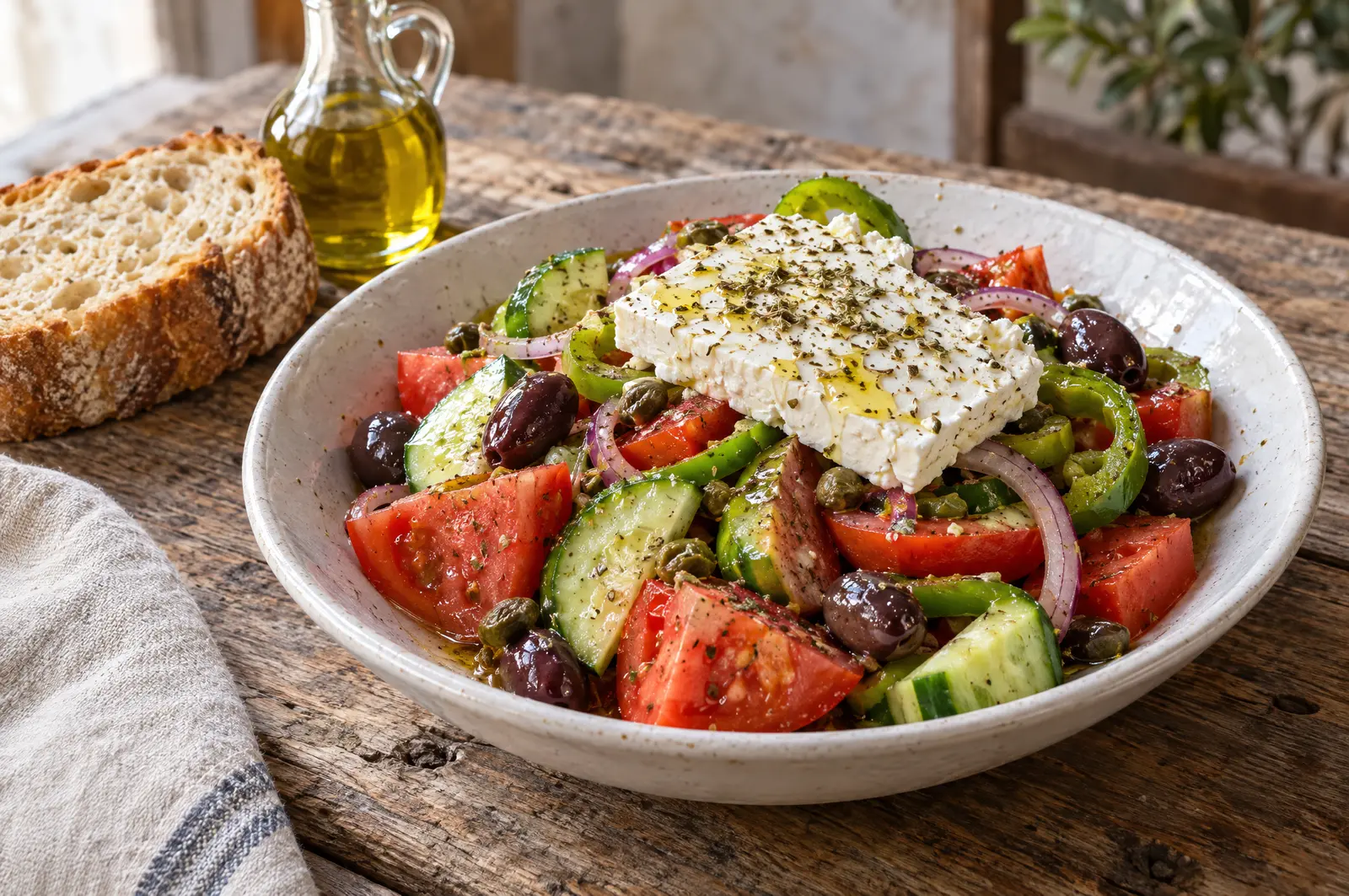
Greek Salad
Greece
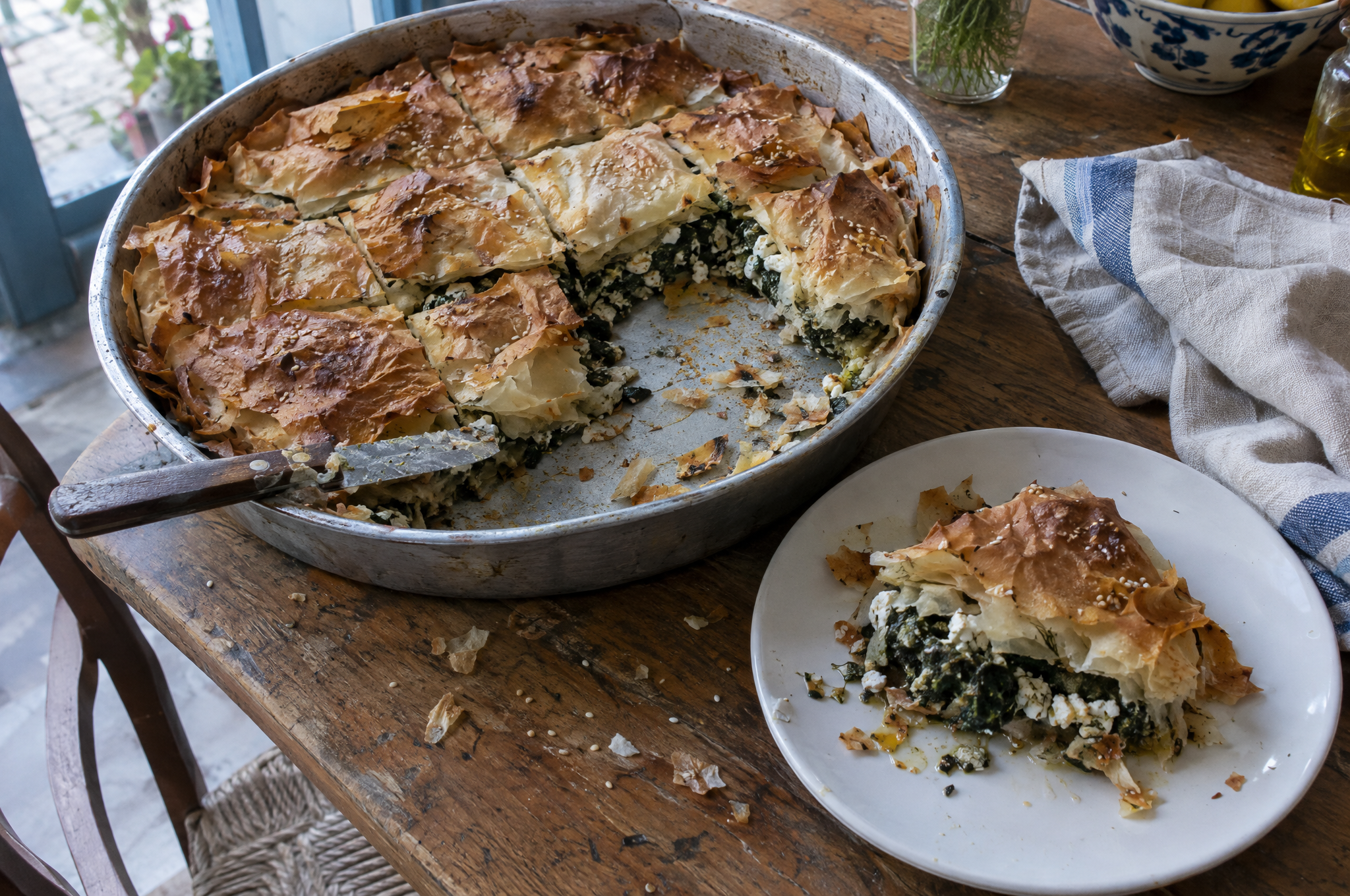
Spanakopita