Set the Tone for Worldly Tastes in Every Kitchen
Traditional Maltese Dishes
A Guide to the Food That Defines the Island
There’s something about Maltese food that doesn’t reveal itself immediately. At first, it feels familiar — Mediterranean, simple, ingredient-driven — but the more you eat, the more you realise how much history is sitting on the plate.
Malta has always been a crossroads. Traders, settlers and empires have passed through for centuries, and instead of replacing what was there, they’ve added to it. That’s exactly how the food feels. Italian structure, Arabic depth, a bit of British practicality — all working together in a way that’s understated but memorable.
This is a guide to the traditional dishes that shape Maltese cuisine. Not just what they are, but what they feel like to eat, and why they matter.
What Defines Traditional Maltese Food
What stood out to me most is how grounded everything is. Maltese food doesn’t try to be refined or reinvented. It’s built around what’s available — seasonal produce, local fish, simple meats — and cooked in a way that makes sense.
There’s a strong reliance on olive oil, tomatoes, garlic and herbs, but also a quiet use of spices that hint at North African influence. Dishes are often slow-cooked, baked or built to feed more than one person. It’s food that fits into daily life, not something separate from it.
The Core Dishes of Malta
These are the dishes you’ll come across again and again, whether you’re in a small village or walking through Valletta.
Pastizzi
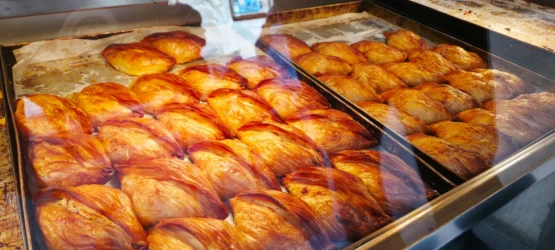
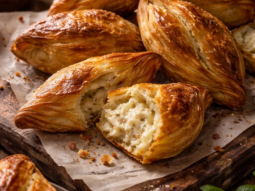
Pastizzi are impossible to miss. Small pastries with a flaky, almost layered crust, filled with ricotta or mushy peas. They’re sold in bakeries all over the island and eaten at any time of day.
They’re quick, cheap and deeply satisfying. It’s the kind of food that becomes part of your routine without you realising it.
Ftira and Ħobż biż-Żejt
Ftira is Malta’s traditional bread, but it’s what you do with it that matters.
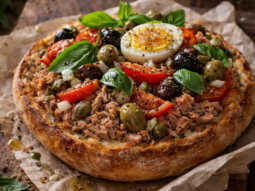
The most common version is ħobż biż-żejt — bread rubbed with tomatoes and olive oil, then layered with tuna, capers, olives and sometimes anchovies. It’s simple, but when everything is fresh, it works perfectly.
It’s one of those meals that doesn’t need anything extra.
Bigilla
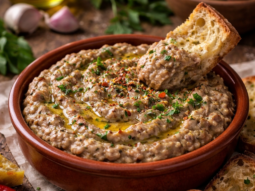
Bigilla is a thick bean dip made from local tic beans, garlic and olive oil.
It’s usually served with crackers or bread and has a strong, slightly earthy flavour. It’s one of those dishes that adds depth to a table rather than standing out on its own.
Ġbejna
These small cheeses from Gozo are a key part of Maltese food.
Made from sheep or goat’s milk, they can be eaten fresh, dried or seasoned. They show up in salads, pasta dishes or as part of a simple spread.
They’re subtle, but once you notice them, you see them everywhere.
Imqaret
For something sweet, imqaret are hard to ignore.
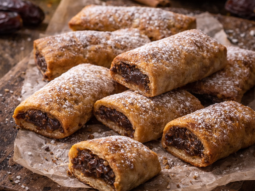
Fried pastries filled with spiced dates, often eaten warm and sometimes served with ice cream. The spices give them a clear Arabic influence, adding another layer to the cuisine.
They’re simple, but very distinct.
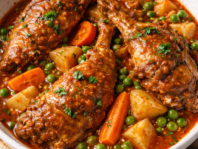
Stuffat tal-Fenek (Rabbit Stew)
Rabbit stew is often considered the national dish, and once you try it, it makes sense.
Cooked slowly in wine, garlic and herbs, it’s rich and full of depth without feeling heavy. It’s traditionally eaten as part of a shared meal, which adds to the experience.
It’s not just about the flavour — it’s about the way it’s eaten.
Timpana
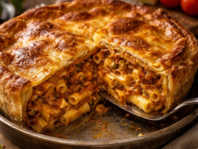
Timpana is comfort food in its purest form. Pasta mixed with meat sauce, eggs and cheese, wrapped in pastry and baked until golden.
It’s filling, slightly indulgent, and very much a reflection of Malta’s mix of influences. You can see the Italian base, but also the British-style baking approach.
It’s the kind of dish that feels familiar, even if you’ve never had it before.
Lampuki and Lampuki Pie
Lampuki, or mahi-mahi, is one of the most important fish in Maltese cuisine, especially when it’s in season.
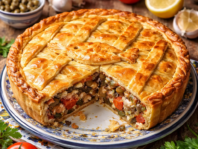
It’s often served simply, pan-fried with a light sauce, or baked into a pie with vegetables, olives and capers. Fresh and slightly sweet, it’s one of the clearest expressions of Malta’s connection to the sea.
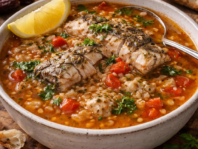
Aljotta
Aljotta is a fish soup that relies on simplicity done well.
Made with garlic, tomatoes, herbs and small fish, it’s light but full of flavour. A squeeze of lemon at the end lifts everything and gives it a freshness that makes you want another spoon immediately.
It’s not a showpiece dish, but it stays with you.
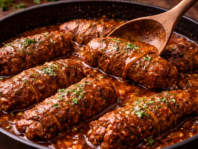
Bragioli (Beef Olives)
Bragioli are beef rolls stuffed with a mixture of minced meat, egg, herbs and breadcrumbs, then slowly braised.
Despite the name, there are no olives involved. The name comes from the shape rather than the ingredients.
It’s a dish that feels very much like home cooking — practical, filling and made to be shared.
How These Dishes Fit Together
What makes Maltese food interesting isn’t just the individual dishes, but how they work as a whole.
You might start with something small like pastizzi, move into a bread-based lunch, and end the day with a slow-cooked stew or baked dish. It’s a natural progression, not something structured or forced.
Meals feel connected to the day rather than separated from it.
Why Traditional Maltese Food Works
The reason Maltese food works so well is because it doesn’t try to be anything other than what it is.
It’s based on:
- simple ingredients
- practical cooking methods
- recipes that have been repeated over time
There’s no need to reinvent it. The balance is already there.