
Set the Tone for Worldly Tastes in Every Kitchen
Sichuan-Style Crispy Chili Beef
Fiery, crunchy, and deeply aromatic — a bold weeknight dish straight from the heart of Sichuan cuisine.

A Dish Worth Making TonightIf you've ever craved something that delivers heat, crunch, and deep savory satisfaction all in one bite, Sichuan-Style Crispy Chili Beef is the dish you've been looking for. It brings together thinly sliced beef, fried to a golden crisp, and coated in a sauce that is equal parts spicy, sweet, tangy, and aromatic.This recipe has become a favourite in Chinese home kitchens and restaurant menus around the world for good reason: it is fast, deeply flavourful, and endlessly satisfying. The combination of dried red chilies and Sichuan peppercorns creates a layered heat that is bold without being one-dimensional, while rice vinegar and sugar bring just enough brightness and balance to keep you reaching for another piece.Whether you're cooking for a weeknight dinner or looking to impress guests with something a little adventurous, this dish delivers. Serve it over steamed rice and it becomes a complete meal in under 30 minutes.
What Is It?
Sichuan-Style Crispy Chili Beef is a stir-fry dish built around two key techniques: deep-frying thinly sliced beef until it becomes shatteringly crisp, then tossing it in a hot, glossy sauce. The result is a dish with serious textural contrast — crackling, caramelised beef against a sticky, spiced coating.
The flavour profile is classic Sichuan: fiery from dried red chilies, numbing and floral from Sichuan peppercorns, salty and umami-rich from soy sauce, with the tartness of rice vinegar cutting through the richness of the beef. It is bold, unapologetic cooking at its best.
While the dish is often found on Chinese-Western restaurant menus as a crowd-pleasing takeaway staple, its roots are firmly in the Sichuan tradition of mala — the famous combination of "má" (numbing) and "là" (spicy) that defines the province's culinary identity.

A Little History
Sichuan cuisine hails from the Sichuan Basin in southwestern China, a region known for its humid climate and extraordinarily bold cooking. For centuries, locals have relied on chilies, garlic, ginger, and Sichuan peppercorns not just for flavour, but as a way of warming the body and stimulating circulation in the region's damp, foggy weather.
The Sichuan peppercorn — the ingredient that sets this cuisine apart from all others — is not actually a pepper at all, but the dried husk of a berry from the prickly ash tree. Its unique quality is the mild anaesthetic effect it produces on the lips and tongue, creating the signature "má" sensation that distinguishes Sichuan food from every other regional style in China.
Crispy chili beef as a dish evolved from the broader tradition of Sichuan dry-fried cooking, where ingredients are cooked at high heat until moisture evaporates and a concentrated, intensely flavoured crust forms. As Sichuan food spread globally through migration and the rise of Chinese restaurants in the 20th century, the dish was adapted — sometimes simplified, sometimes enriched — but the core flavour principles remained unchanged.
What You Need
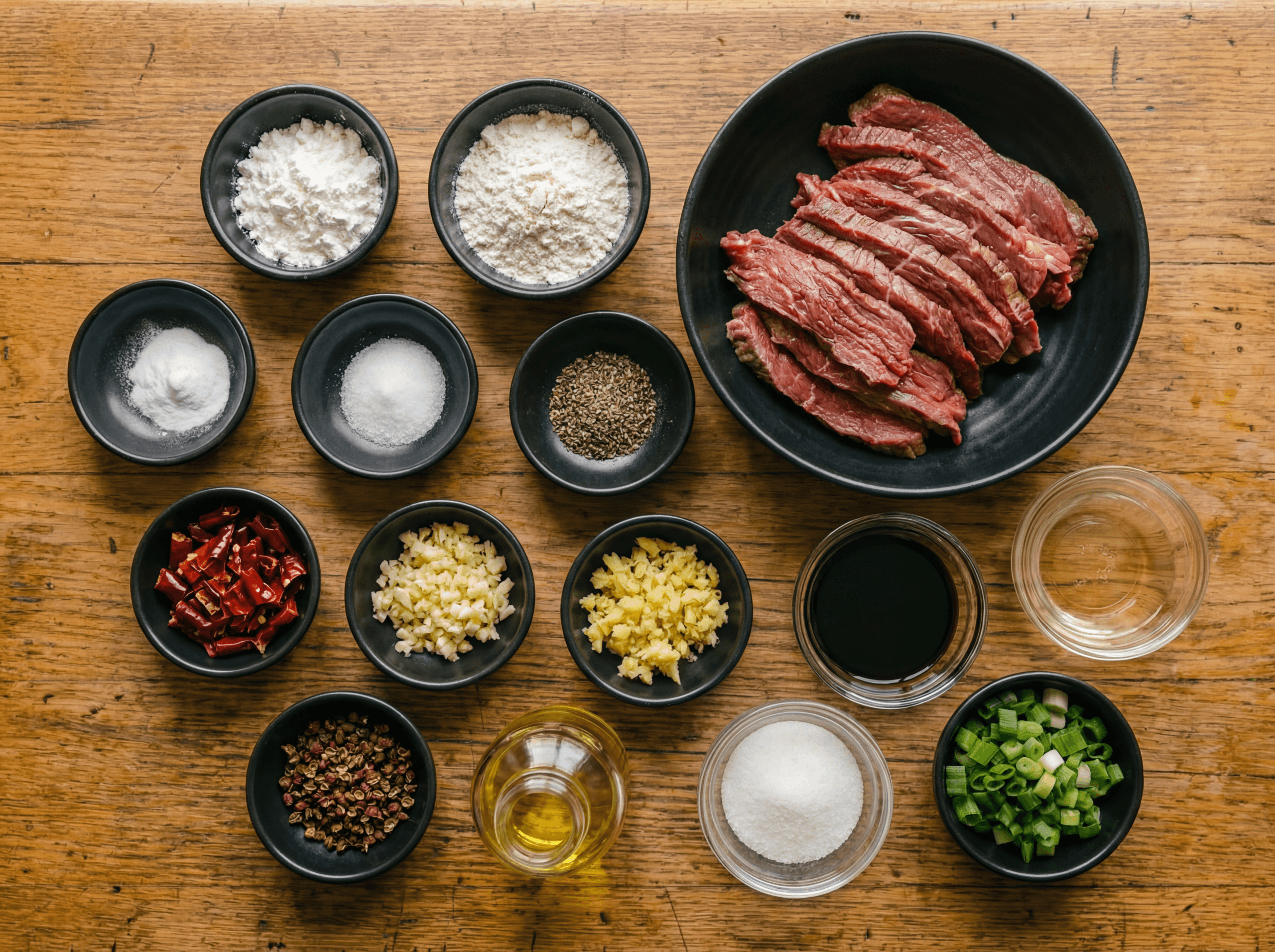
Before starting the recipe, gather your ingredients and equipment so everything is ready to go. This dish cooks quickly once the oil is hot, so having everything prepared in advance helps keep the process smooth and stress-free.
For the Beef
- beef flank steak, thinly sliced against the grain
- cornstarch
- all-purpose flour
- baking soda
- salt
- black pepper
For the Sichuan Sauce
- dried red chilies, chopped
- garlic cloves, minced
- resh ginger, minced
- soy sauce
- rice vinegar
- sugar
- Sichuan peppercorns, crushed
For Garnish
- green onions, chopped
The Process
The magic of this dish lies in the interplay between texture and flavour. The beef is coated in a mixture of cornstarch, flour, and baking soda before frying. The baking soda tenderises the meat while the starch-flour blend forms a light, crispy shell that holds up even after being tossed in the sauce. Frying in batches at high heat ensures each piece gets golden and crisp rather than steaming in the oil.
The sauce is built quickly in the same pan — dried chilies and Sichuan peppercorns bloom in the residual oil, releasing their fragrance, followed by garlic and ginger for aromatic depth. Soy sauce provides the salty, umami backbone; rice vinegar lifts and brightens; sugar balances and helps the sauce cling. The final toss of crispy beef through this sauce is brief on purpose — just long enough to coat without sacrificing the crunch that makes the dish so compelling.
Step-by-Step Instructions
Step 1 — Slice the Beef
Start by preparing the beef.
Place the flank steak on a cutting board and slice it thinly against the grain using a sharp knife. Cutting against the grain shortens the muscle fibers, which keeps the beef tender once cooked.
Aim for thin strips or bite-size slices so they crisp up quickly during frying. Set the sliced beef aside in a large mixing bowl.
Step 2 — Coat the Beef
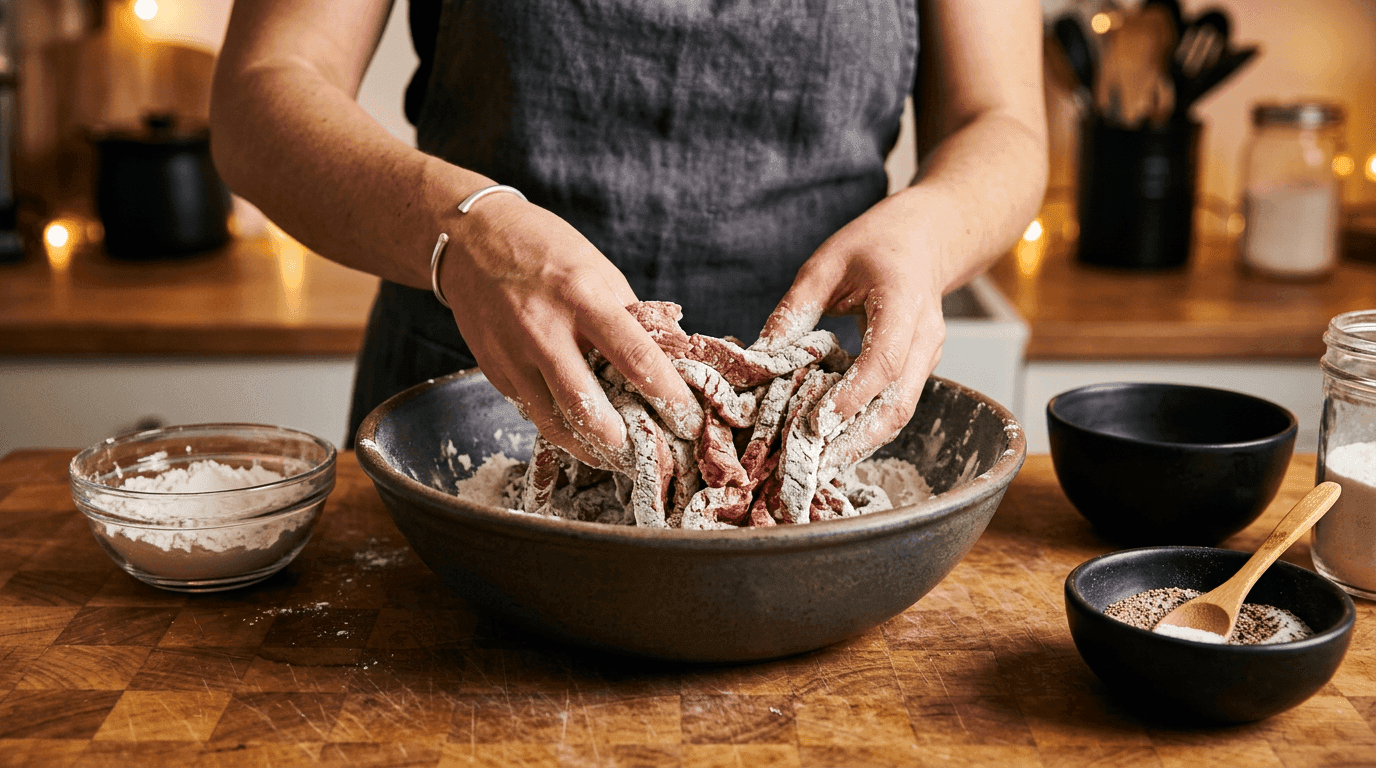
In the same bowl with the sliced beef, add the cornstarch, all-purpose flour, baking soda, salt and the black pepper.
Toss everything together thoroughly until each piece of beef is evenly coated in the dry mixture. The coating should cling lightly to the meat and create a thin, powdery crust that will become crispy when fried. Let the coated beef rest while you prepare the oil.
Step 3 — Heat the Oil
Place a wok or large skillet over medium-high heat.
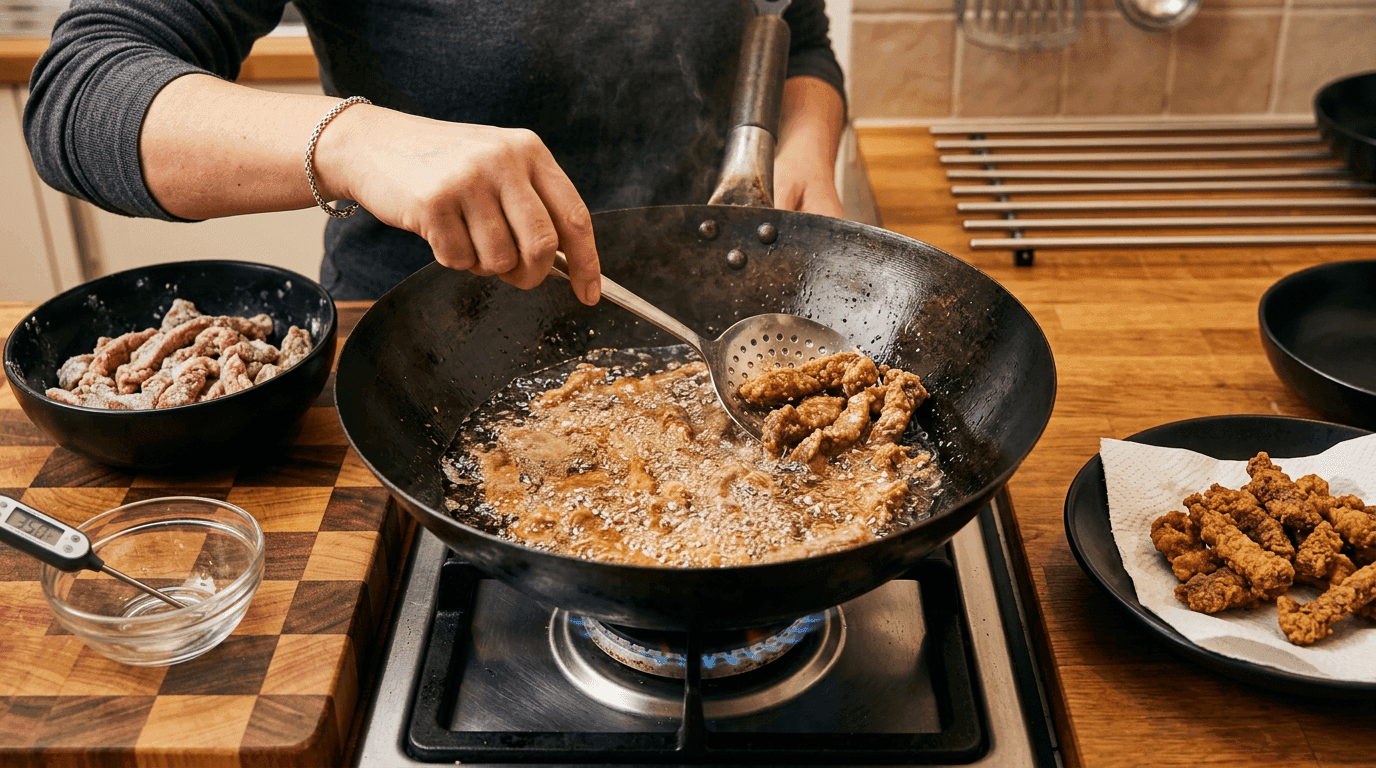
Add 0.5 cups vegetable oil and allow it to heat until it reaches about 350°F (175°C). The oil should shimmer and feel hot enough that a small piece of coating sizzles immediately when dropped in. Maintaining the correct oil temperature helps the beef fry quickly and stay crisp instead of becoming greasy.
Step 4 — Fry the Beef
Working in small batches, carefully add pieces of the coated beef into the hot oil.
Fry each batch for 3–4 minutes until the beef turns deep golden brown and crispy. Stir gently during frying so the pieces cook evenly and do not stick together.
Once crispy, remove the beef using a slotted spoon and place it on paper towels to drain excess oil. Continue frying until all the beef is cooked.
Step 5 — Prepare the Aromatics
Once the beef is finished frying, reduce the oil remaining in the wok to about 1 tablespoon. Add the chopped dried red chilies, minced garlic, minced fresh ginger and stir-fry the aromatics for about 1 minute 30 seconds, stirring constantly. The mixture should become fragrant as the garlic and ginger release their aroma and the chilies lightly toast in the oil.
Step 6 — Build the Sauce
Pour into the wok the soy sauce, rice vinegar, sugar, and crushed Sichuan peppercorns. Stir everything together and allow the sauce to bubble gently for 1–2 minutes. The sugar will dissolve and the sauce will slightly thicken, creating a glossy, savory base with a sweet-spicy balance.
Step 7 — Combine the Beef and Sauce
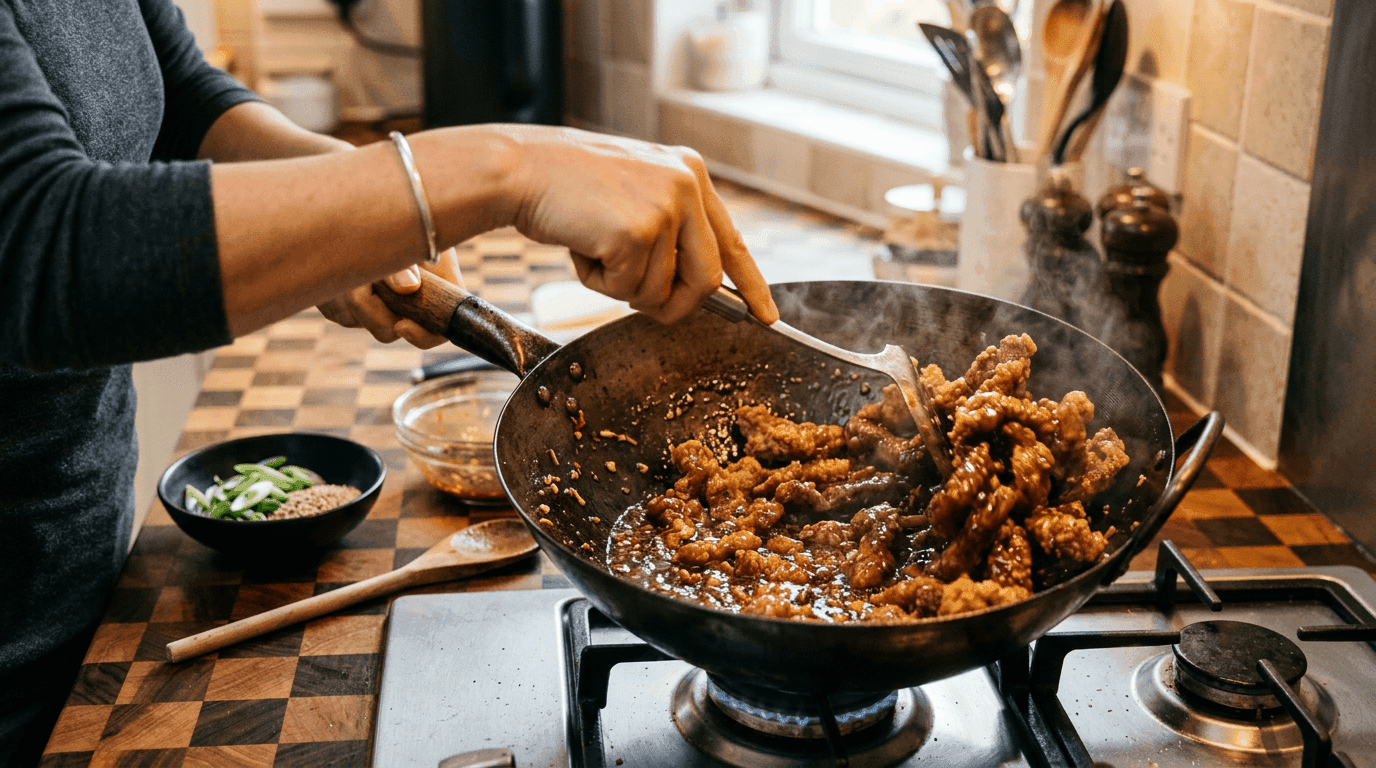
Add the crispy fried beef back into the wok. Toss the beef quickly in the sauce so each piece becomes coated while still maintaining its crunchy texture. Keep the heat high and stir rapidly so the sauce lightly clings to the beef without softening the crust.
Step 8 — Garnish and Serve
Transfer the crispy chili beef to a serving plate. Finish by sprinkling chopped green onions over the top for freshness and color. Serve immediately while the beef is still hot and crisp.
Serving Suggestions
Sichuan-style crispy chili beef pairs well with:
- steamed jasmine rice
- stir-fried vegetables
- simple cucumber salad
The crispy texture is best enjoyed immediately after cooking, when the beef is still crunchy and the sauce is glossy and aromatic.

Sichuan-Style Crispy Chili Beef
Equipment
- Sharp knife For slicing the beef thinly.
- Large mixing bowl To toss the beef with the cornstarch and flour.
- Wok or large skillet Ideal for frying the beef and sautéing the sauce ingredients.
- Slotted spoon or tongs For removing the crispy beef from the hot oil.
- Paper towels To drain the excess oil from the fried beef.
- Serving dish For plating the finished dish.
Ingredients
- 500 g beef flank steak thinly sliced against the grain
- 40 g cornstarch
- 40 g all-purpose flour
- 2.5 g baking soda
- 2.5 g salt
- 2.5 g black pepper
- 120 ml vegetable oil for frying
- 3 dried red chilies chopped
- 3 garlic cloves minced
- 1 tablespoon 15 g fresh ginger, minced
- 80 ml soy sauce
- 30 ml rice vinegar
- 25 g sugar
- 2 g Sichuan peppercorns crushed
- 2 green onions chopped (for garnish)
Instructions
- Coat the beef: Slice 1 pounds beef flank steak, thinly sliced against the grain thinly against the grain. In a large mixing bowl, combine the beef with 0.3 cups cornstarch, 0.3 cups all-purpose flour, 0.5 teaspoons baking soda, 0.5 teaspoons salt, and 0.5 teaspoons black pepper. Toss until every piece is evenly coated.
- Fry the beef: Heat 0.5 cups vegetable oil, for frying in a wok or large skillet over medium-high heat until it reaches 350°F (175°C). Fry the beef in batches for 3–4 minutes
- per batch until golden brown and crispy. Remove with a slotted spoon and drain on paper towels.
- Make the sauce: Reduce the oil in the wok to about 1 tablespoon. Add 3 pieces dried red chilies, chopped, 3 pieces garlic cloves, minced, and 1 tablespoons fresh ginger, minced, and stir-fry for 1m 30s
- until fragrant. Pour in 0.3 cups soy sauce, 2 tablespoons rice vinegar, 2 tablespoons sugar, and 1 teaspoons Sichuan peppercorns, crushed. Stir and let the sauce bubble for 1–2 minutes until slightly thickened.
- Combine beef and sauce: Return the crispy beef to the wok. Toss to coat every piece in the sauce and cook together for a further 1–1m 30s
- Garnish and serve: Transfer to a serving dish and scatter 2 pieces green onions, chopped (for garnish) over the top. Serve immediately with steamed rice or noodles.
Notes
Beef substitutes: Sirloin or skirt steak work well, but flank steak gives the best texture. Adjust the heat: Use fewer dried chilies and less Sichuan peppercorn for a milder version — you can always add more at the table. Vegetarian option: Swap the beef for well-pressed firm tofu or seitan. Fry until golden before proceeding with the sauce. Crispiness tip: Make sure the oil is hot enough before adding the beef — a small piece of batter should sizzle immediately on contact. Storage: Leftovers keep in an airtight container in the fridge for up to 3 days. Reheat in a skillet
Nutrition
Product We Use
to make our cooking experience better