

Sri Lankan Food Mains
Kottu Roti: Sri Lankan Chicken & Vegetable Recipe
Sri Lanka’s Loudest, Tastiest Street Food.
Serves
4
Calories
353 kcal
Cuisine
Sri Lankan

On this page: What is it · History · What you need · Step by step · Serving & storage · Recipe card
Loud, smoky, spicy, and deeply comforting, Kottu Roti is one of the most recognizable street foods from Sri Lanka. Traditionally cooked on large flat griddles with the rhythmic sound of metal spatulas chopping through roti, vegetables, egg, and meat, kottu is both a meal and an experience.
This version combines shredded chicken, scrambled eggs, vegetables, curry spices, and strips of godamba roti tossed together in a hot wok until slightly crispy and packed with flavor. The result is rich, savory, warming, and incredibly satisfying.
Kottu is one of those dishes that turns simple leftovers into something addictive. It is fast, flexible, and full of texture.
What Is It?
Kottu Roti, often simply called kottu, is a Sri Lankan stir-fried dish made from chopped flatbread mixed with vegetables, spices, eggs, and usually chicken, beef, or seafood.
The name comes from the Tamil word koththu, meaning “to chop,” referring to the way the roti is repeatedly chopped and mixed during cooking using two metal spatulas.
The dish is known for its layered texture. The roti absorbs curry spices and juices while staying chewy and slightly crisp around the edges. Eggs add richness, vegetables bring freshness, and the meat provides depth and protein.
While chicken kottu is one of the most popular versions, vegetarian and seafood variations are equally common across Sri Lanka.
A Little History
Kottu Roti originated in Sri Lanka during the 1970s as an affordable and filling street food. Vendors would use leftover godamba roti — a soft, thin flatbread similar to paratha — and stir-fry it with whatever ingredients were available.
Over time, the dish became one of Sri Lanka’s most iconic late-night foods. Street stalls across the country are famous for the sound of spatulas rapidly chopping and tossing the ingredients on large steel griddles, creating a rhythm that has become part of Sri Lankan food culture itself.
The beauty of kottu lies in its adaptability. Every region, restaurant, and household has its own variation, from cheesy kottu to fiery extra-spicy versions and luxurious seafood combinations.
Today, kottu is enjoyed globally and remains one of the defining dishes of Sri Lankan cuisine.
At a glance
Serves
4
Calories
353 kcal
Protein
23.6 g
Course
Main Course
Why it works
01 Everything cooks fast over high heat
02 Leftover roti gives the best texture
03 Easy to swap chicken for tofu, paneer or beef
Cooking this later?
Save it to your Pinterest board so it’s there when you need it.
What You Need
Exact amounts are in the recipe card
Equipment tip: If making the flatbread from scratch, a heavy griddle helps it cook evenly. See the Lodge cast-iron griddle we recommend.
For stir-frying the chopped roti, the T-fal wok we recommend is also handy; our chef’s knife pick is useful for preparing the ingredients.
For the Kottu
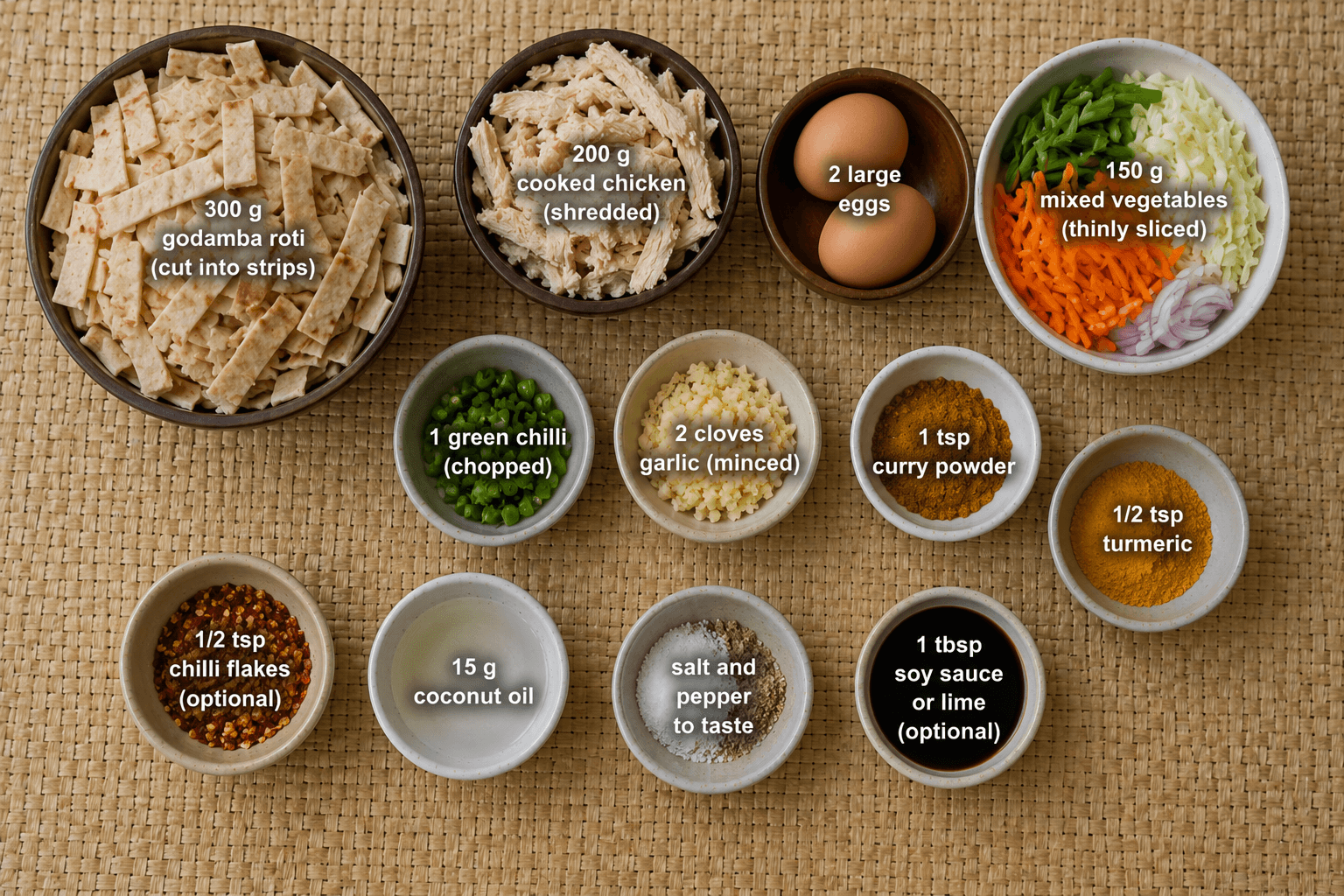
- Godamba roti, leftover roti, or paratha
- Cooked chicken, shredded
- Eggs
- Mixed vegetables, thinly sliced
- Green chili
- Garlic
- Curry powder
- Turmeric
- Chili flakes
- Coconut oil
- Salt and black pepper
- Soy sauce or lime juice
Step-by-Step Instructions
The key to good kottu is high heat and constant movement. Everything cooks quickly, allowing the roti to absorb flavor while still maintaining texture.
The vegetables are stir-fried first to soften slightly while keeping some bite. Eggs are scrambled directly into the wok, coating the mixture and adding richness throughout the dish.
Once the chicken is added, the roti strips go in last. This prevents them from becoming soggy too early. Traditionally, two metal spatulas are used to chop, lift, and toss the mixture continuously, helping everything combine evenly while creating crispy edges and smoky flavor.
The final seasoning can vary depending on preference. Soy sauce adds umami depth, while lime juice gives brightness and balance.
1. Heat the oil
Heat the coconut oil in a large wok or flat griddle over medium-high heat.
2. Soften the aromatics
Add the garlic and onion. Sauté until softened and fragrant.
3. Add the vegetables and spices
Add the mixed vegetables, curry powder, turmeric, green chili, and chili flakes if using. Stir-fry for 2–3 minutes until slightly wilted.
4. Scramble the eggs
Push everything to one side of the pan. Crack in the eggs and scramble until just cooked.
Mix the eggs through the vegetables.
5. Add the chicken
Add the shredded chicken and stir-fry for another 2 minutes.
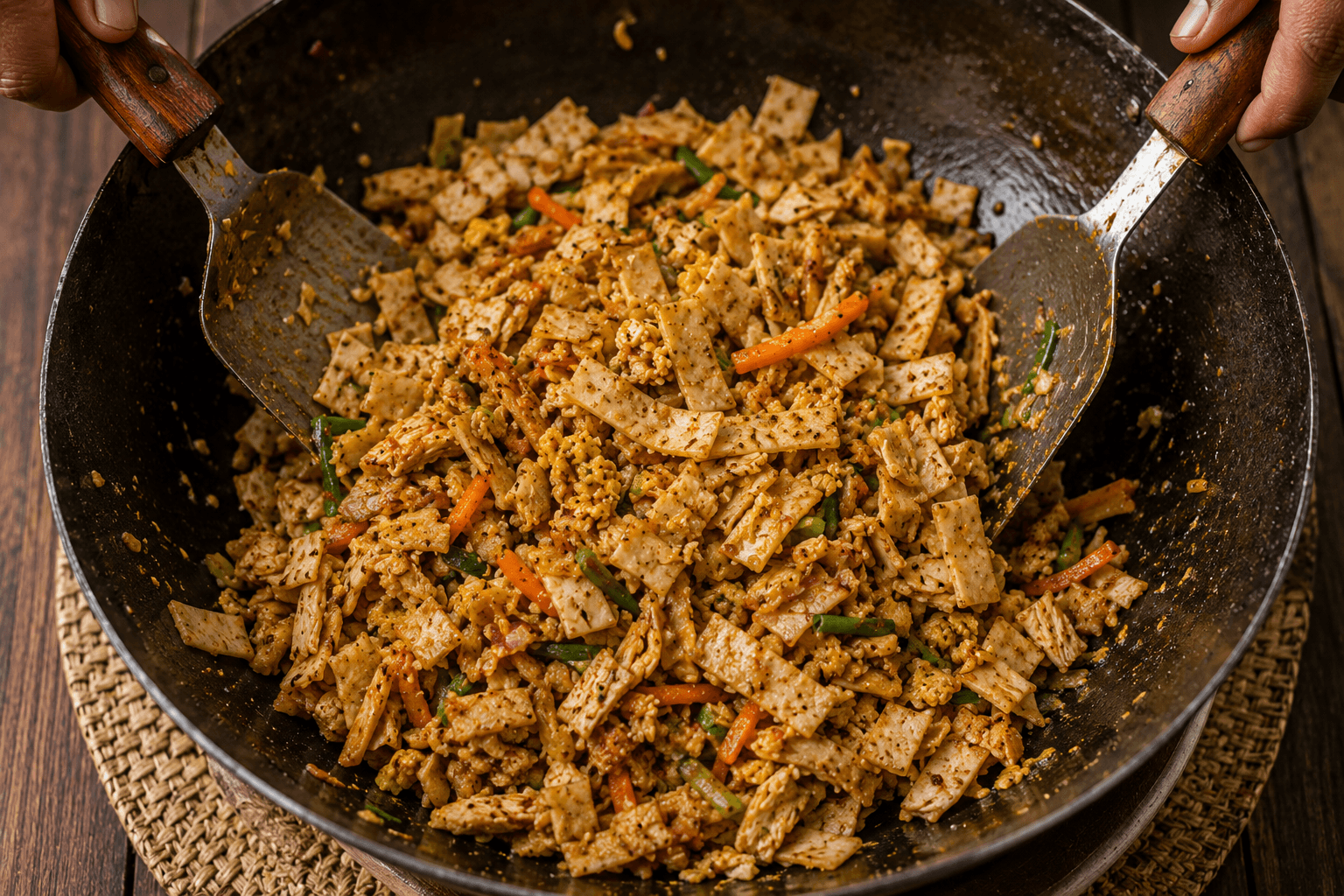
6. Add the roti and chop
Add the roti strips and toss thoroughly, using two spatulas or spoons to chop and combine everything evenly.
Tip: Leftover roti works perfectly and gives better texture.
7. Season and serve
Season with salt, black pepper, and optional soy sauce or lime juice.
Serve immediately while hot.
Serving & Storage
Serving
Kottu Roti is best served fresh straight from the wok while still hot and slightly crispy. It pairs perfectly with Sri Lankan curries, coconut sambol, chili sauce, or a fried egg on top.
For extra heat, serve with sliced green chili or spicy sambol on the side.
Storing Leftovers
Leftovers can be stored in an airtight container in the refrigerator for up to 2 days. Reheat in a hot pan rather than a microwave to bring back some texture and crispness.
| Kottu roti | up to 2 days |
Because kottu absorbs flavor over time, it often tastes even richer the next day.
Sri Lankan Kottu Roti
Ingredients
- 300 g godamba roti (or leftover roti/paratha) cut into strips
- 200 g chicken cooked and shredded
- 2 large eggs
- 150 g mixed vegetables thinly sliced
- 1 green chilli chopped
- 2 cloves garlic minced
- 1 tsp curry powder
- 1/2 tsp turmeric
- 1/2 tsp chilli flakes optional
- 15 g coconut oil
- salt and pepper to taste
- 1 tbsp soy sauce or lime optional
- You can substitute chicken with tofu, paneer, or beef.
- Traditionally made on a hot griddle with metal spatulas — the clatter is part of the charm!
- Leftover roti works perfectly and gives better texture.
🧊 Storage:
Store in an airtight container for up to 2 days. Reheat in a skillet for best texture.
Instructions
- Heat coconut oil in a large wok or flat griddle. Add garlic and onion. Sauté until soft.
- Add vegetables, curry powder, turmeric, and chili. Stir-fry for 2–3 minutes until wilted.
- Push to one side. Crack in the eggs and scramble. Mix through.
- Add the cooked chicken and stir-fry for another 2 minutes.
- Add the roti pieces and mix thoroughly, chopping and tossing with two spatulas to combine everything evenly.
- Season with salt, pepper, and optional soy sauce or lime juice. Serve hot!
Kottu Roti FAQs
What is kottu roti?
Kottu roti is a Sri Lankan street-food stir-fry made with chopped godamba roti, vegetables, egg and often chicken or another protein.
What is godamba roti?
Godamba roti is a thin, flaky Sri Lankan flatbread. It is chopped into small pieces to make kottu roti.
Can I make kottu roti with leftover roti?
Yes. Chilled leftover roti works well; chop it into small pieces and stir-fry it with the vegetables, seasoning and other ingredients.
Made this kottu?
Rate it with the stars in the recipe card and tell us how it went in the comments: what you swapped, what you added, how spicy you made it.
Products we use
Our kitchen kit for this recipe
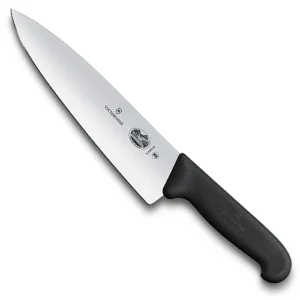
Victorinox Fibrox Pro Chef’s Knife (20 cm)
View in shop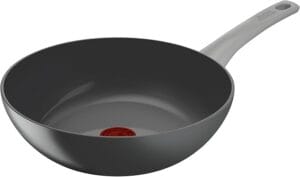
T-fal Nonstick Wok (36 cm)
View in shop
Wooden Spoons
View in shop
Stainless Steel Bowls
View in shopMore to cook
More recipes from our kitchen
Sri Lanka
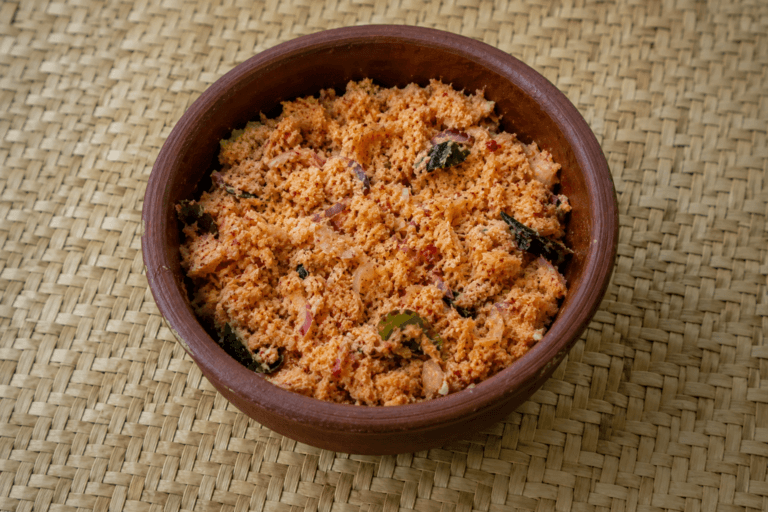
Pol Sambol
Sri Lanka
Maalu Hodhi (Fish Curry)
Sri Lanka
Hoppers (Appam)
Such a good dish, comfort food!