

Sri Lankan Food Breakfast
Godamba Roti: Sri Lankan Flatbread Recipe
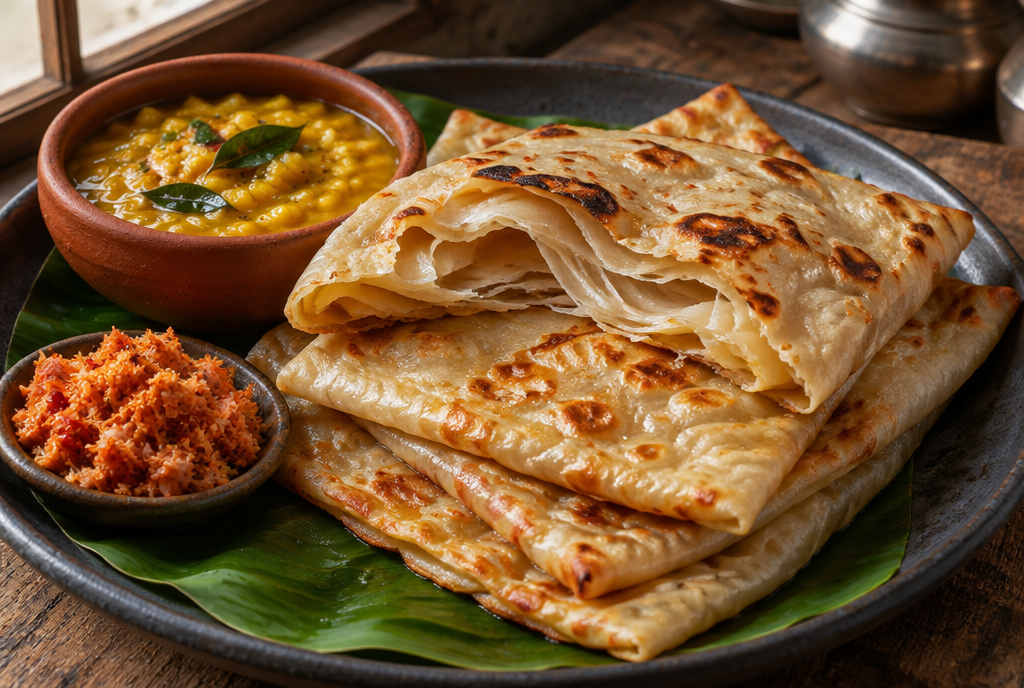
Stretched thin, folded square, cooked on a hot pan.
Makes
6 roti
Calories
435 kcal
Cuisine
Sri Lankan

On this page: What is it · History · What you need · Step by step · Serving & storage · Recipe card · FAQs
Godamba roti is a thin, soft Sri Lankan flatbread made from wheat flour, water, salt and oil, stretched until almost see-through, folded into a square and cooked on a hot pan. It is eaten with curry, filled with egg or vegetables, and chopped into strips to make kottu. This Tone & Taste recipe makes six roti with a simple dough that works in a normal home kitchen: no special griddle, just a heavy flat pan and a little patience while the dough rests.
What Is It?
Godamba roti (also spelled godhamba or gothamba roti) is an unleavened flatbread made with plain white flour. What makes it different from other roti is the stretching: each ball of oiled dough is pressed and pulled out until it is paper-thin, then folded into a neat square. That folding traps thin layers of dough and oil, so the cooked roti is soft and chewy with crisp, golden patches. It sits somewhere between an Indian paratha and Malaysian roti canai: thinner and softer than paratha, and usually less flaky than roti canai.
A Little History
The name comes from the Sinhala word for wheat, which tells you what sets it apart. Traditional Sri Lankan staples are built on rice and coconut: hoppers, string hoppers, pittu and coconut roti. Godamba roti belongs to the wheat-based flatbread tradition shared across South India and Southeast Asia, and it became a fixture of Sri Lanka’s small roadside eateries and street stalls.
Its biggest moment came with kottu. Vendors began chopping godamba roti on the griddle with vegetables, egg and meat, and kottu roti became one of the island’s best-known street foods.
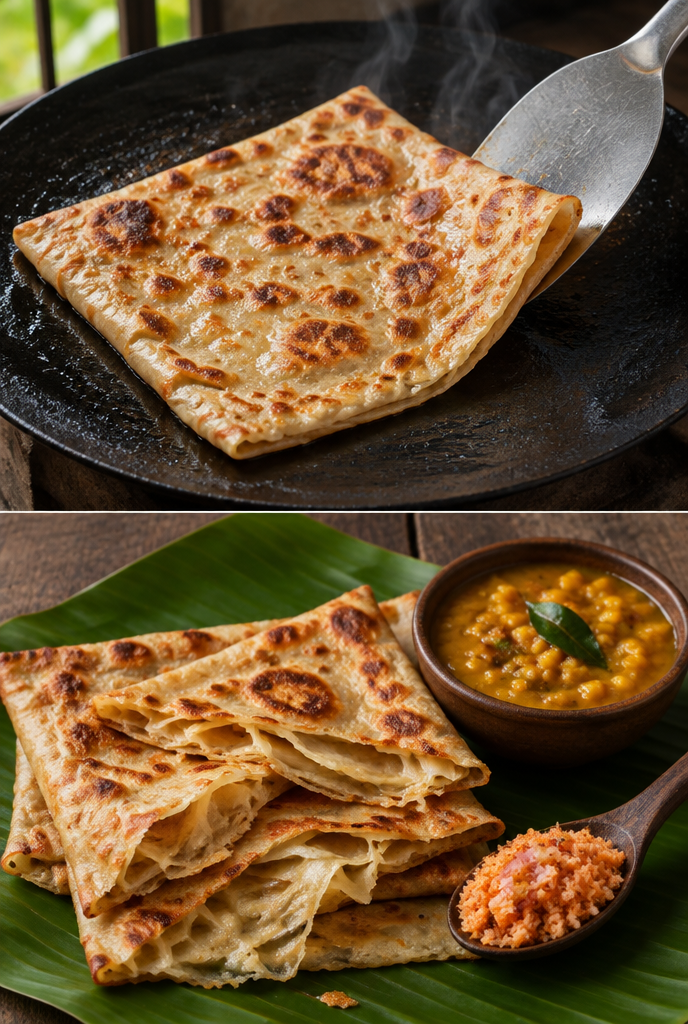
Today you will find it in three forms: plain, torn and eaten with dhal or a meat curry; filled, folded around egg, vegetables or a spiced filling before cooking; and chopped into strips for kottu.
Next to rice, hoppers and pittu, it is one of the everyday breads of Sri Lanka. Our guide to Sri Lankan staple foods and the Sri Lanka travel and food guide show where it fits on the island.
At a glance
Makes
6 roti
Calories
435 kcal
Protein
9.5 g
Course
Breakfast, Main Course
Why it works
01 A long rest in oil lets the dough stretch thin
02 Folding traps soft, flaky layers
03 Eat it with curry or chop it into kottu
Cooking this later?
Save it to your Pinterest board so it’s there when you need it.
What You Need
Exact amounts are in the recipe card
For the Godamba Roti
- plain (all-purpose) flour
- salt
- sugar
- egg (optional)
- lukewarm water
- neutral oil or coconut oil
Step-by-Step Instructions
Good godamba roti comes down to two things: a soft dough and a long rest in oil. The rest relaxes the gluten so the dough stretches thin without tearing. Skip it and the dough keeps springing back.
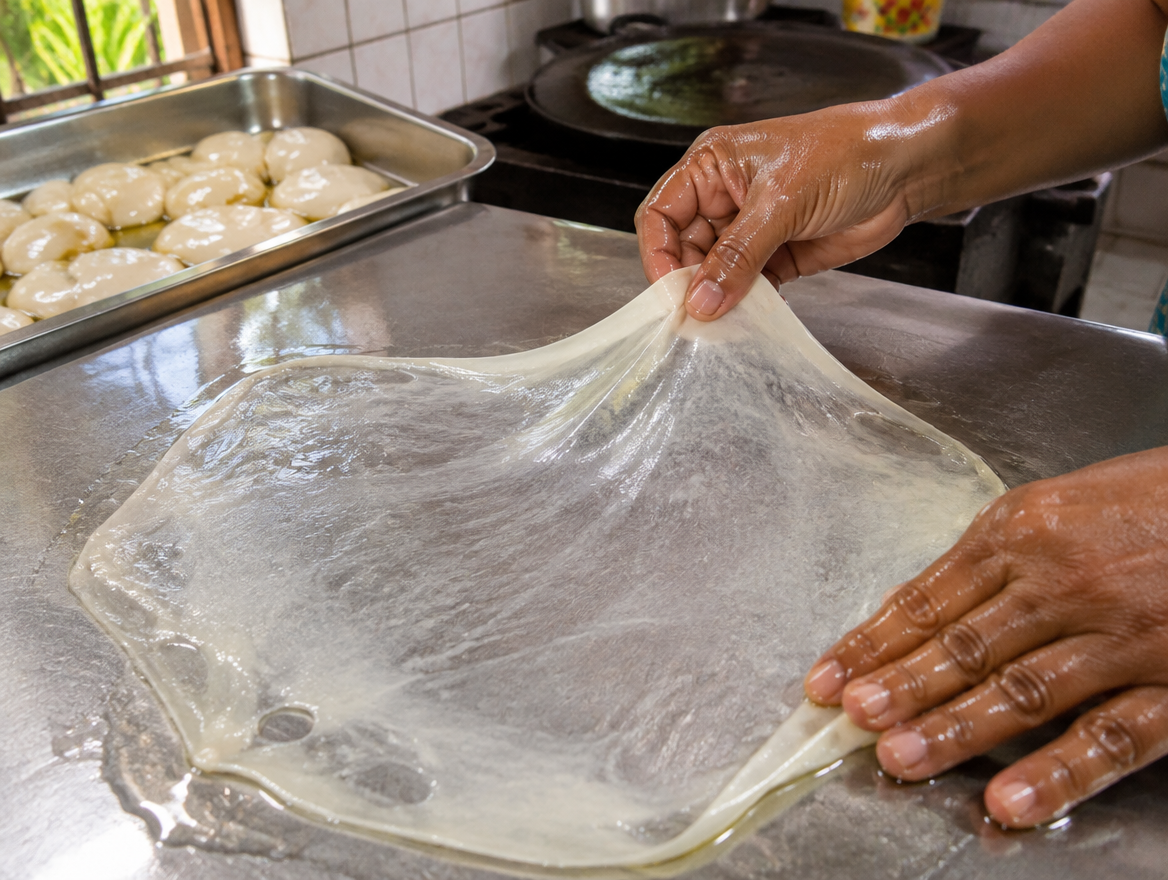
Street vendors spin and slap the dough into a thin sheet in seconds. At home, pressing and pulling it out with oiled hands on an oiled counter works just as well. A few small holes are fine: they disappear when you fold.
Use plain flour, not bread flour, because strong flour fights back when you stretch it. Coconut oil gives a more Sri Lankan flavour, but any neutral oil works. Start the dough at least two and a half hours before you want to eat, or rest it overnight in the fridge.
1. Make and knead the dough
Mix the flour, salt and sugar in a large bowl. Add the egg if using, the 30 ml oil and most of the water. Bring it together, adding the rest of the water a little at a time, until you have a soft, slightly tacky dough. Knead for 8–10 minutes until smooth and elastic.
Tip: The dough should feel softer than bread dough. If it feels stiff, work in another spoonful of water.
2. Divide, oil and rest
Divide the dough into 6 balls of about 140 g. Pour some of the resting oil into a tray, roll each ball in it until fully coated and cover tightly. Leave at room temperature for at least 2 hours, or up to 4. You can also rest the balls overnight in the fridge; bring them back to room temperature for an hour before stretching.
3. Stretch and fold
Oil the work surface and your hands. Flatten one ball with your palm, then press and pull it outwards from the centre, working your way around, until it is very thin and roughly 40 cm across. Fold the left and right sides into the middle, then the top and bottom, to make a square of about 18–20 cm. For filled roti, put the filling in the centre before folding.
4. Cook and keep warm
Heat a heavy flat pan over medium-high heat. Cook the square on the dry pan for 1–2 minutes until golden spots appear underneath, then flip and cook the other side for another 1–2 minutes. Brush with a little oil if it looks dry. Stack the cooked roti under a clean tea towel while you make the rest, so they stay soft.
Serving & Storage
Serving
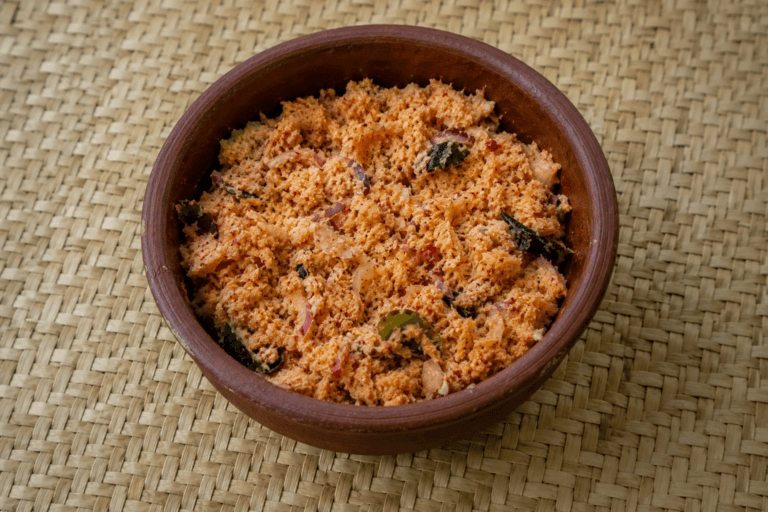
Tear godamba roti and dip it into dhal curry for a simple breakfast or dinner, serve it with Sri Lankan fish curry or eggplant curry, and add a spoonful of pol sambol on the side. Or cut it into thin strips and turn it into kottu roti.
For a filled version, crack an egg onto the stretched dough with chopped onion, green chilli and salt, or add a dry spiced potato and vegetable filling, then fold and cook as usual.
Storing Leftovers
Wrap cooked roti in a clean tea towel, or keep them in a sealed bag in the fridge. Reheat in a dry pan. Day-old roti is ideal for kottu.
| Room temperature | up to 1 day |
| Fridge | up to 3 days |
| Freezer, with baking paper between | up to 2 months |
| Uncooked oiled dough, fridge | up to 24 hours |
No egg? Leave it out and add an extra 20–30 ml water. The dough is slightly less stretchy but works well.
Sri Lankan Godamba Roti
Equipment
- Heavy flat pan, cast-iron skillet or tawa (at least 26 cm)
- Wide spatula
Ingredients
- 500 g plain (all-purpose) flour not bread flour
- 6 g salt 1 tsp
- 5 g sugar 1 tsp
- 1 egg optional, makes the dough more elastic
- 260-280 ml lukewarm water
- 30 ml neutral oil or coconut oil for the dough
- 100 ml neutral oil for resting and stretching
- Use plain flour: strong bread flour springs back when you stretch it.
- A few small holes while stretching are fine; they disappear when you fold.
- Day-old roti is ideal for kottu.
- Nutrition is an estimate per roti, assuming about half the resting oil is absorbed.
Instructions
- Mix the flour, salt and sugar in a large bowl. Add the egg if using, the 30 ml oil and most of the water. Bring it together, adding the rest of the water a little at a time, until you have a soft, slightly tacky dough.
- Knead for 8–10 minutes until smooth and elastic. It should feel softer than bread dough.
- Divide into 6 balls of about 140 g. Roll each ball in the resting oil until fully coated and cover tightly.
- Rest at room temperature for at least 2 hours, or up to 4 hours. If resting overnight in the fridge, bring back to room temperature for an hour before stretching.
- Oil the work surface and your hands. Flatten one ball, then press and pull it outwards from the centre until it is very thin and roughly 40 cm across.
- Fold the left and right sides into the middle, then the top and bottom, to make a square of about 18–20 cm. Add a filling in the centre before folding if you like.
- Cook on a dry pan over medium-high heat for 1–2 minutes per side until golden spots appear. Brush with a little oil if it looks dry.
- Stack the cooked roti under a clean tea towel to keep them soft while you cook the rest.
Godamba Roti FAQs
What is godamba roti?
Godamba roti is a thin Sri Lankan flatbread made from plain flour, water, salt and oil. The dough is rested in oil, stretched paper-thin, folded into a square and cooked on a hot pan.
What is the difference between godamba roti and paratha?
Both are wheat flatbreads, but godamba roti is stretched much thinner and folded into a square, so it is softer and lighter. Paratha is usually rolled and layered for a thicker, flakier bread.
Is godamba roti the same as roti canai?
They are close relatives. Both are stretched, oiled wheat flatbreads, but godamba roti is usually thinner, softer and less flaky, and it is folded into a neat square.
Why does my dough tear when I stretch it?
It has not rested long enough, or it is too dry. Let it rest longer in oil, and next time add a little more water so the dough is softer.
Can I make godamba roti without egg?
Yes. Leave the egg out and add an extra 20–30 ml water. The dough is slightly less stretchy but still works well.
Can I use shop-bought paratha for kottu instead?
Yes. Frozen paratha or roti canai is a good shortcut, but homemade godamba roti gives kottu its proper soft, chewy texture.
How do you store and reheat godamba roti?
Keep it wrapped for up to 1 day, in the fridge for up to 3 days, or frozen for up to 2 months with baking paper between each roti. Reheat in a dry pan.
Made this godamba roti?
Rate it with the stars in the recipe card and tell us in the comments how your first stretch went, and what you served it with.
Products we use
Our kitchen kit for this recipe
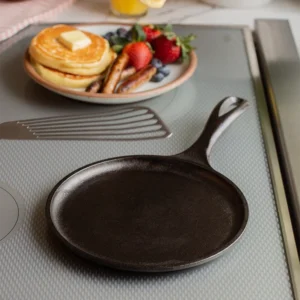
Lodge Cast Iron Round Griddle (26.7 cm)
View in shop
Stainless Steel Bowls
View in shop
Wooden Spoons
View in shopMore to cook
More recipes from our kitchen
Sri Lanka
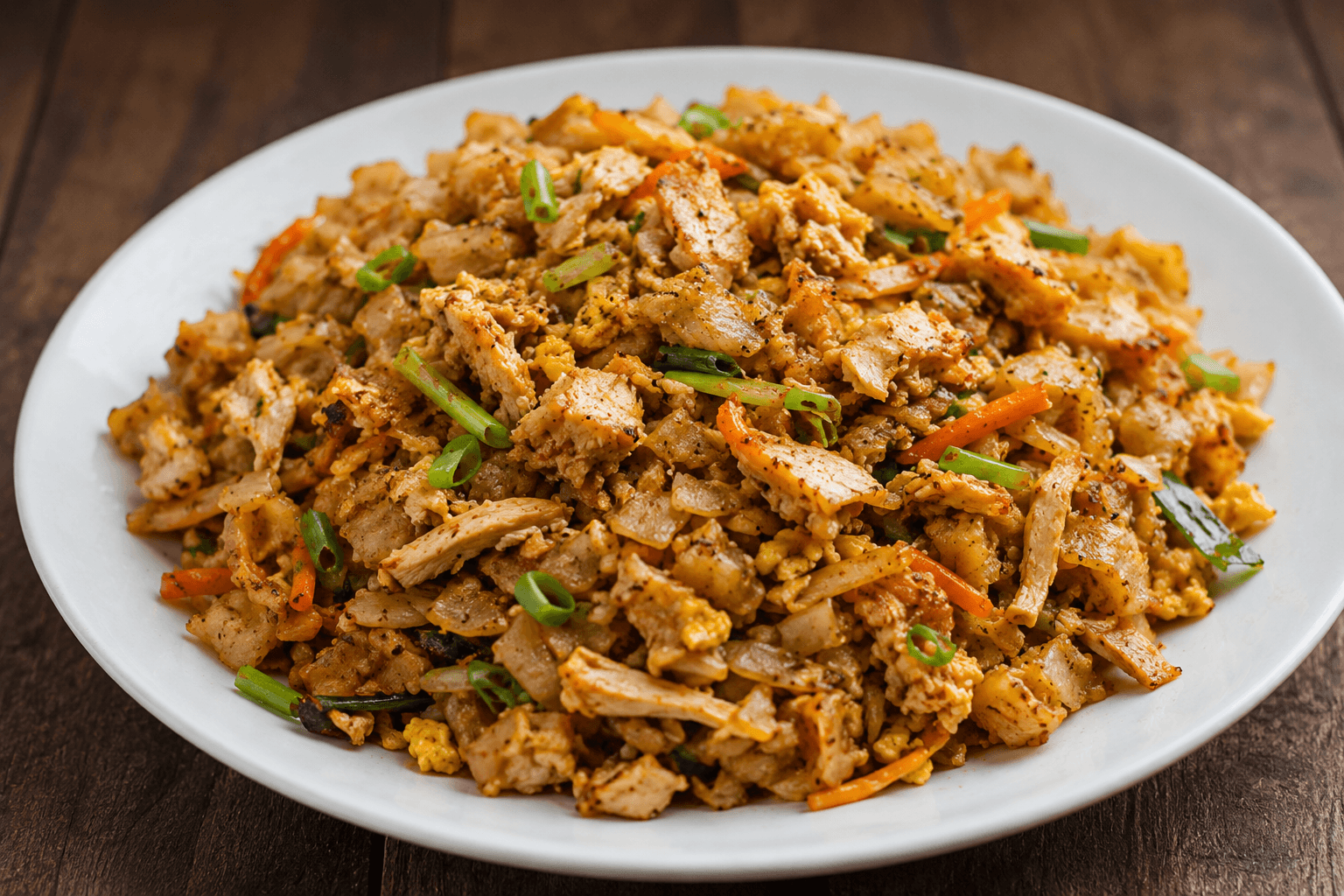
Kottu Roti
Sri Lanka
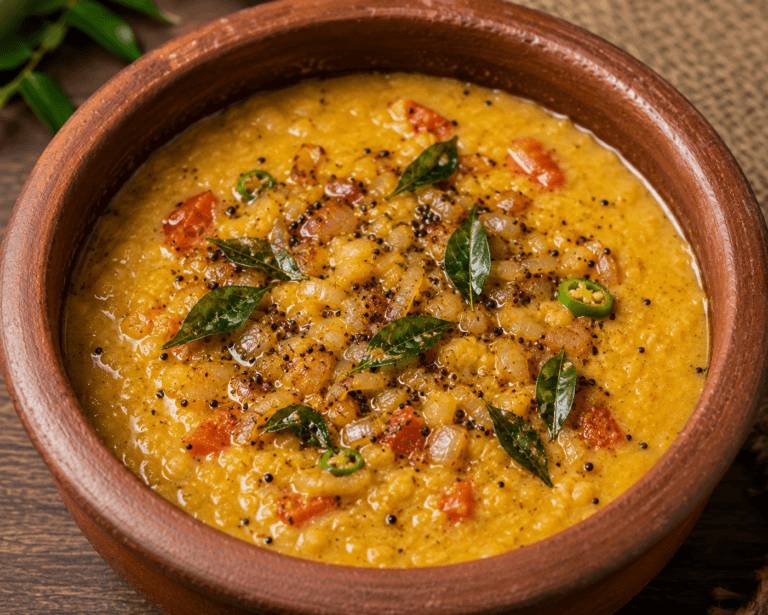
Parippu (Dhal Curry)
Sri Lanka
Pol Sambol