

Maltese Food Snacks & Sharing
Maltese Pastizzi Recipe: Ricotta & Pea Pastries
Malta’s Most Addictive Snack.
Serves
6
Calories
424 kcal
Cuisine
Maltese

On this page: What is it · History · What you need · Step by step · Serving & storage · Recipe card
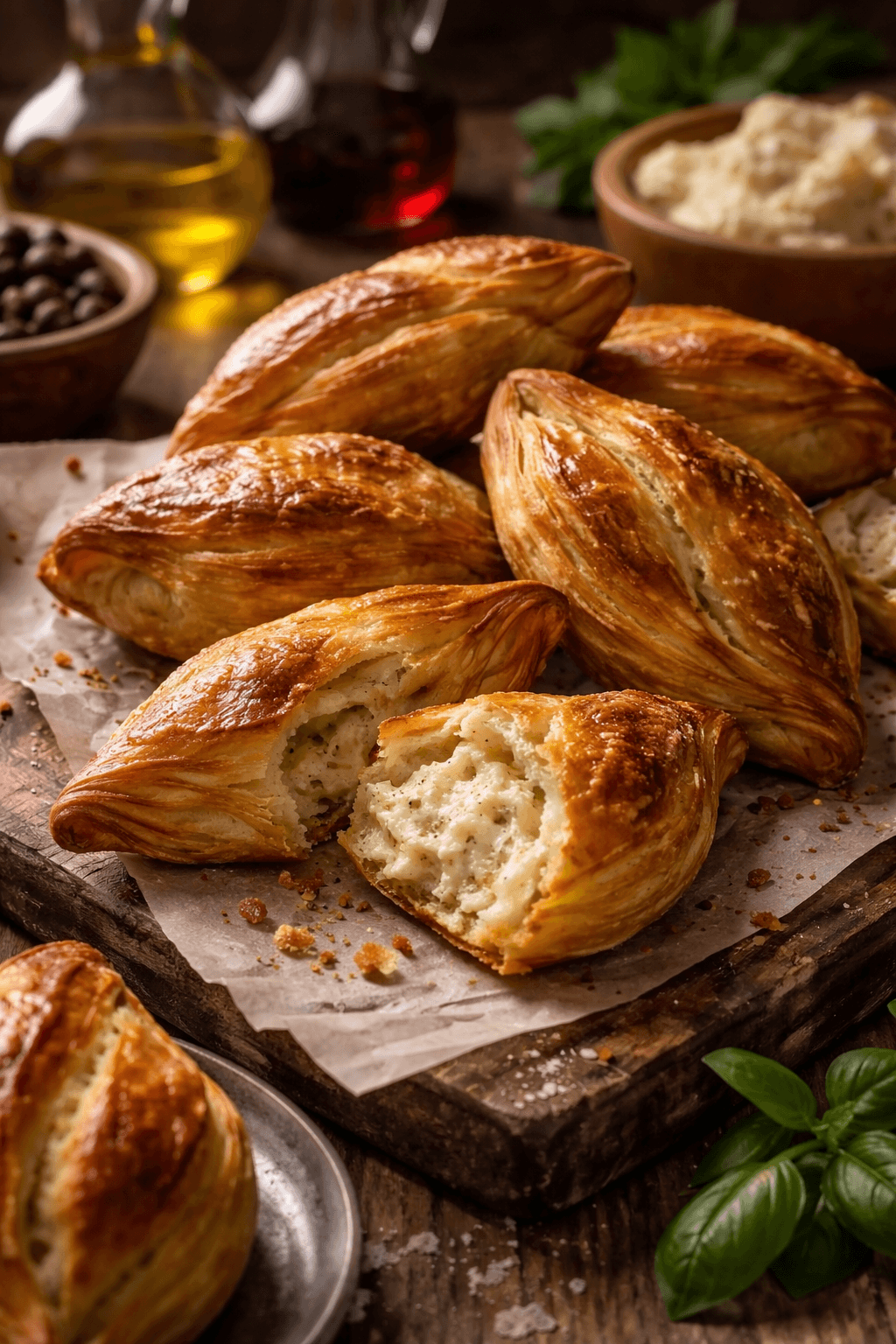
If there is one snack that truly captures the everyday food culture of Malta, it is pastizzi. These golden, flaky pastries are sold all over the islands and are loved by locals for their simple ingredients, rich fillings, and irresistibly crisp layers of pastry. Walk through almost any Maltese town and you will likely spot a small shop with a warm display case full of freshly baked pastizzi, their delicate layers glistening and crackling as they come straight out of the oven.
For many visitors, the first bite of a pastizz becomes an instant memory of Malta. The pastry shatters into crisp flakes while the creamy filling inside stays warm and soft. It is messy in the best possible way — crumbs everywhere, fingers slightly greasy, and absolutely worth it. Whether eaten for breakfast, a quick lunch, or a late-night snack after a long evening out, pastizzi are one of those foods that locals never seem to get tired of. The beauty of pastizzi lies in their simplicity. A handful of ingredients, a clever pastry technique, and a hot oven are all it takes to create something that feels incredibly satisfying. And once you start making them yourself, it becomes very easy to understand why this humble pastry has been such an essential part of Maltese food culture for generations.
The beauty of pastizzi lies in their simplicity. A handful of ingredients, a clever pastry technique, and a hot oven are all it takes to create something that feels incredibly satisfying. And once you start making them yourself, it becomes very easy to understand why this humble pastry has been such an essential part of Maltese food culture for generations.
What Is It?
Pastizzi are small savory pastries made from a thin laminated dough that bakes into dozens of crisp, delicate layers. Each pastry is folded into a diamond-shaped parcel and filled with either ricotta cheese or a thick mash of seasoned peas. The contrast between the crispy pastry and the soft filling is what makes them so addictive.
The ricotta version, known as pastizzi tal-irkotta, is the most widely recognized. The filling is creamy, slightly tangy, and lightly seasoned, creating a simple but comforting center that pairs perfectly with the flaky pastry. The pea version, pastizzi tal-piżelli, is a little more savory and hearty, made with mashed peas cooked with onions and spices.
When baked, the pastry puffs up into thin crisp layers that crackle when you bite into them. The edges become deeply golden and slightly caramelized, while the center stays tender around the filling. Served warm, the pastry breaks apart in delicate shards that make every bite feel indulgent and satisfying.
In Malta, pastizzi are not considered a special occasion food. They are everyday food — something people grab on the go, share with friends, or eat quickly while standing outside a pastizzeria with a hot pastry in one hand and a drink in the other.
A Little History
The exact origins of pastizzi are not entirely clear, but they are deeply tied to Malta’s long history of Mediterranean influence. Over the centuries, the island has absorbed culinary ideas from nearby regions including Sicily, North Africa, and the Middle East. The laminated pastry technique used in pastizzi likely evolved from these influences, combining elements of filo-style pastry with local baking traditions.
By the late nineteenth and early twentieth century, small bakeries known as pastizzerias had begun appearing throughout Malta’s towns and villages. These modest shops specialized in a few inexpensive baked goods, and pastizzi quickly became their signature item. They were affordable, filling, and easy to produce in large quantities, making them popular among workers looking for a quick and satisfying meal.
Over time, pastizzerias became an important part of Maltese daily life. Many locals have a favorite shop they swear by, often debating which bakery makes the crispiest pastry or the creamiest ricotta filling. Some pastizzerias even become late-night gathering spots where people stop for a hot pastry after an evening out.
Today, pastizzi remain one of Malta’s most recognizable foods. Despite the rise of modern cafés and international cuisine on the islands, the humble pastizz continues to hold its place as a beloved snack that connects generations of Maltese home cooks and bakers.
At a glance
Serves
6
Calories
424 kcal
Protein
8.1 g
Course
Appetizer, Snack
Why it works
01 A handful of simple ingredients
02 Laminated dough bakes into crisp layers
03 Freeze unbaked and bake from frozen

Cooking this later?
Save it to your Pinterest board so it’s there when you need it.
What You Need
Exact amounts are in the recipe card
For the Pastry
- Flour
- Water
- Salt
- Butter or margarine for laminating the dough
Ricotta Filling
- Fresh ricotta
- Salt
- Black pepper
Pea Filling
- Cooked peas or dried split peas
- Onion
- Garlic
- Olive oil
- Salt
- Black pepper
Step-by-Step Instructions
One of the reasons pastizzi are so beloved is that the ingredients are incredibly simple. There are no complicated elements here — just a few pantry staples that come together to create something much greater than the sum of their parts.
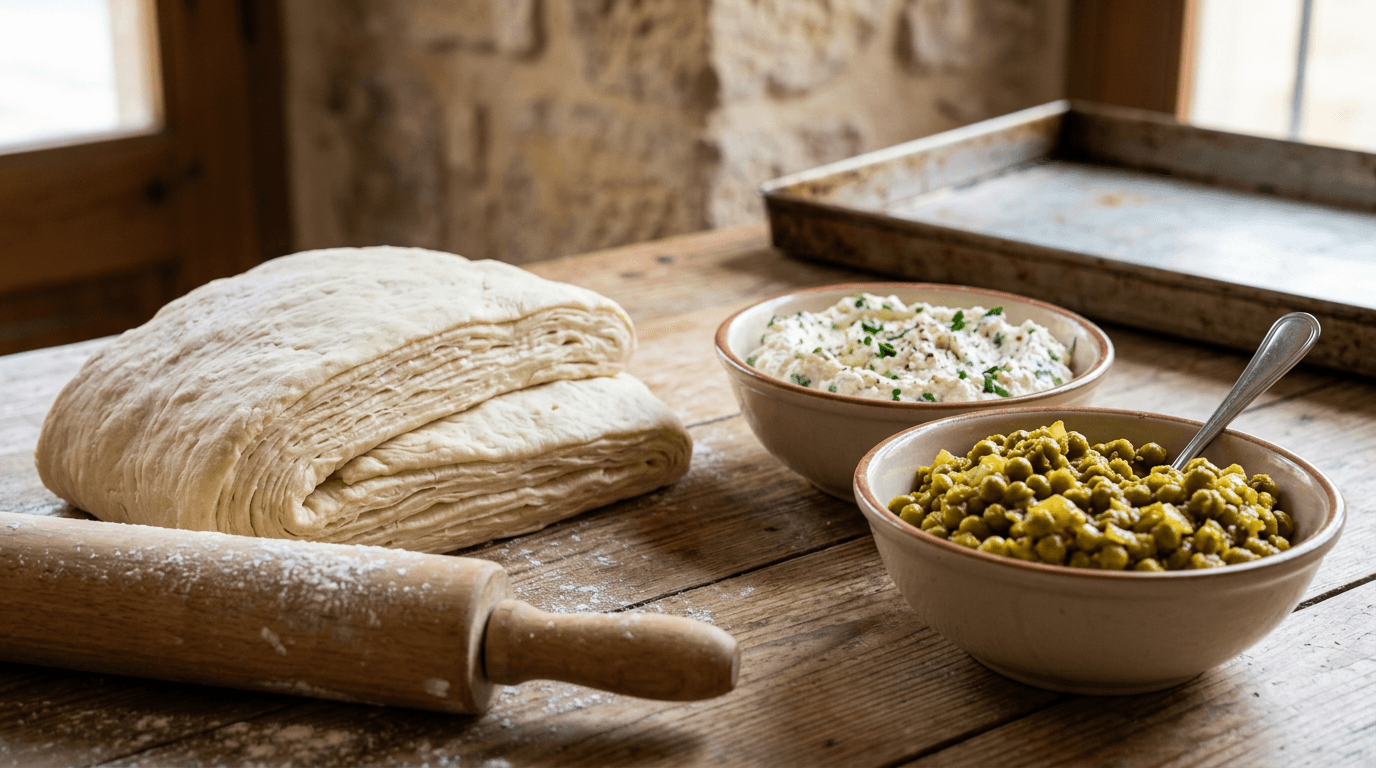
Making pastizzi is all about creating the signature flaky pastry. The dough itself is simple, but the magic happens during the laminating process. The dough is rolled out thinly, coated with fat, and then rolled into a tight log. This technique builds the layers that will later puff and separate during baking.
When the dough is sliced into portions, each piece contains dozens of delicate layers already formed. These portions are gently opened with the fingers to create a small pocket for the filling. It is a surprisingly tactile process, and watching the pastry stretch and thin without tearing is part of what makes pastizzi making so satisfying. Once filled, the pastry is folded and sealed into the traditional diamond shape. The pastries are then baked in a very hot oven where the layers expand and crisp up rapidly. As they bake, the pastry transforms into the golden, flaky shell that makes pastizzi instantly recognizable. The aroma of pastizzi baking is something unforgettable. Buttery pastry, warm ricotta, and toasted edges fill the kitchen with a smell that makes it nearly impossible to wait until they cool before taking the first bite.
Once filled, the pastry is folded and sealed into the traditional diamond shape. The pastries are then baked in a very hot oven where the layers expand and crisp up rapidly. As they bake, the pastry transforms into the golden, flaky shell that makes pastizzi instantly recognizable. The aroma of pastizzi baking is something unforgettable. Buttery pastry, warm ricotta, and toasted edges fill the kitchen with a smell that makes it nearly impossible to wait until they cool before taking the first bite.
The aroma of pastizzi baking is something unforgettable. Buttery pastry, warm ricotta, and toasted edges fill the kitchen with a smell that makes it nearly impossible to wait until they cool before taking the first bite.
1. Prepare the dough
Start by combining the flour, water, and salt to form a smooth dough. Knead it until it becomes elastic and slightly firm. This step helps develop the structure needed for the pastry layers. Once kneaded, cover the dough and allow it to rest so it relaxes and becomes easier to roll.
2. Laminate the dough
Roll the rested dough into a large thin sheet. Spread butter or margarine across the surface and then roll the dough tightly into a long log. This rolling process creates the layers that will later puff and separate in the oven.
Let the dough rest again so the fat firms up slightly before shaping the pastries.
3. Prepare the filling
For the ricotta filling, simply mix the ricotta with salt and black pepper until evenly seasoned.
For the pea filling, cook the peas until soft, then mash them with sautéed onion, garlic, olive oil, and seasoning. The mixture should be thick enough to hold its shape when spooned into the pastry.
4. Shape the pastizzi
Cut small portions from the dough log. Gently flatten each piece and open it with your fingers into a thin oval shape. Add a spoonful of filling in the center.
Fold the pastry around the filling and pinch the edges together to form the traditional diamond-shaped pastry.
5. Bake
Place the pastizzi on a baking tray and bake them in a very hot oven until the pastry becomes deeply golden and crisp. The layers should puff and separate, creating the light flaky texture that defines a good pastizz.
Serving & Storage
Serving
Pastizzi are at their absolute best when eaten warm, straight from the oven. The pastry is at its crispiest and the filling is perfectly soft and creamy inside. Bite into one too soon and you might burn your tongue — something that happens to almost everyone the first time because they smell too good to resist.
In Malta, pastizzi are often enjoyed as a quick snack or light meal. They are commonly paired with a cup of tea, coffee, or a bottle of the local soft drink Kinnie. Many people simply stand outside the pastizzeria eating them fresh from a paper bag, crumbs falling everywhere as they talk with friends.
While they are humble street food, pastizzi have a way of bringing people together. It is not unusual to see someone buying a dozen to share with family or coworkers, because once one person starts eating them, everyone else usually wants one too.
You’ll now also find pastizzi filled with chicken, sausage, spinach and cheese, pizza-style fillings, and even Nutella in some places.
Storing Leftovers
Pastizzi are best enjoyed on the day they are baked, when the pastry is at its crispiest and the layers are still light and flaky. As with many pastries, the texture softens over time as the moisture from the filling begins to absorb into the dough.
If you have leftovers, they can be stored in an airtight container in the refrigerator for up to two days. To restore some of their crispness, reheat them in a hot oven for several minutes rather than using a microwave.
| Baked pastizzi | up to 2 days in the fridge |
| Unbaked pastizzi | freeze, bake from frozen |
Pastizzi can also be frozen before baking. Simply shape the pastries, place them on a tray to freeze individually, and then store them in a freezer bag. When ready to bake, cook them directly from frozen, adding a few extra minutes to the baking time. This makes it easy to enjoy fresh pastizzi whenever the craving strikes.
Traditional Maltese Pastizzi (Ricotta-Filled)
Ingredients
- 400 g puff pastry ready-rolled or homemade
- 200 g fresh ricotta cheese
- 1 egg yolk optional, for egg wash
- Salt to taste
- Black pepper to taste
Instructions
- Preheat oven to 200°C (390°F).
- In a bowl, mix the ricotta with salt and pepper to taste.
- Roll out the puff pastry and cut into 6 even squares or circles.
- Place a spoonful of ricotta mixture in the center of each piece.
- Fold the pastry into a half-moon (or diamond) shape and crimp the edges gently.
- Optionally brush with egg yolk for a golden finish.
- Place on a baking tray lined with parchment paper.
- Bake for 20–25 minutes, or until golden brown and crisp.
- Serve hot, preferably with a cup of tea or Maltese coffee.
Made these pastizzi?
Rate it with the stars in the recipe card and tell us how it went in the comments: what you swapped, what you added, how spicy you made it.
Maltese Pastizzi Recipe FAQs
What are pastizzi filled with?
The two classic fillings are creamy ricotta and seasoned mushy peas. This recipe explains both options.
What pastry is used for pastizzi?
Pastizzi use a flaky, layered pastry. Follow the dough and shaping method in this recipe for the characteristic crisp shell.
How should I serve pastizzi?
Serve them warm, when the pastry is crisp and the filling is soft. In Malta they are often eaten as a snack with tea or coffee.
Products we use
Our kitchen kit for this recipe
Stainless Steel Bowls
View in shop
Wooden Spoons
View in shop
Ninja Foodi DualZone Air Fryer (7.6 L)
View in shopMore to cook
More recipes from our kitchen

Malta
Imqaret

Malta
Tuna Ftira
Malta
Lampuki Pie