Set the Tone for Worldly Tastes in Every Kitchen
Maltese Recipes
Malta’s food culture is a direct reflection of its history. Sitting in the middle of the Mediterranean, the islands have absorbed influences from Italy, North Africa, and the United Kingdom, yet still hold on to a strong, rustic identity. The cuisine is built on simplicity—seasonal vegetables, slow-cooked meats, fresh fish, olive oil, and bread are at the core of almost every dish.
What defines Maltese cooking is not complexity, but depth. Recipes are often slow, hearty, and designed to feed families. You’ll find dishes that have barely changed over generations, alongside street food that locals eat daily. Below is a structured guide to traditional Maltese recipes, broken down by course.
Appetizers (Small Bites & Street Food)
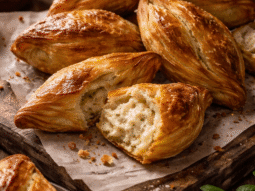
We started, of course, with pastizzi. Those golden, flaky little pastries are everywhere, stuffed with ricotta or mushy peas, and eaten standing up because sitting down would just slow you down. At €0.80 a piece, they’re not just tasty—they’re practically Malta’s answer to budget living. We discovered that if all else failed, we could survive happily on pastizzi alone… though maybe not with clean T-shirts.
Ftira
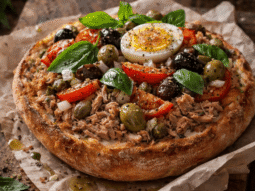
And then there’s ftira, Malta’s genius contribution to the sandwich world. Imagine a pizza and a sandwich had a delicious baby—round, flat Maltese bread split open and stuffed with tuna, tomatoes, onions, capers, and olives. It’s the kind of food that disappears in seconds, leaving you with salty fingers and a grin.
Bigilla
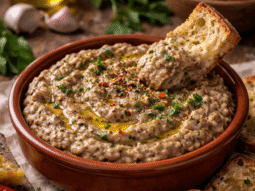
Markets introduced us to another island staple: the big white beans that grow on Maltese soil. They’re plump, creamy, and turn up in stews, soups, and rustic spreads. Sometimes they’re mashed into bigilla, Malta’s famous bean paste. It’s earthy, garlicky, and best enjoyed scooped up with crunchy water crackers or torn hunks of bread. We picked up a tub at a market “just to try,” only to scrape the bottom clean before we’d even made it back to the boat.
Timpana (Baked Pasta Pie)
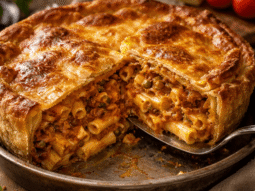
Timpana was the dish that completely won over our kids—and honestly, we understood why. Imagine macaroni mixed with minced meat, tomatoes, eggs, and cheese, then wrapped in pastry and baked until golden. It’s indulgent, filling, and slightly outrageous in the best way.
The first time we ordered it, we thought it would just be a one-off novelty—something to try once and tick off the list. But the kids had other plans. The moment that first slice hit the table, they were wide-eyed and instantly hooked. Layers of pasta and meat encased in flaky pastry? It was like someone had invented lasagna, pie, and comfort food heaven all in one.
From that meal on, timpana became their obsession. They started scanning menus everywhere we went, asking, “Do they have timpana here?” Sometimes they were disappointed, but when we struck gold, it was a celebration. We’d watch them devour slice after slice, sauce on their cheeks, crumbs everywhere, grinning like they’d found the holy grail of Maltese cooking.
For us, timpana was delicious and heavy—definitely a dish to share. But for the kids, it was love at first bite, and the kind of culinary crush that defined our summer in Malta.
Gbejniet
One day at a local market, we also stumbled upon rounds of Maltese goat cheese (ġbejniet). These little white disks can be fresh, tangy, and mild, or dried and peppered until they pack a real punch. We nibbled them with bread and tomatoes, pretending we’d just have “a taste.” By the end, we’d demolished the lot and were plotting how to smuggle a few more on board.
Read more about the Traditional Maltese Recipes
Starters (Light Plates & Soups)
Aljotta (Fish Soup)
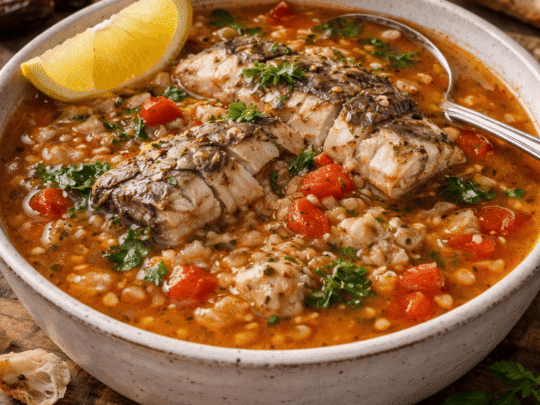
- We discovered aljotta on a breezy afternoon in Marsaxlokk, Malta’s famous fishing village. After wandering the Sunday market—dodging baskets of squid, gleaming swordfish, and rows of fresh octopus—we sat down at a little restaurant by the water. The waiter recommended the fish soup, “simple but very
- Maltese,” so we went for it.
- What arrived was a steaming bowl of garlicky broth, lemony and bright, with little grains of rice soaking up the flavor. It wasn’t heavy or complicated—just honest, rustic, and packed with the taste of the sea. Each spoonful carried that salty freshness, like the Mediterranean had been ladled straight onto the table.
- It reminded me a little of bouillabaisse, but stripped back, lighter, and somehow more comforting. With the boats bobbing in the harbor just meters away, we couldn’t help but smile—it felt like the fish had practically jumped from the sea into our soup pot. Simple, warming, and unforgettable.
Kusksu (Broad Bean & Pasta Soup)
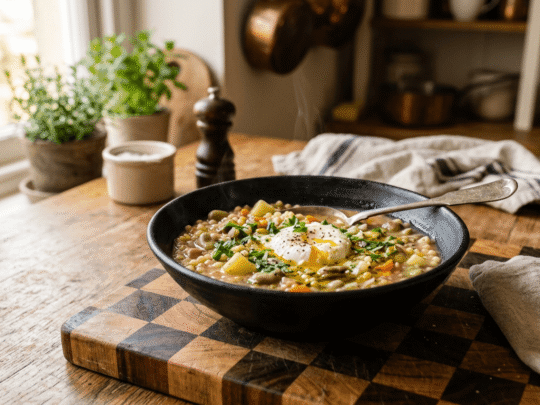
Kusksu was one of those dishes that surprised us. At first glance, it’s “just a soup”—but one spoonful in, and we understood why the Maltese wait for broad bean season every spring. It’s a simple, humble dish: fresh fava beans simmered with tomato and onion, little pasta beads floating in the broth, and, if you’re lucky, a poached egg or a piece of ġbejna (Maltese goat cheese) melting into it at the end.
We tried kusksu in a small village café where the owner’s mother was stirring a massive pot behind the counter. It was served in plain white bowls, steaming hot, with thick slices of Maltese bread on the side. The first bite was earthy and comforting—like spring had been distilled into soup.
There was something deeply satisfying about it, not fancy or showy, just honest food cooked from whatever was in season. Sitting there with our spoons clinking against the bowls, we realized that kusksu isn’t about impressing—it’s about nourishing. It felt like the kind of dish a Maltese grandmother would put in front of you without asking if you were hungry, because she already knew you were.
Minestra (Vegetable Soup)
Minestra is Maltese comfort in its simplest form—the kind of dish that feels like it’s been quietly simmering in a family kitchen all afternoon. It’s a thick vegetable soup made with whatever is in season, from soft potatoes and carrots to cabbage, beans, and tomatoes. Nothing complicated, just ingredients cooked down until everything comes together into something hearty and satisfying. It’s the kind of meal that doesn’t try to impress, but ends up doing exactly that.
Kapunata (Maltese Ratatouille)
Kapunata is Malta’s take on ratatouille, but with its own bold, Mediterranean edge. Eggplant, tomatoes, capers, and olives are slowly cooked until soft and rich, creating a dish that balances sweetness with a slight tang. It’s light but full of flavour, the kind of plate that works just as well on its own as it does alongside grilled meat or fish. Simple ingredients, cooked properly, and that’s all it needs.
Hearty Maltese Main Courses
Why Rabbit (Fenek) Matters in Malta
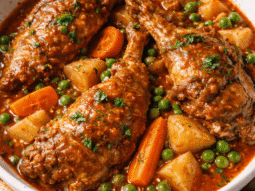
Rabbit (fenek) isn’t just Malta’s national dish—it’s a window into the island’s farming history. Malta’s land is rocky and limited, with little room for large herds of cattle or sheep. Raising rabbits, however, was practical: they’re small, reproduce quickly, and thrive even in tight rural spaces. For centuries, Maltese families kept rabbits not just as livestock but as a reliable source of meat in a landscape where farming was tough and resources were scarce.
There’s also a cultural layer. Under the rule of the Knights of St. John, hunting rabbits was once restricted to the nobility—ordinary Maltese weren’t allowed to catch or raise them freely. When the ban was lifted, rabbit became a symbol of freedom and resilience. Over time, it grew into a beloved Sunday meal, something families would gather for at home or in countryside restaurants known as fenek places.
So when you sit down to a steaming plate of stuffat tal-fenek, you’re not just tasting a stew—you’re tasting centuries of tradition, ingenuity, and even a little rebellion. It’s one of the dishes that truly defines Malta.
Braġjoli (Beef Olives)
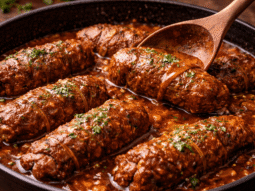
The name fooled us at first—beef olives? We were expecting something with olives tucked inside. Instead, what arrived at our table was even better: thin slices of beef rolled carefully around a stuffing of breadcrumbs, herbs, and just enough bacon to make it irresistible. The rolls were then simmered slowly in a rich tomato sauce until they were fork-tender.
We ordered braġjoli at a tiny, family-run spot on a side street in Rabat. The waiter winked when we chose it—“proper comfort food,” he said—and he was right. The dish came bubbling hot in a clay dish, with thick slices of Maltese bread on the side, perfect for mopping up the sauce.
It wasn’t fancy, but it didn’t need to be. Eating braġjoli felt like being handed a plate of Maltese home cooking, the kind of meal you’d expect to find at someone’s grandmother’s table. Hearty, humble, and cooked with love—exactly the kind of food that makes you want to linger long after the plate is empty.
Lampuki Pie
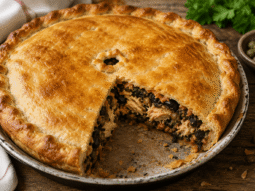
Lampuki Pie felt like Malta on a plate—seasonal, celebratory, and steeped in tradition. We learned quickly that lampuki, the local dolphin fish, or in some countrie mahi mahi, only appears in autumn when the fishermen set out their special nets. The excitement in the markets was contagious—stalls piled high with shiny silver fish, vendors proudly announcing, “Lampuki is here!”
When we finally tried the pie, it was clear why this dish has such a reputation. Flaky pastry gave way to a filling of fish mixed with spinach, cauliflower, olives, and nuts. The flavors were hearty yet delicate, the kind of meal that feels homemade even when you’re eating it at a restaurant.
What struck us most was how locals talked about it. Lampuki Pie isn’t just food—it’s a marker of time. You know the season has shifted, that autumn has arrived, when lampuki hit the menus. Sharing a slice felt less like ordering dinner and more like joining in a yearly ritual. We left the table full, happy, and already wishing we could come back for lampuki season again.
Ross il-Forn (Baked Rice)
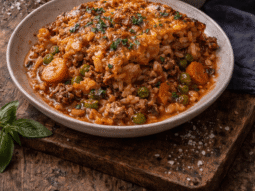
Ross il-Forn was comfort food at its finest—the kind of dish that makes you feel like you’ve been invited to Sunday lunch with a Maltese family, even if you’re just sitting in a little local restaurant. It’s oven-baked rice, cooked with minced meat, tomato sauce, eggs, and cheese until it forms a golden, slightly crispy crust on top.
We first tried it in a tucked-away eatery where the portions looked big enough to feed a small army. The waiter set down a piping-hot tray in front of us, and the smell alone was enough to make us forget we’d already had a starter. That first bite was rich, hearty, and just a little nostalgic—even though we’d never grown up with it.
There was something about the texture that won us over: soft, saucy rice inside, crispy browned edges outside. We found ourselves scraping the corners of the dish, unwilling to let even a single crunchy grain go to waste. By the end, we were stuffed, but in that happy, content way that makes you linger at the table a little longer.
- Stuffed Calamari – Squid filled with a savoury mixture and cooked in tomato sauce.
Desserts (Sweet & Traditional)I
Imqaret
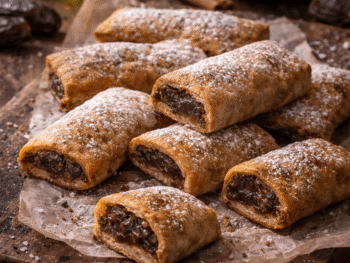
Of course, no Maltese feast ends without something sweet. Enter imqaret—date-filled pastries fried until golden. You’ll smell them before you see them, usually at street stalls, and if you buy one, you’ll immediately wish you’d bought three.
To wash it all down? A glass of local wine (underrated and absolutely worth seeking out), a cold Cisk beer, or, if you’re feeling adventurous, Malta’s national soda: Kinnie. It’s bittersweet, herbal, and citrusy—love it or hate it, but definitely try it. I personally loved it… after the third sip.
Kannoli (Maltese Style)
Kannoli are one of those desserts that feel instantly familiar, but still worth ordering every time. Crisp pastry shells are filled with sweet ricotta, creating that perfect contrast between crunchy and smooth. Similar to the Sicilian version, but with a slightly more rustic feel, they’re simple, rich, and exactly what you want at the end of a meal.
Qagħaq tal-Għasel (Honey Rings)
Qagħaq tal-Għasel are dense, spiced honey rings that lean more towards deep, rich flavours than light sweetness. Filled with a dark treacle mixture and wrapped in pastry, they have a slightly sticky, almost chewy texture. It’s the kind of dessert that feels traditional in every bite—bold, warming, and built on ingredients that have been used for generations.
Ħelwa tat-Tork
Ħelwa tat-Tork is Malta’s version of a halva-style sweet—crumbly, nutty, and unmistakably rich. Made from ground sesame seeds and sugar, it has a texture that falls apart as you eat it, melting slightly with each bite. It’s not overly delicate or refined, but that’s part of the appeal—simple ingredients turned into something deeply satisfying.