

Maltese Food Mains
Braġjoli: Maltese Beef Olives Recipe (Slow-Cooked)
Malta’s Comfort Food in a Sauce.
Serves
4
Calories
619 kcal
Cuisine
Maltese

On this page: What is it · History · What you need · Step by step · Serving & storage · Recipe card
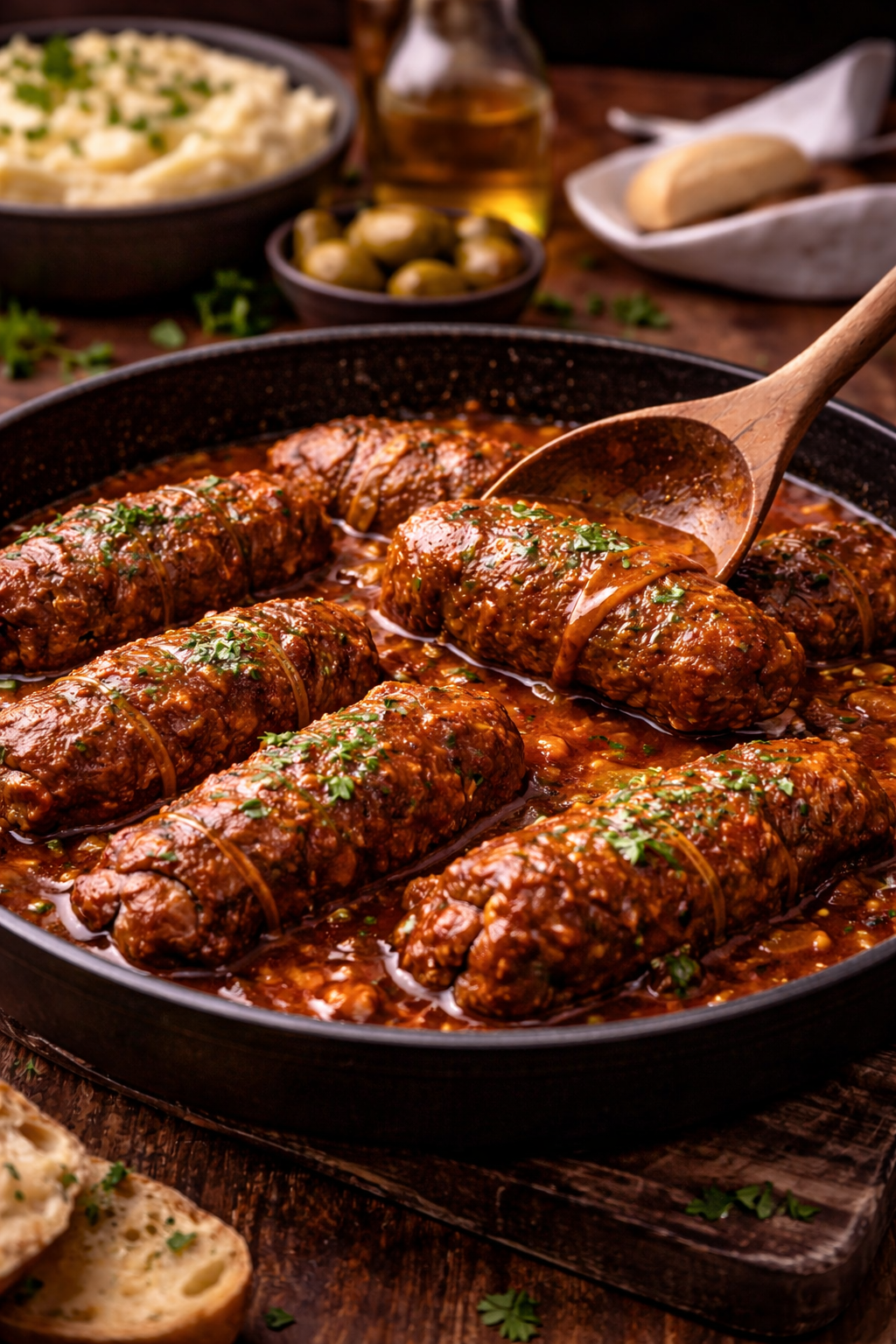
Braġjoli are the kind of dish you don’t just eat — you settle into them.
They arrive swimming in a rich sauce, tied neatly into little bundles that promise comfort before you’ve even taken a bite. This is not quick food and it’s definitely not light food. Braġjoli are for days when you want something warm, slow, and deeply satisfying.
The first time I was served braġjoli, I didn’t immediately understand what I was looking at. Rolled beef, tied with string, resting quietly in a tomato-based sauce — it didn’t look dramatic.
Then I cut into one.
Inside was a filling packed with flavour, soaking up the sauce from the inside out. One bite was enough to explain why this dish has been cooked in Maltese homes for generations.
What Is It?
Braġjoli, often called beef olives, are thin slices of beef rolled around a savoury stuffing and slowly braised. The filling usually includes breadcrumbs, herbs, garlic, eggs, and sometimes bacon or minced meat, all tied together before being cooked gently in a rich sauce.
The slow cooking is everything here. It softens the beef and allows the flavours to deepen without rushing.
A Little History
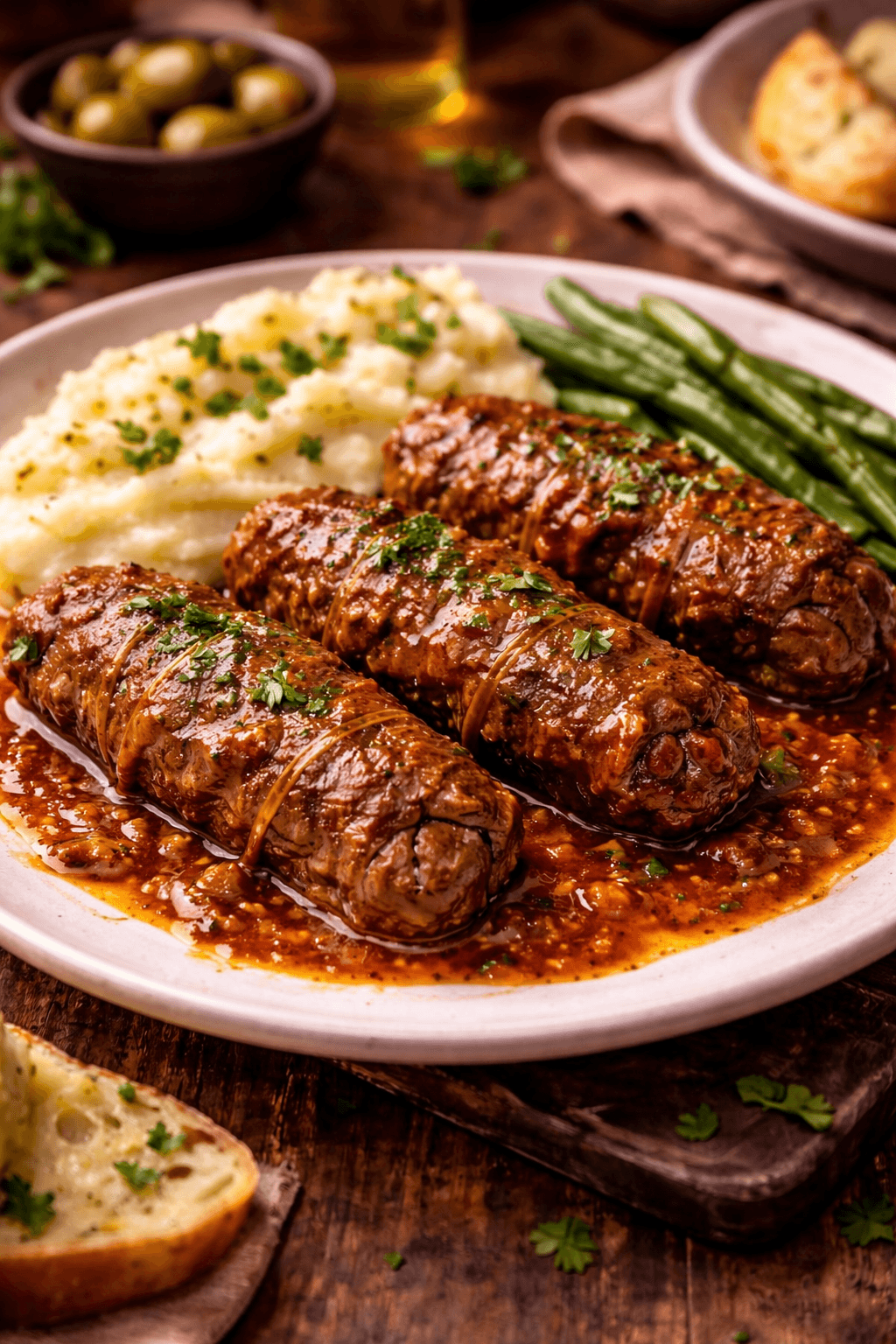
Bragjoli, often called Maltese beef olives, is one of Malta’s most recognizable traditional dishes and reflects the island’s long history of cultural influences. Despite the name “olives,” the dish contains no olives; the term likely comes from the rolled shape of the beef parcels.
The recipe developed from Mediterranean and European cooking traditions, particularly Italian and British influences that shaped Maltese cuisine over centuries. Thin slices of beef were filled, rolled, and slowly braised to create a hearty meal that could feed a family using relatively simple ingredients. Over time, bragjoli became a staple of Maltese home cooking, often served as a comforting Sunday meal and typically accompanied by potatoes, peas, or crusty bread to soak up the rich sauce.
At a glance
Serves
4
Calories
619 kcal
Protein
45.8 g
Course
Main Course
Why it works
01 Slow simmering makes the beef tender
02 Rolls can be prepared ahead
03 Often better the next day
Cooking this later?
Save it to your Pinterest board so it’s there when you need it.
What You Need
Exact amounts are in the recipe card
For the Rolls
- thin beef slices (topside or flank)
- breadcrumbs
- egg, beaten
- streaky bacon, chopped
- parsley, grated cheese or mustard (optional)
For the Sauce
- olive oil
- onion, chopped
- garlic, crushed
- tomato paste
- red wine
- water or beef stock
- salt and pepper
Step-by-Step Instructions
To make traditional Maltese bragjoli, you need a few key components that build the dish’s rich, slow-cooked character. Thin slices of beef form the outer layer, while the filling usually brings together a savory mixture of minced meat, breadcrumbs, herbs, garlic, onion, and egg for binding. Many versions also include bacon, hard-boiled egg, or a small sausage-like center, which gives bragjoli its classic hearty feel. Once rolled, the beef parcels are browned and then slowly simmered in a deeply flavored sauce, often made with onion, garlic, tomato, stock, and wine. You will also need a good frying pan or heavy pot, kitchen string or toothpicks to secure the rolls, and enough time to let the beef become tender and the sauce develop properly.
Bragjoli is a dish that comes together in stages, and each one matters. First, the beef slices are prepared and filled, then rolled into compact parcels that hold their shape during cooking. After that, the rolls are browned to build flavor on the outside before being gently simmered in sauce until the meat softens and the filling becomes rich and cohesive. The slow cooking stage is what transforms bragjoli from a simple stuffed beef roll into a deeply comforting Maltese dish. As the rolls cook, the sauce thickens and takes on all the juices from the meat, creating a hearty finish that feels both rustic and special.
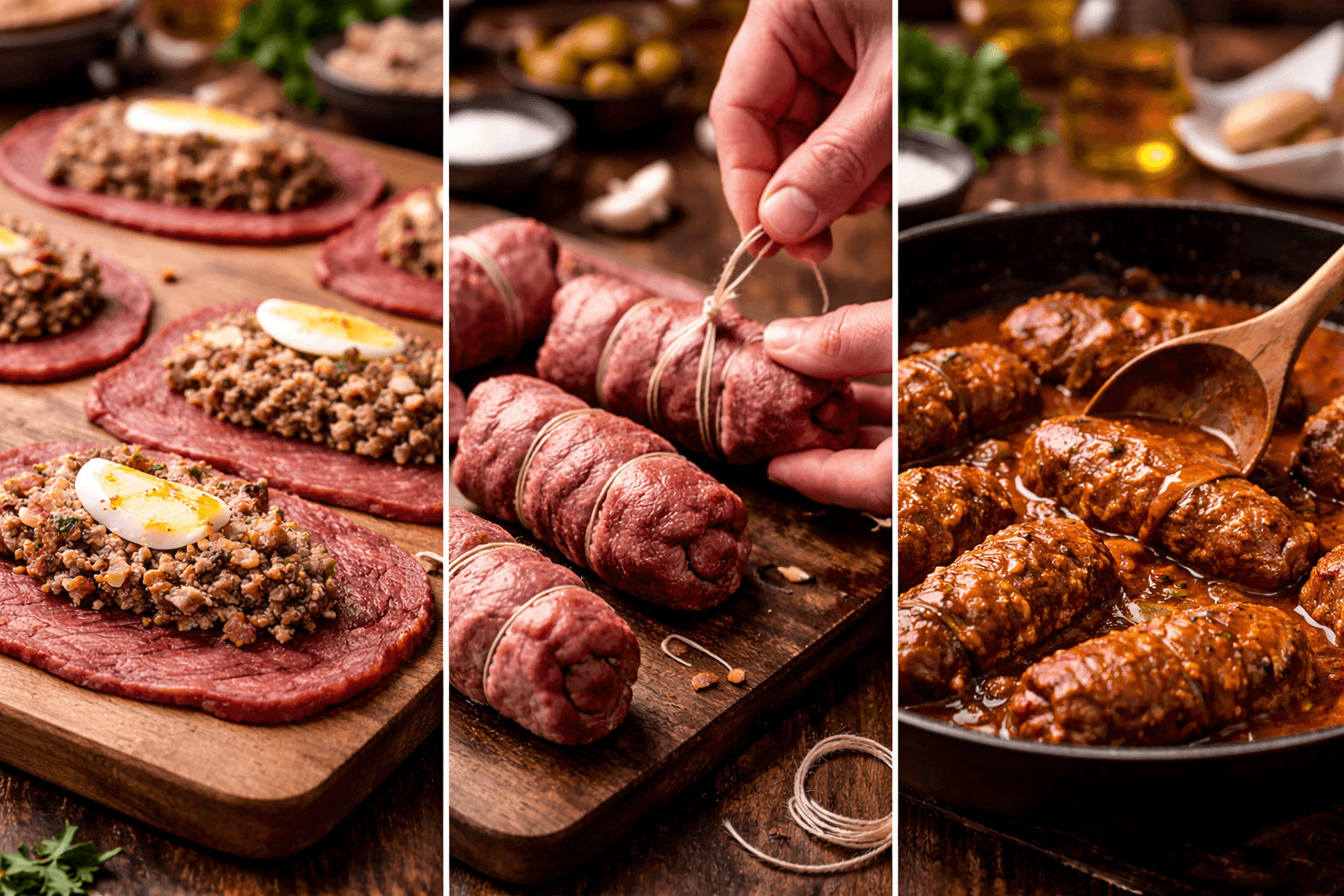
1. Prepare and fill the beef
Start by laying out the beef slices and gently flattening them if needed, so they are easier to roll. Prepare the filling in a bowl, combining the minced meat with the other filling ingredients until the mixture holds together well and is evenly seasoned. Place a portion of filling onto each slice of beef, shaping it into a compact line rather than spreading it too widely. This makes the rolls easier to close neatly.
2. Roll and brown
Roll each piece of beef tightly around the filling, tucking in the sides as you go if possible. Secure each roll with kitchen string or toothpicks so it stays closed during cooking. Once all the rolls are ready, heat a little oil in a heavy pan and brown them on all sides. This step adds color and depth and helps seal the outside before simmering.
3. Make the sauce and simmer
Remove the rolls briefly if needed, then cook the onion and garlic in the same pan so they absorb the browned flavors left behind. Add the sauce ingredients and stir well, then return the bragjoli to the pan. Cover and simmer gently until the beef is tender and the sauce has thickened. This usually takes time, so do not rush it. The finished bragjoli should be soft enough to cut easily, with a rich filling and a sauce that coats the rolls nicely.
Tip: For a richer sauce, stir in a spoon of butter or a splash of cream at the end.
Serving & Storage
Serving
Bragjoli is best served hot, with plenty of sauce spooned over the top. It pairs especially well with creamy mashed potatoes, boiled potatoes, rice, or crusty bread that can soak up the sauce. Because it is such a rich and hearty dish, a simple side of peas or another mild vegetable works well alongside it. If serving for a family meal, place the rolls on a platter and spoon the sauce over just before bringing them to the table, so they look generous and full of flavor.
Storing Leftovers
You can prepare the rolls in advance and freeze them raw or cooked.
| Bragjoli rolls | freeze raw or cooked |
This dish is often better the next day, perfect for meal prep or slow Sunday lunches.
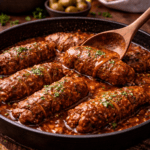
Braġjoli (Maltese Beef Olives)
Equipment
- Sharp knife
- Meat mallet or rolling pin (to flatten beef slices)
- Cutting board
- Large frying pan or Dutch oven
- Skewers or kitchen twine (to secure the rolls)
Ingredients
- 500 g thin beef slices topside or flank
- 50 g breadcrumbs
- 1 egg beaten (50 g)
- 100 g streaky bacon chopped
- 2 tbsp olive oil 30 g
- 100 g onion chopped
- 2 –3 cloves garlic crushed
- 50 g tomato paste
- 100 ml red wine
- 100 ml water or beef stock
- Salt and pepper to taste
- Optional: parsley grated cheese, or mustard for stuffing
Instructions
- Flatten the beef slices with a meat mallet until about 5 mm thick. Season with salt and pepper.
- In a bowl, mix breadcrumbs, bacon, beaten egg, and parsley (or grated cheese, if using).
- Place a spoonful of stuffing on each beef slice, roll tightly, and secure with a skewer or kitchen twine.
- Heat olive oil in a pan and brown the rolls on all sides. Remove and set aside.
- In the same pan, sauté onion and garlic until soft.
- Add tomato paste and cook for 1–2 minutes, then deglaze with red wine.
- Return the beef rolls to the pan. Add water or stock, cover, and simmer gently for about 1 to 1.5 hours, until tender.
- Serve hot with potatoes, peas, or fresh bread.
Made this bragjoli?
Rate it with the stars in the recipe card and tell us how it went in the comments: what you swapped, what you added, how spicy you made it.
Products we use
Our kitchen kit for this recipe
T-fal Stainless Steel Cookware Set (11-piece)
View in shop
Stainless Steel Bowls
View in shop
Wooden Spoons
View in shopMore to cook
More recipes from our kitchen
Malta
Timpana

Malta
Ross il-Forn

Malta
Fenek