
Set the Tone for Worldly Tastes in Every Kitchen
Sri Lankan Curries
The Essential Guide to What's on the Table

Sri Lankan curries aren't built to be eaten one at a time. A typical meal puts several on the table at once, usually a protein curry, a lentil curry, and at least one vegetable curry, each bringing its own heat, texture, and flavor. The most common ones are chicken curry, fish curry, dhal curry, jackfruit curry, and a rotating cast of vegetable curries.
At Tone & Taste, curry was the constant thread through every stop of our time in Sri Lanka, from a family-run hotel kitchen in Negombo to roadside stalls further south. This guide breaks down the curries you'll actually encounter and what sets each one apart.
Chicken Curry (Kukul Mas Curry)
Kukul mas curry is Sri Lanka's everyday chicken curry, built on a base of coconut milk, curry leaves, cinnamon, and a blend of roasted Sri Lankan curry powder. The roasting step matters here. Sri Lankan curry powder is toasted before grinding, which gives the curry a deeper, almost smoky background flavor compared to the raw curry powders used elsewhere in South Asia.
It's a fragrant, moderately spiced curry rather than an aggressively hot one, which is part of why it works so well as the centerpiece of a rice and curry spread that also includes sharper, spicier sides. Chicken curry is the one most households make regularly, which makes it a good starting point if you're new to Sri Lankan cooking.
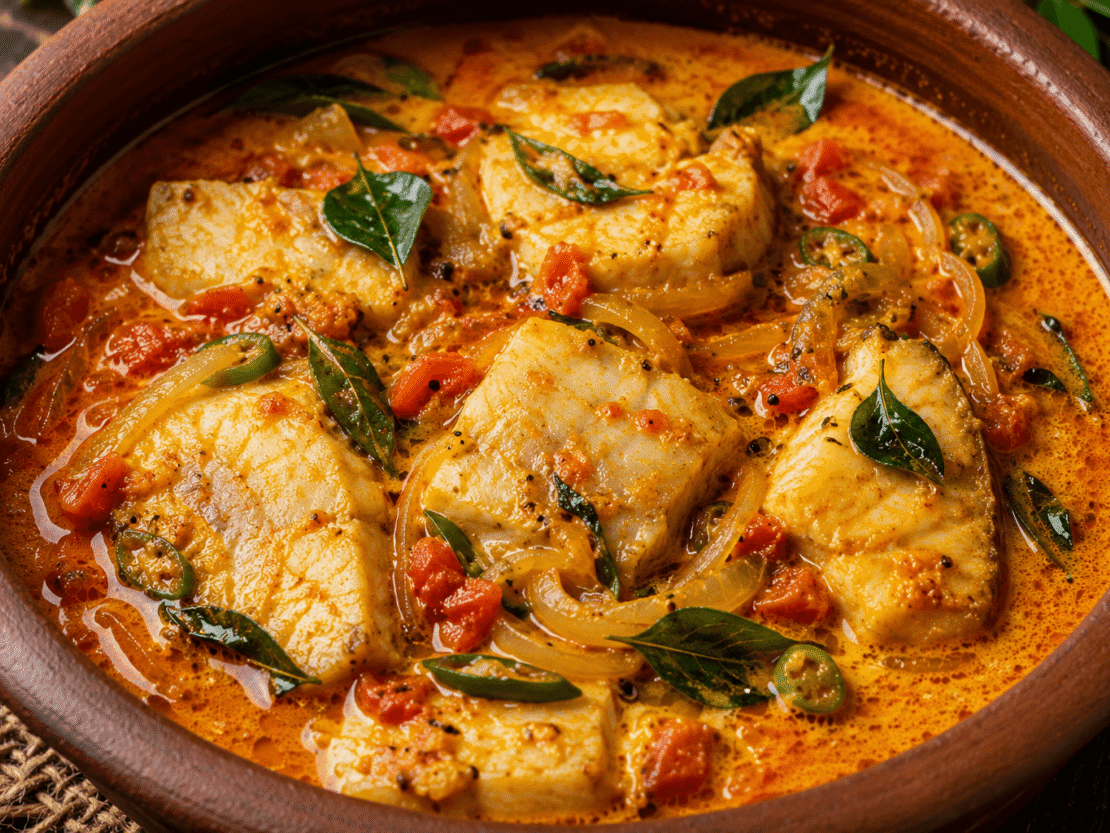
Fish Curry (Ambul Thiyal)
Ambul thiyal is a completely different style of curry: dry, sour, and intensely flavored rather than saucy and mild. It's made with firm fish, usually tuna, cooked down with goraka, a sour, dark fruit native to Sri Lanka that's dried and used the way tamarind is used elsewhere. The goraka does more than add sourness. It was traditionally used to help preserve the fish before refrigeration was common, which is why ambul thiyal holds up well and often tastes even better the next day.
The result is a curry with almost no liquid left by the time it's done, the fish pieces coated in a thick, dark, tangy spice paste rather than sitting in a sauce. It's one of the more distinctive curries on this list, and one that doesn't have an easy equivalent outside Sri Lankan cooking. Our fish curry recipe covers the goraka sourcing and technique in detail.
Dhal Curry (Parippu)
Dhal curry, or parippu, is the curry that shows up at nearly every Sri Lankan meal regardless of what else is on the table. Red lentils are simmered with coconut milk, garlic, and mustard seeds until they break down into a thick, spiced, almost creamy curry.
Its job is balance. Next to something as sharp as ambul thiyal or as rich as chicken curry, dhal curry is mild and grounding, the dish that ties a plate of contrasting flavors back together. It's also one of the easier Sri Lankan curries to make at home, since red lentils cook quickly and the ingredient list is short. Full method is in our dhal curry recipe.

Jackfruit Curry (Kiri Kos)
Kiri kos is a creamy jackfruit curry made with young, unripe jackfruit simmered in coconut milk until it takes on a texture close to shredded meat. It's one of Sri Lanka's most common vegetarian mains, not treated as a novelty substitute but as a legitimate curry in its own right, especially in households and regions where meat is eaten less frequently.
The unripe jackfruit is key here. Ripe jackfruit is sweet and used in desserts, while the young, unripe fruit is starchy and mild enough to take on the coconut milk and spices the way meat would. It's an ingredient that's become easier to find outside Sri Lanka in recent years, usually sold canned or vacuum-packed in the unripe form specifically for savory cooking.
Vegetable Curries
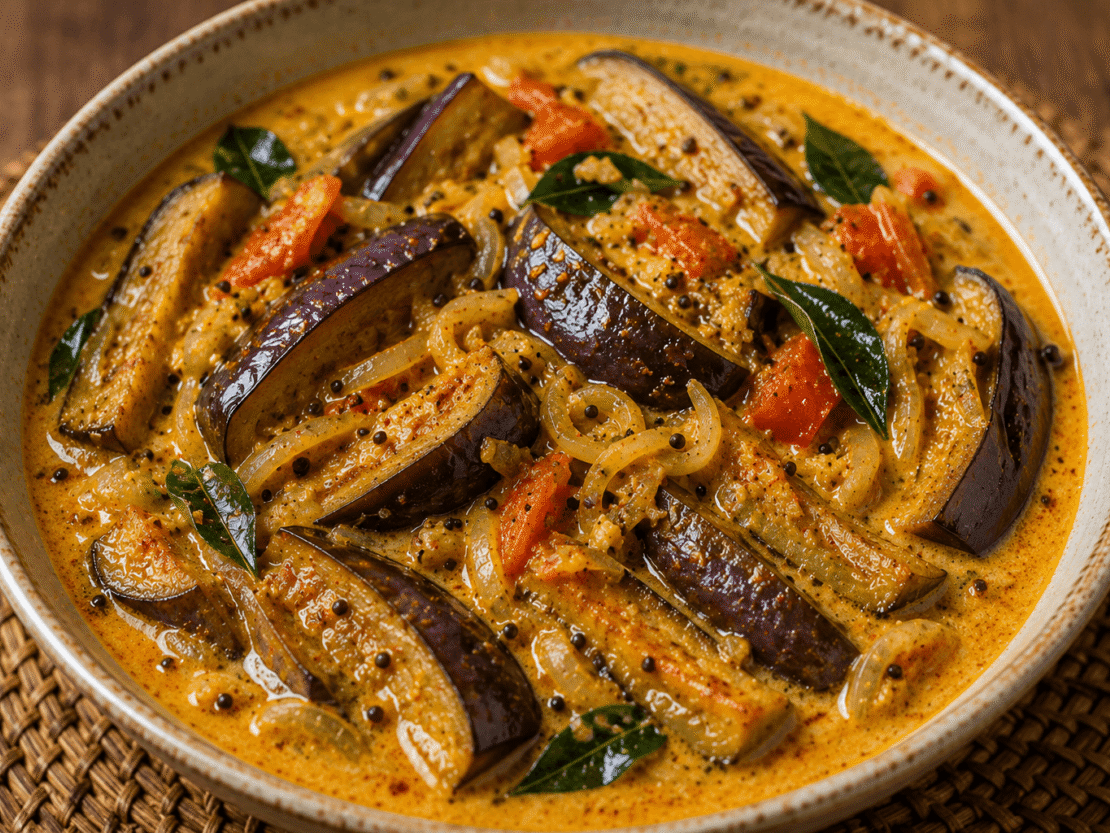
Beyond the main proteins, Sri Lankan meals lean heavily on vegetable curries, and pumpkin, potato, and eggplant are some of the most common. Each one follows a similar approach: the vegetable simmered in coconut milk with curry leaves, mustard seeds, and a mix of spices until it's tender and the sauce has thickened around it.
These aren't side dishes in the Western sense. On a Sri Lankan table, a vegetable curry carries the same weight as the protein curries next to it, and it's not unusual for a single meal to include two or three different ones at once, each bringing something different. Pumpkin curry tends to be slightly sweet and soft, potato curry more neutral and filling, and eggplant curry richer and more absorbent, soaking up whatever spice mix it's cooked in.
Why Sri Lankan Curries Work Together
The real character of Sri Lankan cooking shows up not in any single curry, but in how several are eaten side by side. A meal built around kukul mas curry, dhal curry, and a vegetable curry gives you fragrant, mild, and earthy all on one plate. Add ambul thiyal and suddenly there's something sour and intense cutting through everything else.
If you're building a Sri Lankan meal at home for the first time, start with dhal curry and one vegetable curry, since both are approachable and forgiving. Once you're comfortable with the base flavors, work toward chicken curry, then finally ambul thiyal, which asks the most of both technique and ingredient sourcing. For the fuller picture of how these curries fit into a full Sri Lankan meal, our guide to Sri Lankan staple foods covers what they're eaten with, and our Sri Lanka travel and food guide has the rest of the country's food story.