
Set the Tone for Worldly Tastes in Every Kitchen
Staple foods in Sri Lanka
What Sri Lankans Actually Eat Every Day
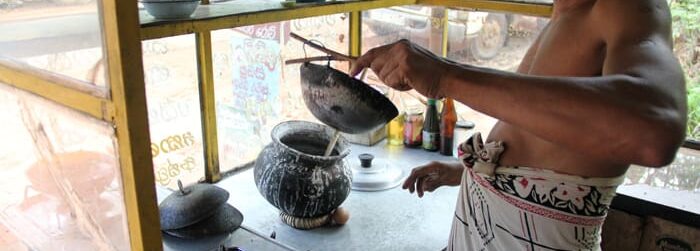
The staple foods of Sri Lanka are rice, coconut, and lentils, built into dishes like rice and curry, hoppers, string hoppers, roti, and pittu. These aren't restaurant specialties. They're what shows up on a Sri Lankan table on an ordinary Tuesday, and they're the foundation everything else in Sri Lankan cooking is built on.
At Tone & Taste, we spent weeks moving through Sri Lanka eating exactly this kind of food, from hotel poolside curries in Negombo to street stalls in Hikkaduwa. This guide breaks down the staples themselves: what they are, how they're made, and where they fit on the plate.
Rice and Curry
Rice and curry is less a single dish and more the basic structure of a Sri Lankan meal. Steamed rice sits at the center, surrounded by two, three, or more curries: usually a protein curry (chicken, fish, or egg), a lentil curry, and at least one vegetable curry, with sambols filling in the gaps.
What makes it work is contrast. Each curry brings its own heat level, texture, and flavor, and the rice is there to balance all of it out. A meal with five small curries isn't unusual, and it's one of the reasons Sri Lankan home cooking rewards repeat visits, since the combination changes daily depending on what's fresh.
The lentil curry in that lineup is almost always dhal curry (parippu), and the vegetable side is often something like eggplant curry or a pumpkin curry, cooked down with coconut milk and curry leaves.


Hoppers (Appa)
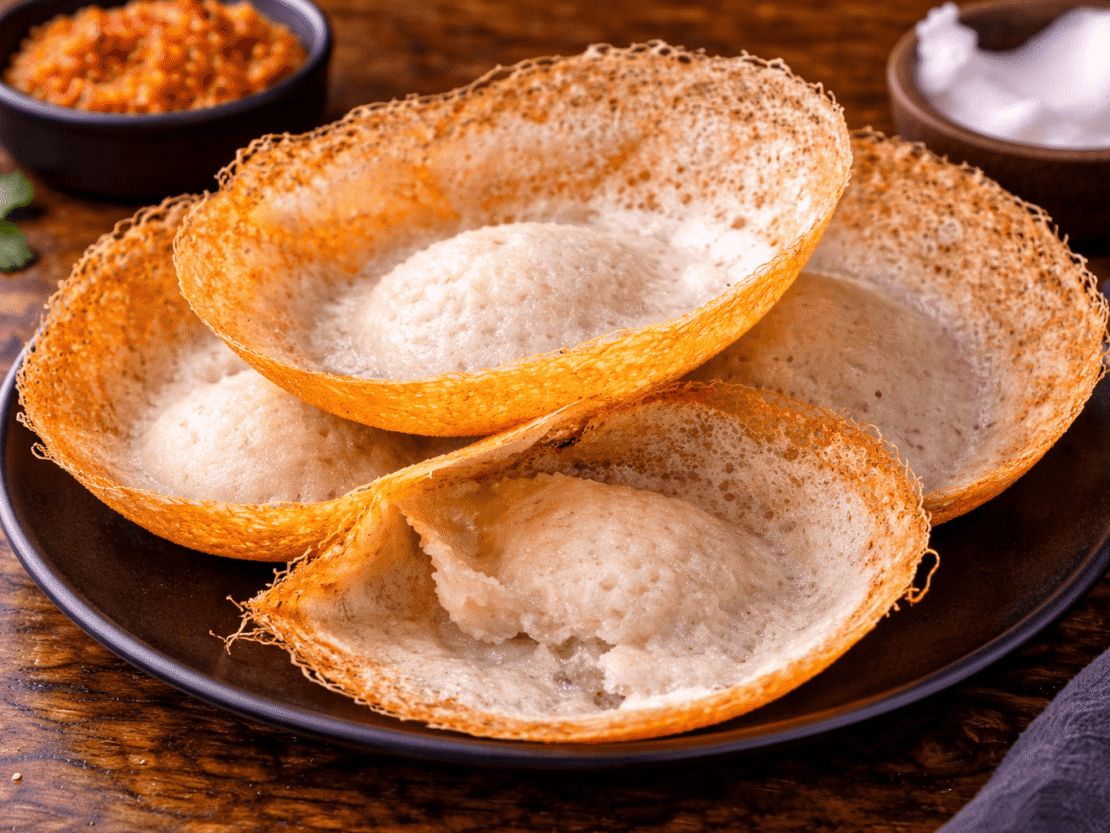
Hoppers are bowl-shaped pancakes made from a fermented batter of rice flour and coconut milk, cooked in a small wok-shaped pan until the edges turn thin and crisp while the center stays soft. The fermentation is what gives them their faint tang, similar in spirit to a sourdough starter, and it's what separates a good hopper from a flat, one-note pancake.
Egg hoppers are the most common variation, made by cracking an egg directly into the center of the batter as it cooks. They're eaten for breakfast, dinner, or anything in between, usually torn apart with your hands and used to scoop up curry or sambol.
Full method and batter ratios are in our hoppers recipe.
String Hoppers (Idiyappam)
String hoppers are made from the same basic idea as hoppers, rice flour and coconut, but pressed into thin noodles and steamed into small, round nests instead of fried into a bowl shape. The texture is soft and slightly chewy, closer to a rice noodle than a pancake.
They're typically served alongside a coconut sambol and a lentil curry, and because they're steamed rather than fried, they're a lighter option than hoppers when you want the same base flavors without the crisp edge. Our string hoppers recipe covers the pressing technique, which is the part most people get wrong on a first attempt.
What makes Mdina unique is how all these periods remain visible without overpowering each other. The city wasn’t rebuilt or modernized in a major way—it evolved slowly, keeping its structure intact. That’s why it doesn’t feel restored or reconstructed, but preserved, with each era still quietly present in the streets and walls.

Roti
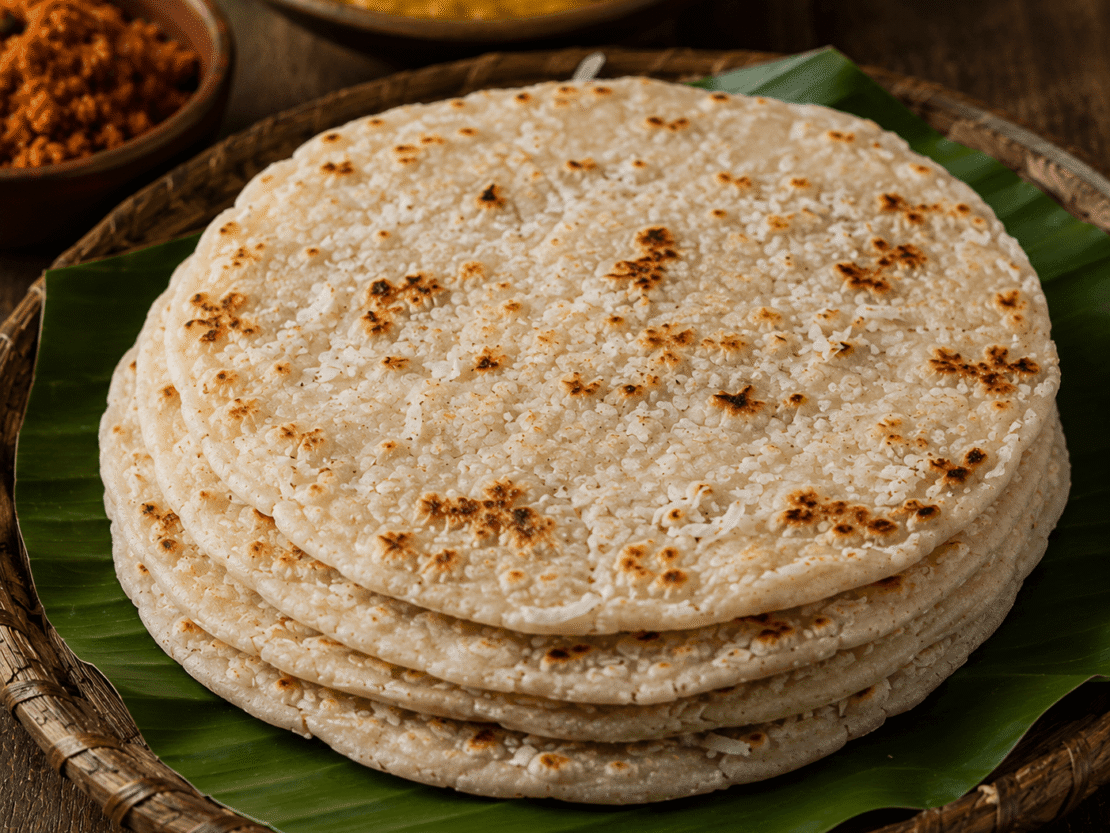
Sri Lankan roti is a simple flatbread made from flour, grated coconut, and water, cooked on a flat griddle until lightly charred in spots. It's less elaborate than hoppers or string hoppers, no fermentation, no pressing equipment, which makes it the everyday bread of choice when something needs to happen quickly.
It's eaten alongside curries the same way hoppers are, torn and used as a scoop, but it's also the base ingredient for one of Sri Lanka's most recognizable street foods: kottu roti, where day-old roti gets chopped and stir-fried with egg, vegetables, and meat or seafood on a hot griddle. Our roti recipe works as the base for both uses.
Pittu
Pittu is a steamed dish made from rice flour and grated coconut, layered together and cooked in a cylindrical mold, traditionally over a pot of simmering water. What comes out is a crumbly, coconut-flecked cylinder that gets broken apart at the table rather than sliced.
It's usually served with coconut milk poured over the top and a curry on the side, most often dhal or a fish curry. Because pittu doesn't carry much flavor on its own, it works as a blank canvas the same way rice does, there to soak up whatever curry it's paired with. The full steaming method is in our pittu recipe.

Dhal Curry (Parippu)
Dhal curry, or parippu, is the lentil curry that shows up in nearly every Sri Lankan meal, whether the rest of the plate is rice and curry, hoppers, string hoppers, or roti. Red lentils are cooked down with coconut milk, garlic, and mustard seeds until they break down into something closer to a thick, spiced porridge than a soup.
It's mild compared to most of the other curries on a Sri Lankan table, which is exactly why it's there. It rounds out sharper, spicier dishes and gives the whole meal something to balance against. Our dhal curry recipe has the full method.

Pol Sambol: The Constant Companion
No staple foods list from Sri Lanka is complete without pol sambol, even though it's technically a side rather than a staple on its own. It's a spicy, coconut-based relish made from grated coconut, chili powder, lime juice, salt, and often Maldive fish flakes for depth.
Pol sambol shows up next to almost everything: rice and curry, hoppers, string hoppers, roti. It's the dish that ties the rest of the table together, adding heat and acidity to foods that would otherwise be fairly mild on their own. Full recipe and ratios are in our pol sambol guide.

How It All Fits Together
What ties these staples together is coconut and rice, in one form or another, showing up in nearly everything. The difference between hoppers, string hoppers, pittu, and roti mostly comes down to technique: fermented and fried, pressed and steamed, layered and steamed, or simply griddled. None of them require specialized ingredients you can't find outside Sri Lanka, which is part of why they translate so well into a home kitchen.
If you're building a full Sri Lankan meal for the first time, start with rice and curry using dhal curry and one vegetable curry, add pol sambol on the side, and work your way toward hoppers or string hoppers once you're comfortable with the base flavors. For the fuller picture of where these dishes come from and what a trip through Sri Lanka actually looks like, our Sri Lanka travel and food guide covers the rest of the country's food story, from colonial influences to the street food you'll find beyond the staples.