Set the Tone for Worldly Tastes in Every Kitchen
Sri Lankan String Hoppers (Idiyappam) – Easy Steamed Rice Noodles
A Comforting Breakfast Classic
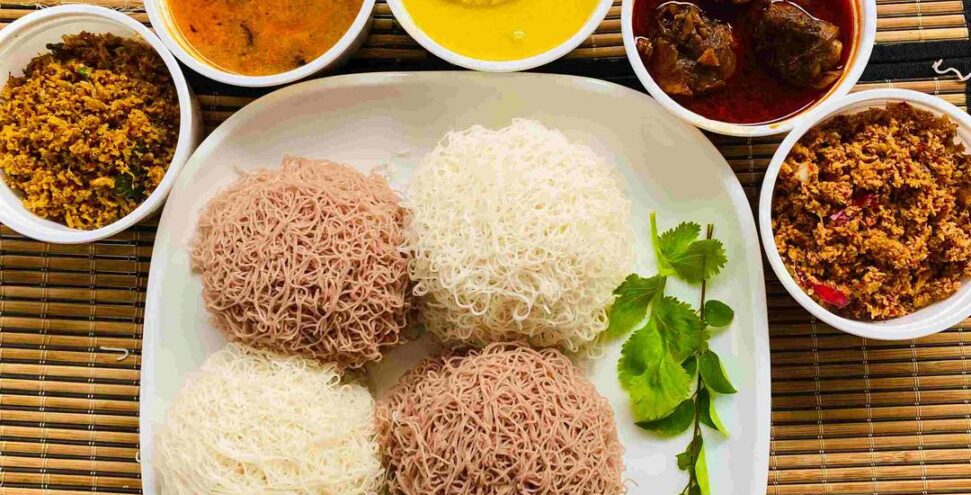
Table of Contents
When it comes to Sri Lankan breakfasts, string hoppers (locally known as idiyappam) are in a league of their own. These delicate nests of steamed rice noodles are soft, slightly chewy, and perfectly designed to soak up the rich flavors of curries, sambols, and coconut milk gravies.
Served warm with coconut sambol, dhal curry, or kiri hodi (a coconut milk gravy), string hoppers create a meal that’s light yet deeply satisfying. They’re as common on the breakfast table as toast or pancakes in Western households — and for good reason.
What Is It?
String hoppers are made by pressing rice flour dough through a special press to create thin, lace-like noodles. These are then steamed until cooked. They are naturally gluten-free and, unlike fried or baked breads, feel lighter and healthier. The slightly tangy flavor comes from a brief resting of the dough and the subtle nuttiness of the rice flour.
A Little History
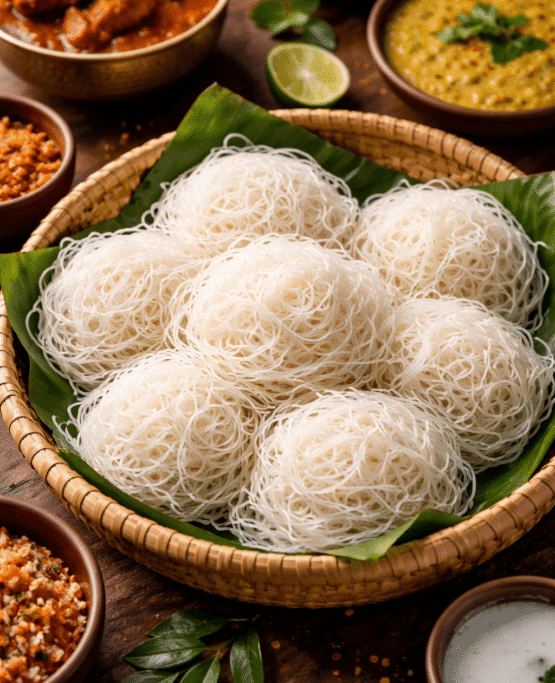
String hoppers, known as idiyappam in Sri Lanka and southern India, are a traditional rice-flour noodle dish with roots that likely stretch back over a thousand years in the culinary history of the Indian Ocean region. The dish is believed to have originated in the southern parts of India, particularly Tamil Nadu and Kerala, where rice has long been the staple grain. Through centuries of trade, migration, and cultural exchange across the Indian Ocean, the technique of pressing rice dough into delicate noodle strands and steaming them spread to Sri Lanka, where it became deeply embedded in everyday cuisine.
In Sri Lanka, string hoppers evolved into a distinctive breakfast and dinner staple served in nearly every household. The preparation method reflects the island’s long history of rice cultivation and simple, efficient cooking techniques. Rice flour dough is pressed through a special mold to form thin noodle nests, which are arranged on small woven mats or plates and then gently steamed. This process produces the characteristic soft, slightly chewy bundles that are perfect for soaking up flavorful curries and coconut-based dishes.
Historically, string hoppers were often prepared early in the morning for family meals, as steaming allowed large batches to be made quickly and economically. They were commonly served with coconut milk gravies, lentil curries, spicy sambols, or mild vegetable stews. Over time, the dish became a defining element of Sri Lankan food culture, appearing not only in homes but also in street stalls, small cafés, and traditional restaurants across the island.
Today, string hoppers remain one of the most recognizable and beloved dishes of Sri Lanka. Their delicate texture and neutral flavor make them an ideal companion to richly spiced curries, and they continue to represent the practical ingenuity of rice-based cooking traditions that have sustained families across the region for generations.
What You Need
To make traditional Sri Lankan string hoppers, you only need a few simple ingredients and basic kitchen tools. The dough itself is made from rice flour, salt, and hot water, which together create a soft, smooth mixture that can be easily pressed into fine strands. A string hopper press, also known as an idiyappam maker, is essential for shaping the delicate noodle-like patterns. For steaming, you will need either idli trays, small pieces of banana leaf, or any steaming tray that prevents sticking. A steamer or a large pot fitted with a steaming rack completes the setup, allowing the string hoppers to cook gently until tender and perfectly set.
The Process
Making string hoppers is a simple but satisfying process that focuses on technique rather than complexity. It begins with preparing a soft rice flour dough, made by carefully mixing rice flour with hot water and a little salt until the mixture becomes smooth and pliable. The warm dough is then pressed through a special string hopper press, creating delicate strands that form thin, lace-like circles on trays or banana leaves. Once shaped, the nests are gently steamed for a few minutes until they become tender and lightly firm. The result is a soft, fragrant base that pairs beautifully with curries, coconut sambol, or sweet coconut milk.
Step-by-Step Instructions
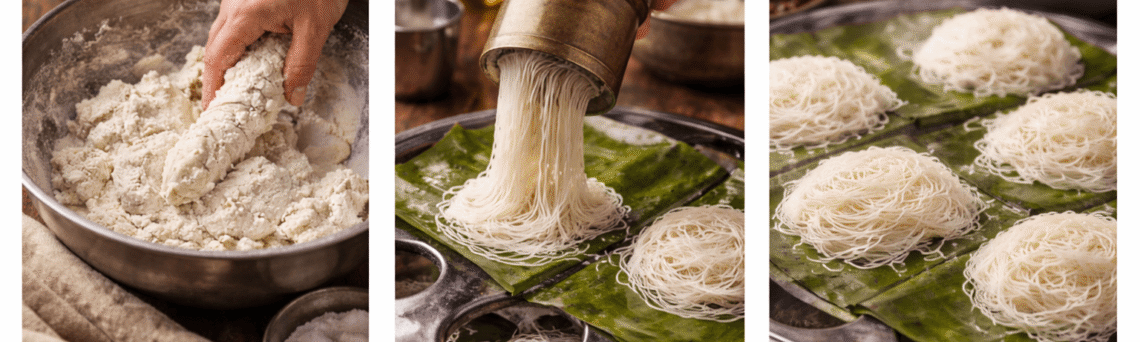
String hoppers, also known as idiyappam, are delicate steamed rice noodles pressed into soft, lace-like discs. They are simple to make but require a gentle hand and the right dough consistency. Once you understand the process, they come together quickly and make a wonderful base for curries, coconut sambol, or sweet coconut milk.
Step 1 — Prepare the Dough
Start by placing the rice flour and salt in a large mixing bowl. Stir briefly to combine the ingredients evenly.
Slowly pour in the hot water, adding it a little at a time while stirring with a wooden spoon or spatula. The hot water helps hydrate the flour and makes the dough smooth and easy to press later.
Continue mixing until the flour begins to come together into a soft dough. At this stage, the mixture will still be warm.
Let the dough cool slightly until it is comfortable to handle. Once it has cooled enough, knead it gently by hand for 2–3 minutes. The goal is to create a dough that is soft, smooth, and pliable, without cracks or dry patches.
If the dough feels too dry, add a small splash of warm water. If it feels sticky, sprinkle in a little extra rice flour.
Step 2 — Prepare the String Hopper Press
Lightly grease the inside of a string hopper press (idiyappam maker) with a little oil. This prevents the dough from sticking and helps the noodles press smoothly.
Break the dough into portions and place one portion inside the press. Secure the lid so it is ready to use.
Step 3 — Shape the String Hoppers
Prepare your steaming surface by lightly oiling idli trays or placing pieces of banana leaf on the trays.
Hold the press above the tray and begin pressing the dough through the nozzle. Move your hand in a circular motion so the thin strands form a round, lace-like nest. Try to keep the strands evenly distributed so the discs cook evenly.
Repeat until the trays are filled, leaving a little space between each disc.
Step 4 — Steam the String Hoppers
Place the trays into a steamer or a large pot fitted with a steaming rack.
Cover with a lid and steam the string hoppers for 6–8 minutes. During steaming, the dough cooks through and firms up slightly while still remaining soft.
You will know they are ready when the strands look set and feel slightly firm to the touch.
Step 5 — Cool Slightly and Serve
Remove the trays from the steamer and allow the string hoppers to cool for a minute or two. This helps them release more easily from the tray.
Carefully lift the string hoppers off the tray using your fingers or a spatula.
Serve them warm while still soft and delicate. String hoppers pair beautifully with Sri Lankan curries, coconut sambol, dhal curry, or lightly sweetened coconut milk.
Serve With:
- Coconut Sambol – A tangy and spicy condiment made with fresh grated coconut, chili, and lime.
- Dhal Curry – A creamy and lightly spiced lentil curry that perfectly complements the mild noodles.
- Kiri Hodi – A golden coconut milk gravy, aromatic with curry leaves and turmeric.
- Pol Sambol – A dry-style sambol that’s a bit more intense in flavor.
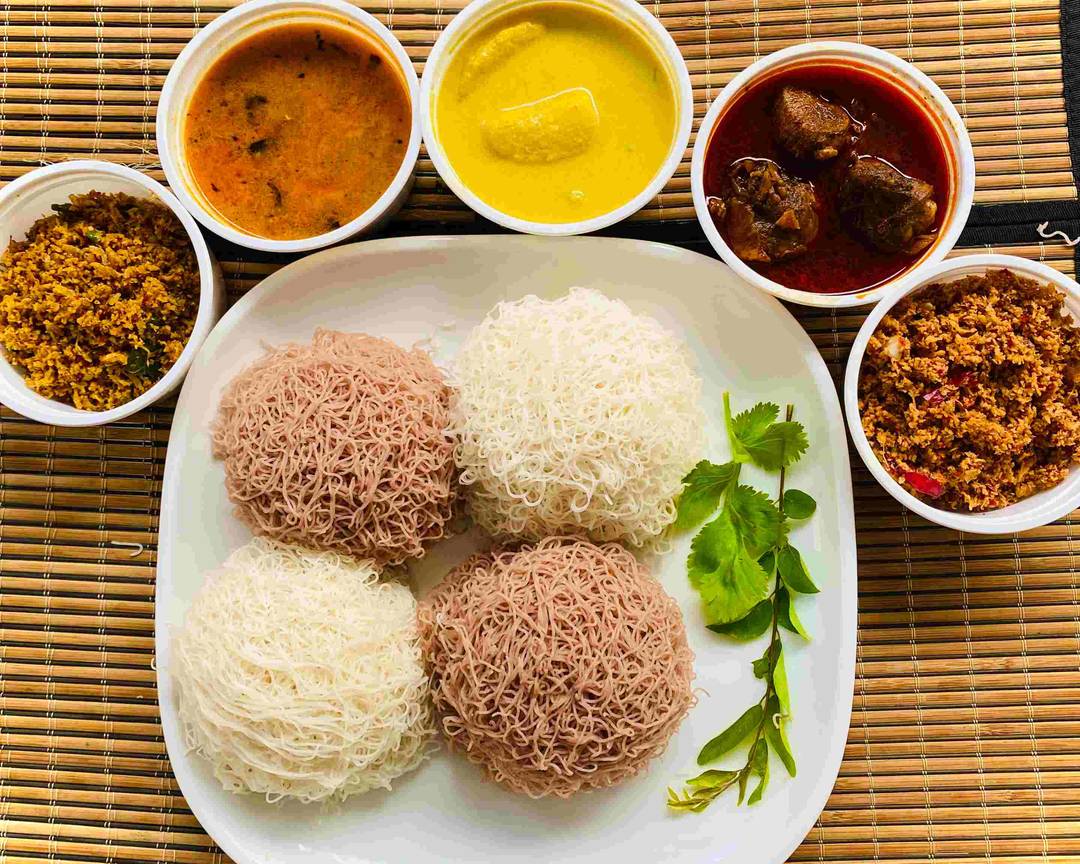
String Hoppers
Thin rice noodles pressed into round shapes and steamed, usually served with coconut sambol and dhal curry.
Share Recipe
Pin
RateServings: 4 servings
Calories: 240kcal
Ingredients
- 250 g rice flour (red or white)
- 1/2 tsp salt
- 250-300 ml bolied water
- Coconut oil or neutral oil for greasing
Instructions
- In a large bowl, mix the rice flour and salt.
- Gradually pour in the hot water while stirring with a wooden spoon or spatula until a dough forms.
- Let it cool slightly, then knead by hand for 2–3 minutes until soft, smooth, and pliable.
- Grease a string hopper press (idiyappam maker) with a little oil. Fill it with the dough.
- Press the dough onto lightly oiled idli trays or banana leaves in thin, circular lace-like patterns.
- Steam the string hoppers in a steamer or large pot with a steaming rack for 6–8 minutes, or until they are cooked and slightly firm to the touch.
- Remove from heat and let cool slightly before serving.
Notes
Notes:
Store in an airtight container at room temperature for up to 1 day. For longer storage, refrigerate and re-steam before serving.
- The water must be just boiled — too cool and the dough will crack; too hot and it becomes sticky.
- You can use a fine sieve rice flour if roasted flour is unavailable.
- Traditionally served with coconut sambol, dhal curry, or kiri hodi (coconut milk gravy).
- String hoppers can be made ahead and gently reheated by steaming for 1–2 minutes.
Store in an airtight container at room temperature for up to 1 day. For longer storage, refrigerate and re-steam before serving.
Nutrition
Calories: 240kcal | Carbohydrates: 47.5g | Protein: 4.6g | Fat: 3g
Product We Use
to make our cooking experience better