Set the Tone for Worldly Tastes in Every Kitchen
Bunless Burger & Sweet Potato Fries – High-Protein, Low-Cal
Fast Food Redefined: Savoring the Goodness of Bunless
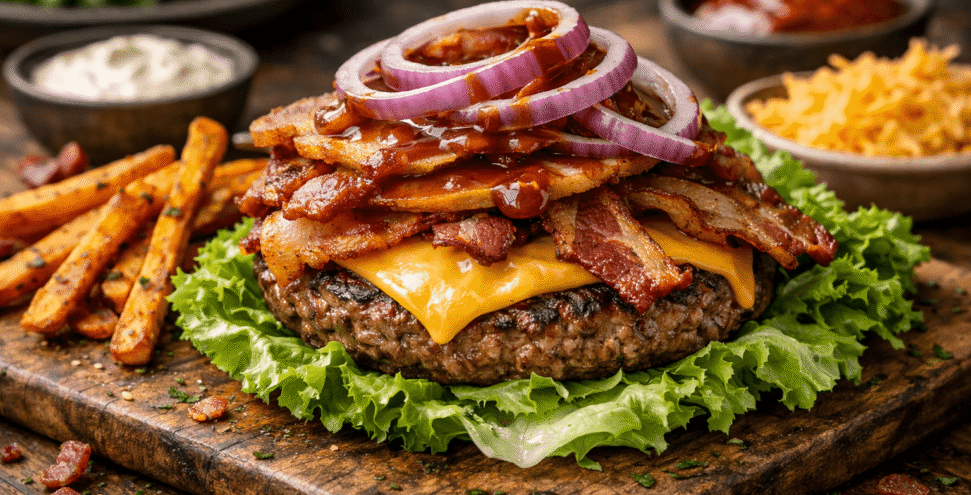
Table of Contents
A good burger doesn’t need to feel heavy to be satisfying. This diet burger focuses on balance: lean protein, fresh toppings, and simple techniques that keep everything juicy without excess fat. Instead of relying on rich sauces or fatty meat, the flavor comes from seasoning, texture, and smart ingredient choices.
Homemade burgers already give you more control over what goes in, allowing you to reduce fat, add nutrients, and still keep that classic burger experience . The result is a burger that feels lighter, cleaner, and easier to eat regularly—without losing what makes burgers enjoyable.
What Is It?
A diet burger is simply a lighter version of a traditional burger. It usually uses lean meat or alternative proteins, fewer processed ingredients, and fresh toppings. The goal is not to remove flavor, but to shift where it comes from.
Instead of relying on fat for taste, it focuses on:
Lean proteins (like low-fat beef or turkey)
Fresh vegetables for texture and crunch
Simple seasoning instead of heavy sauces
Lean meat can still produce a juicy burger when handled correctly, especially when combined with small additions like oil or vegetables to maintain moisture
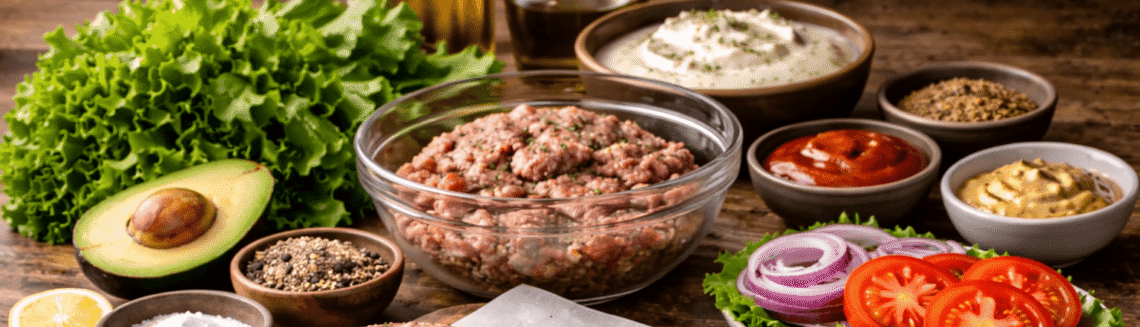
What You Need
Lean ground beef or turkey
Garlic (fresh or powder)
Mustard or light seasoning
Salt and pepper
Optional: all desired toppings like bacon, cheese, onions, tomatoes, avocado etc.
The Process
1. Prepare the ingredients
Finely chop or grate any vegetables you are using. This helps them blend into the burger and keeps the texture smooth while adding moisture.
2. Mix the patty base
In a bowl, combine the lean meat with seasoning, garlic, and any added vegetables. Mix gently—overmixing can make the burger dense instead of tender.
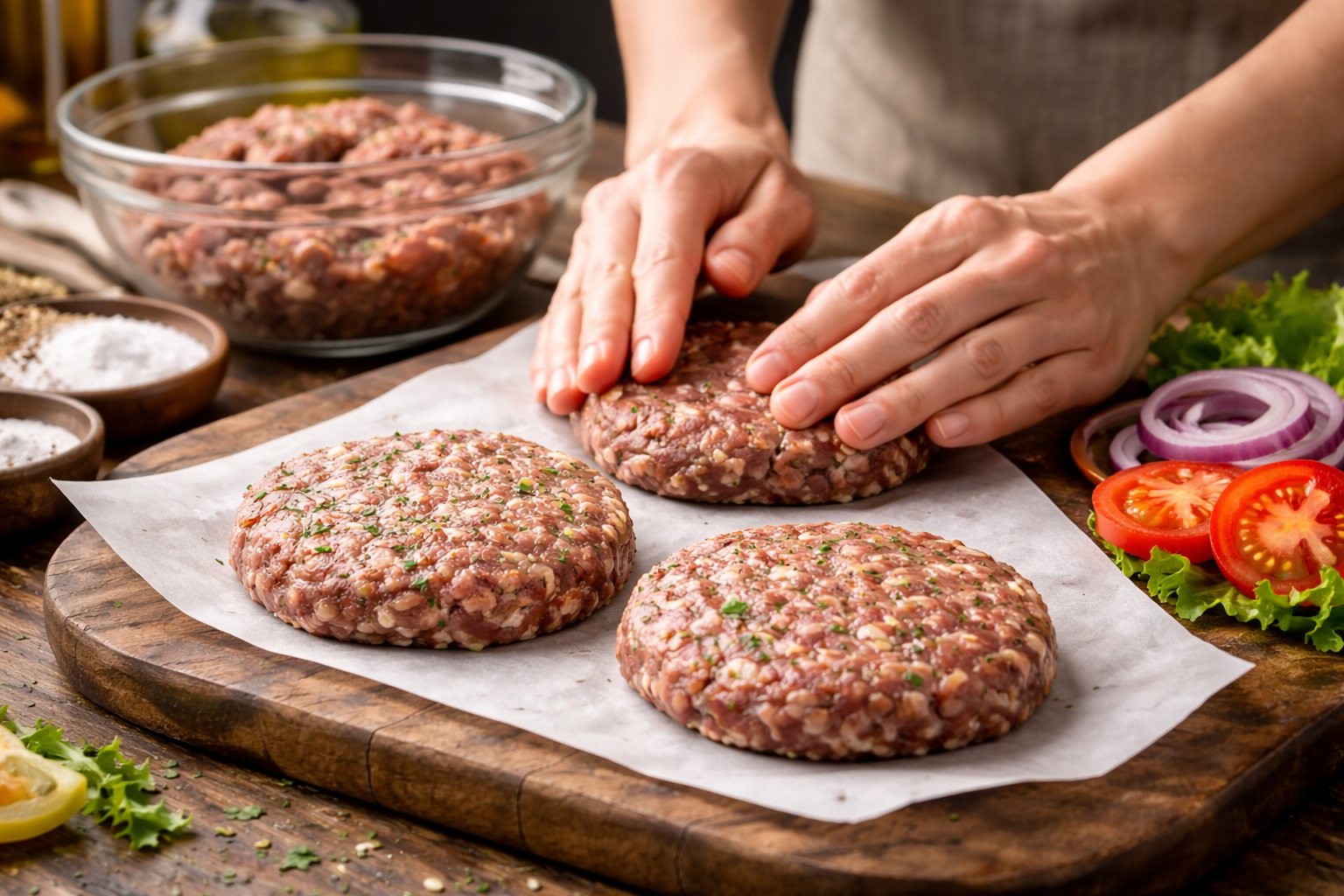
3. Shape the patties
Divide the mixture and shape into evenly sized patties. Press them lightly and create a small indentation in the center so they cook evenly and stay flat.
4. Heat the pan or grill
Preheat a pan or grill over medium-high heat. Add a small amount of oil to prevent sticking.
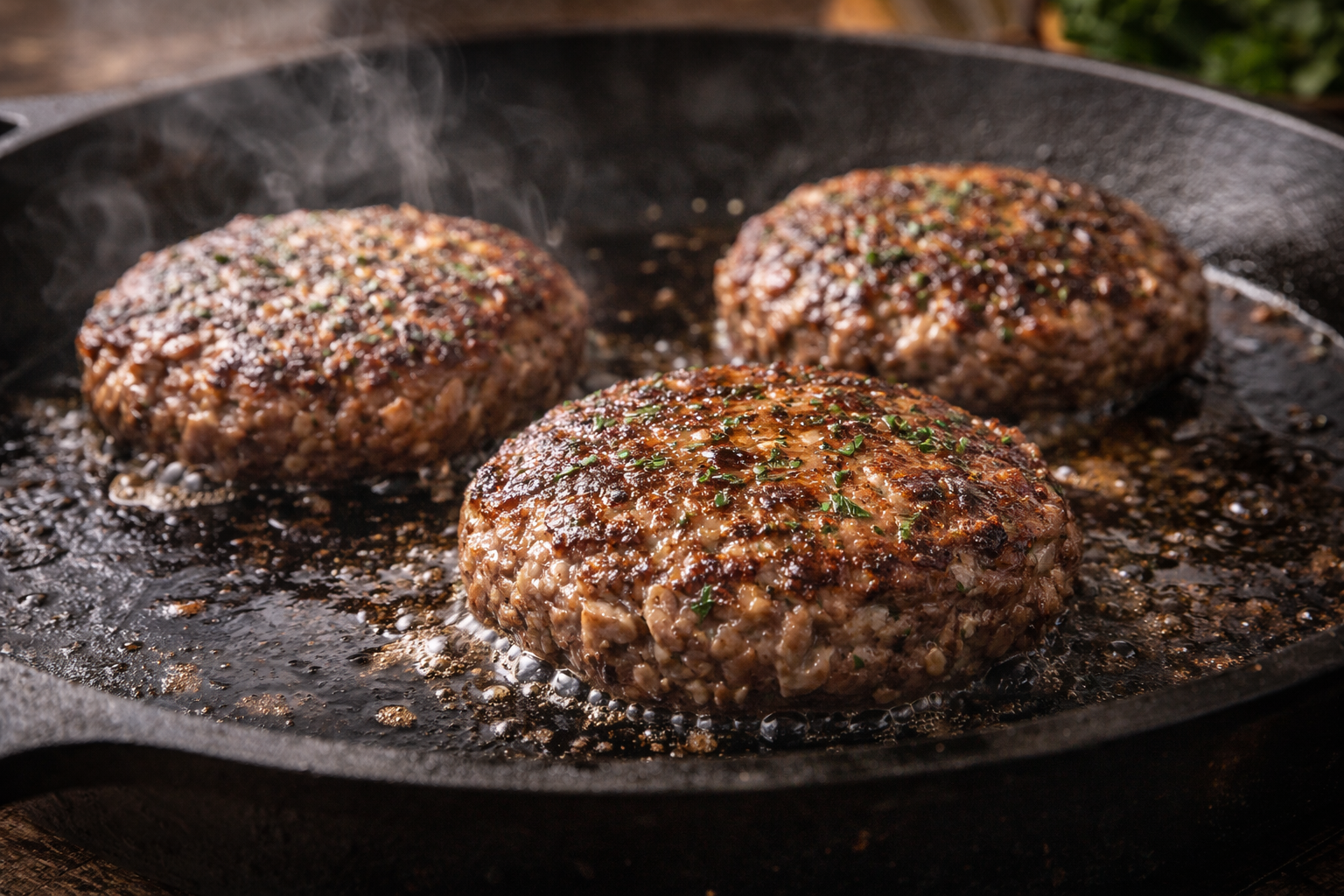
5. Cook the burgers
Place the patties onto the hot surface. Cook for about 3–4 minutes per side until browned and cooked through. Avoid pressing them down, as this removes juices.
6. Let them rest briefly
Remove the burgers and let them rest for a few minutes. This allows the juices to redistribute and keeps the burger moist.
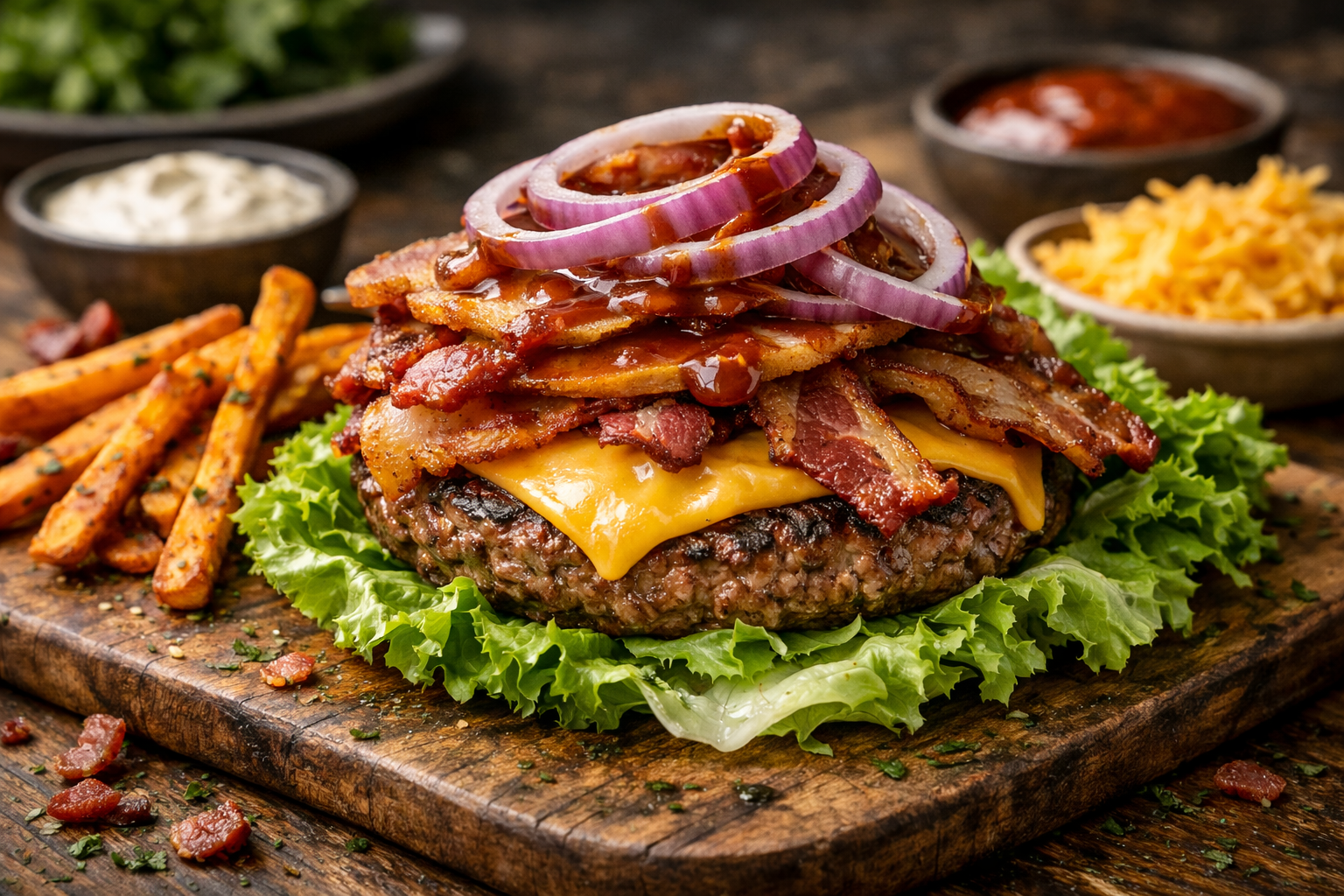
7. Assemble the burger
Layer the patty with fresh toppings. Use a wholegrain bun or keep it light with a lettuce wrap.
Step-by-Step Instructions
1. Prepare the burger ingredients
Start by getting everything ready before you mix the patties. If you are using onion, lettuce, tomato, or any other fresh toppings, slice them first and set them aside. This keeps the cooking process quick and makes assembling the burger much easier once the patties are done.
2. Season the meat
Place the lean ground meat into a bowl and add your seasoning. This is where the flavor starts, so make sure the salt, pepper, garlic, or any other simple spices are evenly distributed. If your recipe includes mustard, herbs, or finely grated vegetables for moisture, mix them in at this stage.
3. Mix gently
Use your hands or a spoon to combine everything just until mixed. Try not to overwork the meat, as this can make the burgers firm and dense instead of tender and juicy. The mixture should hold together without being compacted too much.
4. Shape the patties
Divide the mixture into equal portions and shape them into burger patties. Press them gently into round, even shapes so they cook at the same speed. A slight dip in the center helps keep them flatter while cooking instead of puffing up too much.
5. Heat the pan or grill
Place a frying pan, grill pan, or outdoor grill over medium to medium-high heat. Let it heat properly before adding the burgers. If needed, add a very small amount of oil so the patties do not stick.
6. Cook the burgers
Place the patties onto the hot surface and let them cook without moving them too much. Cook for a few minutes on the first side until nicely browned, then flip and cook the other side until fully done. The outside should be golden and flavorful while the inside stays moist.
7. Rest the patties briefly
Once cooked, transfer the burgers to a plate and let them rest for a couple of minutes. This helps the juices settle back into the meat and keeps the burger from drying out when you bite into it.
8. Prepare the buns or base
If you are using burger buns, you can lightly toast them for extra texture. If you want a lighter version, prepare lettuce leaves or serve the patty over salad instead. This step makes the final burger feel more put together and satisfying.
9. Assemble the burger
Place the cooked patty onto the bun or lettuce base and add your toppings. Layer with lettuce, tomato, onion, or any lighter sauce you are using. Keep it fresh and simple so the burger still feels balanced and not too heavy.
10. Serve straight away
Serve the burger while still warm, with your chosen side dish such as salad, roasted vegetables, or sweet potato fries. This is when the texture is at its best and the burger feels juicy, fresh, and fully satisfying.
Serving
Serve the burger warm with crisp lettuce, fresh tomato, and a light sauce. For a cleaner plate, skip the bun and serve it over a salad or in a wrap.
Pair with:
Sweet potato fries
Fresh slaw
Simple green salad
Storing
Store cooked patties in the fridge for up to 3–4 days
Reheat in a pan or air fryer to keep texture
Patties can also be frozen for later use
Bun less Burger and sweet fries small
Fast Food Redefined: Savoring the Goodness of Bunless Burgers and Sweet Potato Fries
Share Recipe
Pin
RateServings: 1
Calories: 450kcal
Ingredients
- Burger patty
- 170 gr Beef mince 5% fat
- 2 gr Paprika powder
- 2 gr Garlic powder
- 2 gr Onion powder
- Salt & Pepper to taste
- Sweet potato fries
- 220 gr Sweet potato Cut into fries
- 5 gr Paprika powder
- Salt & Pepper to taste
- Slaw
- 35 gr Green beans
- 30 gr White cabbage Thin sliced
- 10 gr Red onion Thin sliced
- 6 gr Carrot Grated
- 6 gr Quark / yoghurt Low fat high protein yoghurt
- 2 gr Mustard Wholegrain
- Salt & Pepper To taste
- 35 gr Clean Ketchup See recipe in sauces
Instructions
- To start preheat the oven to 400°F / 200°C
- Cut the sweet potato into fries and toss the sweet potato fries with paprika, salt & pepper and olive oil.
- Arrange on a baking sheet and bake for 25-30 minutes, or until tender and crispy.
- While waiting for the sweet potato fries to bake start make the burger patty by mix the beef mince with the paprika, garlic powder, salt, black pepper, and onion powder and mix well.
- Weigh the mince into the correct weight (see note to find the weight per patties) and form into patties
- To make the slaw, mix the cabbage, onions, carrots, quark cheese, wholegrain mustard, garlic powder, onion powder, salt, and black pepper in a large bowl.
- Once weighed out place a pan on high heat add a little olive oil and cook the burger patties until internal temperature reaches 158 °F - 167 ° / 70 °C - 75 °C.
- To cook green beans place a pot of hot water on high heat once the water is boiling add the trimmed green beans to the water and cook for around 3-5 minutes.
- To assemble, place the burger patty on a plate, top with slaw, and serve with sweet potato wedges, green beans and clean ketchup.
- Enjoy!
Notes
If you are cooking for multiple portions you will have to plate (or box)
each portion with the following weights: Burger Patty (uncooked 175gr) - 130 gr Sweet potato fries - 140 gr Slaw - 50gr Green beans - 35 gr Clean ketchup - 35 grNutrition
Serving: 395gr | Calories: 450kcal | Carbohydrates: 43g | Protein: 33g | Fat: 12g | Saturated Fat: 3.6g | Sugar: 18g
Bun less Burger and sweet fries Medium
Fast Food Redefined: Savoring the Goodness of Bunless Burgers and Sweet Potato Fries
Share Recipe
Pin
RateServings: 1
Calories: 538kcal
Ingredients
- Burger patty
- 200 gr Beef mince 5% fat
- 3 gr Paprika powder
- 3 gr Garlic powder
- 2 gr Onion powder
- Salt & Pepper to taste
- Sweet potato fries
- 274 gr Sweet potato Cut into fries
- 5 gr Paprika powder
- Salt & Pepper to taste
- Slaw
- 45 gr Green beans
- 30 gr White cabbage Thin sliced
- 10 gr Red onion Thin sliced
- 6 gr Carrot Grated
- 6 gr Quark / yoghurt Low fat high protein yoghurt
- 2 gr Mustard Wholegrain
- Salt & Pepper To taste
- 35 gr Clean Ketchup See recipe in sauces
Instructions
- To start preheat the oven to 400°F / 200°C
- Cut the sweet potato into fries and toss the sweet potato fries with paprika, salt & pepper and olive oil.
- Arrange on a baking sheet and bake for 25-30 minutes, or until tender and crispy.
- While waiting for the sweet potato fries to bake start make the burger patty by mix the beef mince with the paprika, garlic powder, salt, black pepper, and onion powder and mix well.
- Weigh the mince into the correct weight (see note to find the weight per patties) and form into patties
- To make the slaw, mix the cabbage, onions, carrots, quark cheese, wholegrain mustard, garlic powder, onion powder, salt, and black pepper in a large bowl.
- Once weighed out place a pan on high heat add a little olive oil and cook the burger patties until internal temperature reaches 158 °F - 167 ° / 70 °C - 75 °C.
- To cook green beans place a pot of hot water on high heat once the water is boiling add the trimmed green beans to the water and cook for around 3-5 minutes.
- To assemble, place the burger patty on a plate, top with slaw, and serve with sweet potato wedges, green beans and clean ketchup.
- Enjoy!
Notes
If you are cooking for multiple portions you will have to plate (or box)
each portion with the following weights: Burger Patty (uncooked 175gr) - 150 gr Sweet potato fries - 180 gr Slaw - 50gr Green beans - 35 gr Clean ketchup - 45 grNutrition
Serving: 465gr | Calories: 538kcal | Carbohydrates: 53g | Protein: 38g | Fat: 15g | Saturated Fat: 4.2g | Sodium: 3mg | Sugar: 21g
Bun less Burger and sweet fries Large
Fast Food Redefined: Savoring the Goodness of Bunless Burgers and Sweet Potato Fries
Share Recipe
Pin
RateServings: 1
Calories: 634kcal
Ingredients
- Burger patty
- 230 gr Beef mince 5% fat
- 3 gr Paprika powder
- 3 gr Garlic powder
- 2 gr Onion powder
- Salt & Pepper to taste
- Sweet potato fries
- 335 gr Sweet potato Cut into fries
- 5 gr Paprika powder
- Salt & Pepper to taste
- Slaw
- 55 gr Green beans
- 30 gr White cabbage Thin sliced
- 10 gr Red onion Thin sliced
- 6 gr Carrot Grated
- 6 gr Quark / yoghurt Low fat high protein yoghurt
- 2 gr Mustard Wholegrain
- Salt & Pepper To taste
- 35 gr Clean Ketchup See recipe in sauces
Instructions
- To start preheat the oven to 400°F / 200°C
- Cut the sweet potato into fries and toss the sweet potato fries with paprika, salt & pepper and olive oil.
- Arrange on a baking sheet and bake for 25-30 minutes, or until tender and crispy.
- While waiting for the sweet potato fries to bake start make the burger patty by mix the beef mince with the paprika, garlic powder, salt, black pepper, and onion powder and mix well.
- Weigh the mince into the correct weight (see note to find the weight per patties) and form into patties
- To make the slaw, mix the cabbage, onions, carrots, quark cheese, wholegrain mustard, garlic powder, onion powder, salt, and black pepper in a large bowl.
- Once weighed out place a pan on high heat add a little olive oil and cook the burger patties until internal temperature reaches 158 °F - 167 ° / 70 °C - 75 °C.
- To cook green beans place a pot of hot water on high heat once the water is boiling add the trimmed green beans to the water and cook for around 3-5 minutes.
- To assemble, place the burger patty on a plate, top with slaw, and serve with sweet potato wedges, green beans and clean ketchup.
- Enjoy!
Notes
If you are cooking for multiple portions you will have to plate (or box)
each portion with the following weights: Burger Patty - 170 gr Sweet potato fries - 220 gr Slaw - 50gr Green beans - 55 gr Clean ketchup - 35 grNutrition
Serving: 555gr | Calories: 634kcal | Carbohydrates: 63g | Protein: 44g | Fat: 18g | Saturated Fat: 4.9g | Sodium: 3.5mg | Sugar: 25g
Product We Use
to make our cooking experience better