Set the Tone for Worldly Tastes in Every Kitchen
Wambatu Moju – Sri Lankan Eggplant Curry Recipe
The Dish That’s Better the Next Day
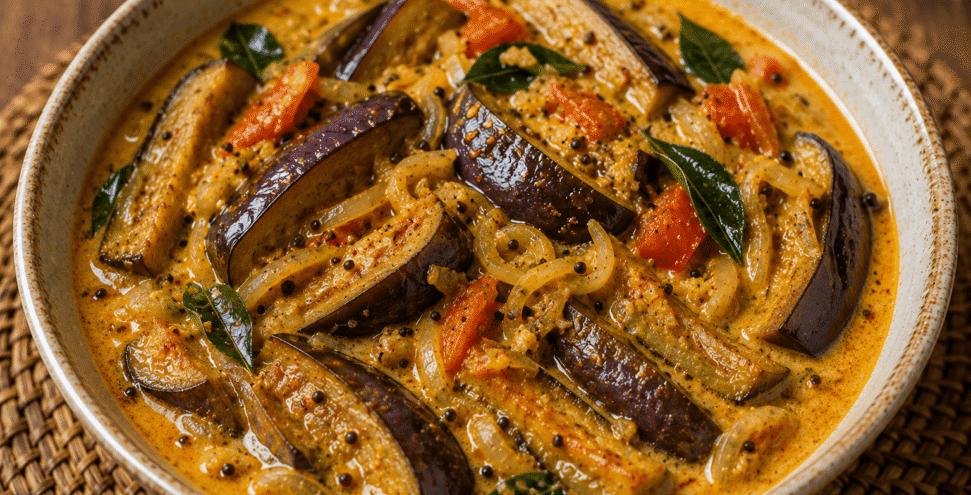
Table of Contents
Rich, warming, and packed with deep aromatic spice, Sri Lankan eggplant curry transforms simple aubergines into a soft, silky curry layered with coconut, curry leaves, mustard seeds, and gentle heat. The eggplant absorbs the spices and coconut milk beautifully, creating a dish that feels comforting while still vibrant and fresh.
This style of curry is common across Sri Lankan home cooking, where coconut milk and fragrant spices form the foundation of everyday meals. The slight caramelization from frying the eggplant first adds extra depth and texture, giving the curry a richer and more rounded flavor.
Served with rice, roti, or pittu, it is simple food with enormous flavor.
What Is It?
Eggplant curry is a coconut-based Sri Lankan curry made with fried aubergine simmered in spiced coconut milk alongside onion, garlic, tomato, curry leaves, and mustard seeds.
Unlike heavier curries, this version stays relatively light while still tasting creamy and rich due to the coconut milk. The eggplant becomes soft and velvety during cooking, soaking up the spices and aromatics.
Some versions are mild and creamy, while others lean heavily into chili and acidity. A small splash of vinegar at the end is traditionally used in many recipes to balance the richness of the coconut milk and deepen the flavor.
A Little History
Eggplant curries are found throughout South Asia, but Sri Lankan versions are especially known for their use of curry leaves, mustard seeds, coconut milk, and layered spice blends.
In Sri Lankan cooking, eggplant is prized for how well it absorbs flavor. Frying the vegetable before simmering is a traditional technique that helps create deeper caramelized notes while keeping the texture soft and luxurious.
Coconut milk plays a central role in Sri Lankan cuisine due to the island’s abundance of coconuts. Combined with spices like turmeric and chili, it forms the base of countless curries eaten daily across the country.
Today, eggplant curry remains a staple side dish in rice-and-curry meals served in homes and restaurants throughout Sri Lanka.
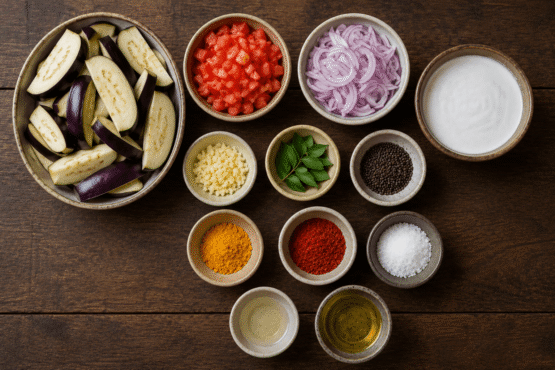
What You Need
Eggplant or aubergine
Tomato
Onion
Garlic
Turmeric
Chili powder
Mustard seeds
Curry leaves
Thick coconut milk
Coconut oil
Salt
Vinegar
The Process
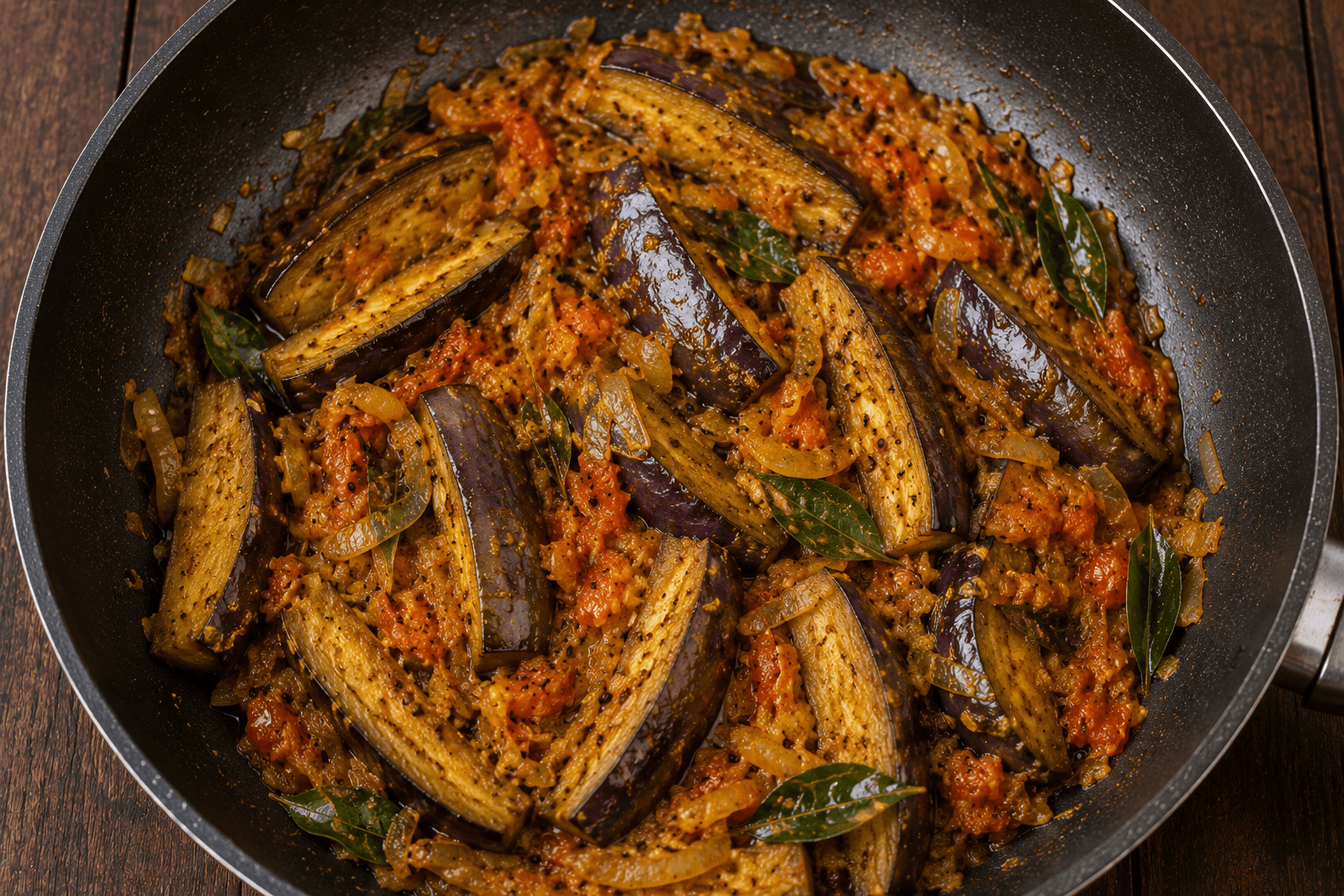
The flavor of this curry comes from layering textures and aromatics step by step. The eggplant is first fried until golden and soft, helping it develop deeper flavor while preventing it from becoming watery during simmering.
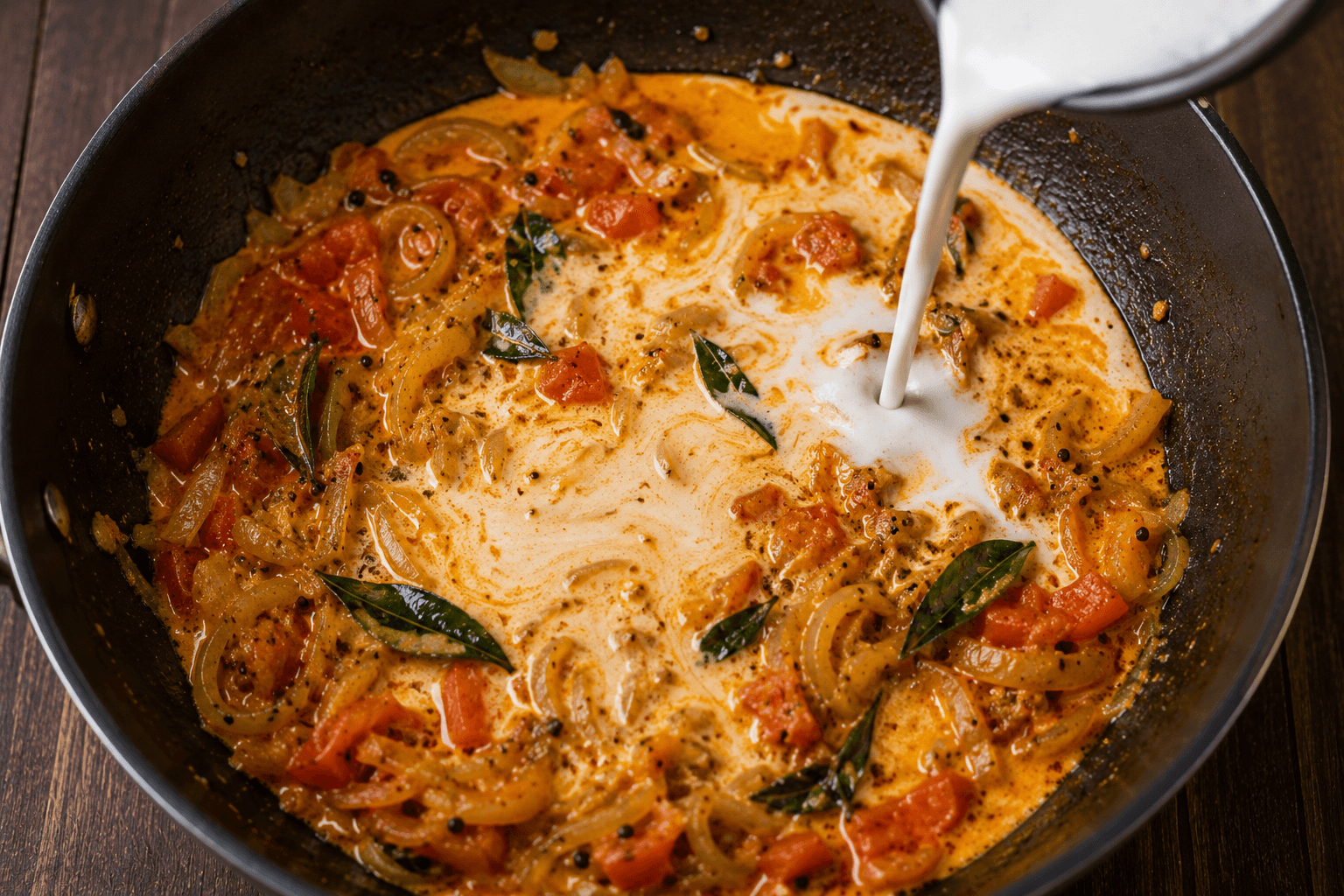
Mustard seeds are toasted in oil until they pop, releasing their nutty aroma. Curry leaves, onion, garlic, and tomato are then sautéed until fragrant and softened, creating the flavor base of the curry.
Coconut milk is added gently rather than boiled aggressively, keeping the sauce creamy and smooth. The fried eggplant is returned to the pan last so it can absorb the sauce while still maintaining structure.
A small splash of vinegar at the end brightens the curry and balances the richness.
Step-by-Step Instructions
- Heat the coconut oil in a large pan over medium heat.
- Fry the eggplant slices until golden brown and softened. Remove and set aside.
- In the same pan, add the mustard seeds and allow them to pop.
- Add the curry leaves, onion, garlic, and tomato. Sauté until soft and fragrant.
- Stir in the turmeric, chili powder, and salt.
- Pour in the coconut milk and bring to a gentle simmer.
- Return the fried eggplant to the pan and cook for 5–8 minutes until the curry thickens slightly and the flavors combine.
- Add the vinegar if using.
Serve warm.
Serving
This curry is traditionally served alongside steamed rice, roti, pittu, dhal curry, or coconut sambol. It also works beautifully as part of a larger Sri Lankan rice-and-curry spread.
For extra texture, garnish with fresh curry leaves or sliced chili before serving.
Storing
Store leftovers in an airtight container in the refrigerator for up to 3 days. The flavors deepen overnight, making the curry even richer the next day.
Reheat gently over low heat to avoid splitting the coconut milk.
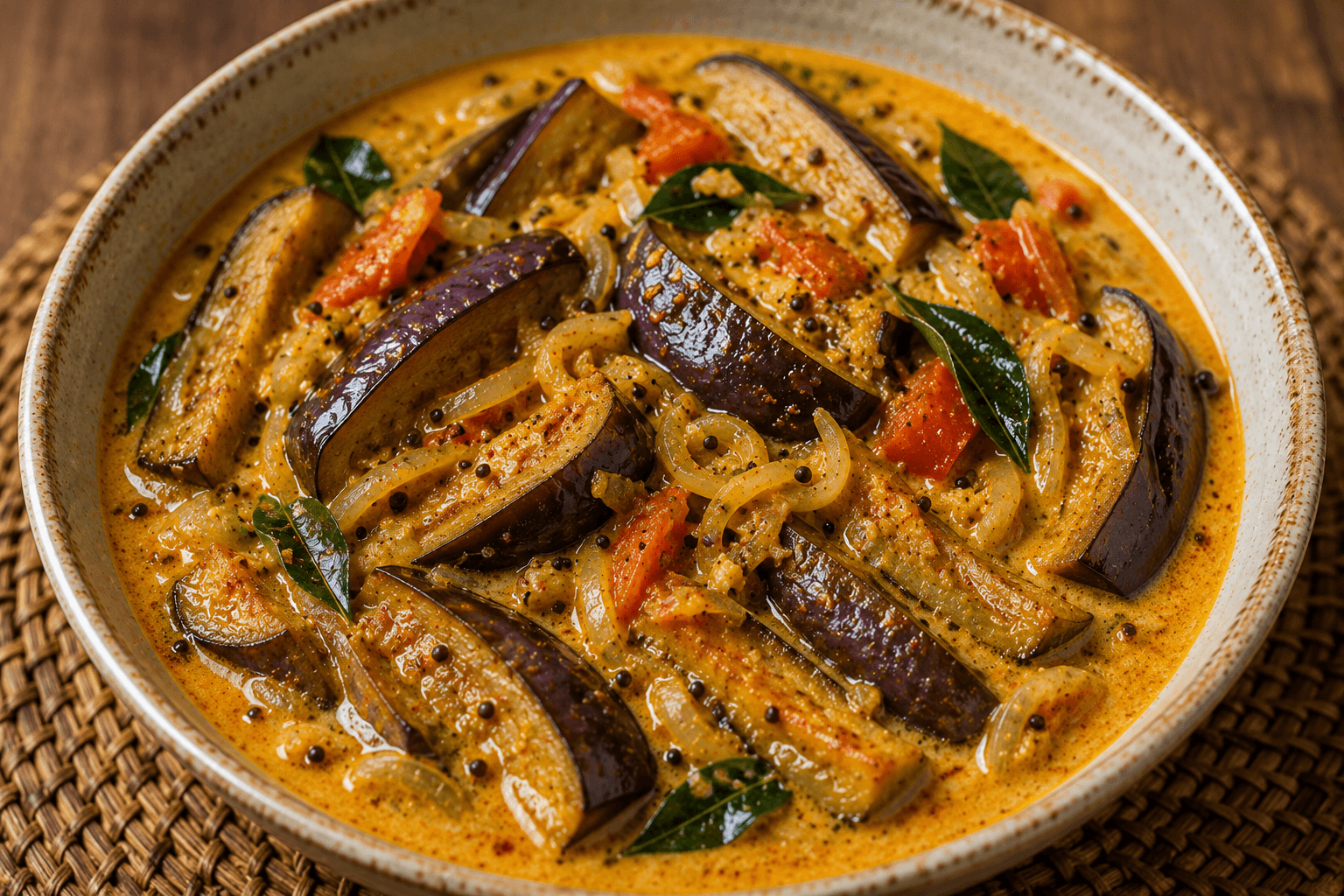
Sri Lankan Wambatu curry (Aubergine Curry)
a rich, coconut milk-based dish made with fried eggplant and spices
Share Recipe
Pin
RateServings: 4 servings
Calories: 141kcal
Ingredients
- 400 g eggplant/aubergine
- 100 g tomato chopped
- 100 g onion finely sliced
- 2 cloves garlic minced
- 1/2 tsp turmeric
- 1/2 tsp chili powder to taste
- 1/2 tsp mustard seeds
- 1 sprig curry leaves
- 120 ml coconut milk thick
- 15 g coconut oil
- salt to taste
- 1 tsp vinagar
Instructions
- Heat coconut oil in a pan. Fry the eggplant slices until golden and soft. Remove and set aside.
- In the same pan, add mustard seeds and let them pop.
- Add curry leaves, onion, garlic, and tomato. Sauté until soft and fragrant.
- Stir in turmeric, chili powder, and salt.
- Add coconut milk and bring to a gentle simmer.
- Return the fried eggplant to the pan and cook for 5–8 minutes, until the flavors meld and the curry thickens.
- Add vinegar (if using) for a touch of acidity.
- Serve warm with rice, roti, or pittu.
Notes
💡 Notes:
🧊 Storage:
Store in an airtight container in the fridge for up to 2 days. The flavors intensify over time.
- For extra depth, add a pinch of roasted curry powder or tamarind.
- You can also roast the eggplant in the oven for a lower-oil version.
- This dish pairs well with lentil curries and sambols.
🧊 Storage:
Store in an airtight container in the fridge for up to 2 days. The flavors intensify over time.
Nutrition
Calories: 141kcal | Carbohydrates: 11g | Protein: 2.2g | Fat: 11.2g
Product We Use
to make our cooking experience better