Set the Tone for Worldly Tastes in Every Kitchen
Sri Lanka Travel & Food Guide: Where to Eat, Explore & Experience
Elephants and Egg Hoppers: Our Sri Lankan Food Expedition
Sri Lanka is an island nation in the Indian Ocean, about 30 kilometers off the southern coast of India, with the Bay of Bengal to the northeast. That location has made it a maritime crossroads for centuries, and you can taste it in the food. Sri Lankan cuisine leans on rice, coconut, and spice, with curries, hoppers, and sambols doing most of the talking.
We spent weeks moving through the island, from the coast to the hill country to a national park, and this guide covers what we actually did, where we actually stayed, and what we actually ate.
About Sri Lanka
why it captivates travelers
Sri Lanka packs an unreasonable amount of variety into a small island. You can start the day floating past elephants on a riverbank, spend the afternoon climbing into hill country tea estates, and end it watching leopards move through a national park at dusk. Then there's the coast, where the pace drops completely and the only plan is the next swim.
It's the contrast that makes it work. Nowhere else have we gone from a slow poolside morning to a wildlife safari to a beach town in the space of a single trip, without any of it feeling rushed or forced together.
Sri Lanka's Living History & Culture
Sri Lanka's story is written in stone, water, and the daily practices of its people. Sigiriya's ancient fortress rises from the plains like an impossible monument. Buddhist monks chanting at dawn. Hindu temple ceremonies with bright flowers and ringing bells. Muslim calls to prayer echoing across fishing villages. This is a place where spiritual practice and daily life aren't separated—they're woven together.

Best Time to Visit Sri Lanka
Sri Lanka runs on two monsoon systems, which means the "best" time depends entirely on which coast you're heading to.
The west and south coasts (Negombo, Hikkaduwa, Galle) are driest and most pleasant from December to April. The east coast flips the other way, with its best weather from May to September. The hill country, including areas like Hatton, stays cooler year-round and is workable in most seasons, though it gets its own rain patterns worth checking closer to your trip.
If you're covering the island the way we did, moving between coast, hill country, and national park, aim for the shoulder periods in March-April or August-September, when you're less likely to get caught out by either monsoon.
How Many Days Do You Need in Sri Lanka?
How long to spend depends on how much of the island you want to see, not just how much time off you have.
7 days: pick one route and stick to it. Land in Negombo and spend a day or two recovering from the flight. From there, go straight to Pinnawala for the elephants, then either continue to a hill-country stop like Ella or a national park like Yala, and finish with a few days on the coast at Hikkaduwa or Mirissa. Trying to fit in hill country, a safari, and multiple beach towns in a week means spending more time in transit than anywhere worth stopping.
Read more about the perfect 7-day itinerary...
10 to 14 days: add the hill country and one more coastal stop. This is enough time for the fuller loop: Negombo, Pinnawala, then properly into the hills through Hatton, Ella, and Kandy, followed by a safari at Yala or Udawalawe, then down to the south coast for both Mirissa and Hikkaduwa rather than choosing one. If you want to add Sigiriya, Dambulla, or a cinnamon or coconut plantation tour, this is the timeframe where it starts to fit without feeling rushed.
Read more about theultimate 10-14 day itinerary...
Three weeks or more: do what we did. Coast to elephants to hill country to safari to a longer beach stay, with room to actually settle into places rather than passing through them. Three weeks is also enough time to add Colombo, Adam's Peak, or a longer stretch on the east coast around Arugam Bay if surfing is a priority.
Read more about a slow 3-4 week itinerary...
The one mistake worth avoiding at any length: don't try to do the hill country and a national park safari back to back without a buffer day. Both involve early starts and long drives, and stacking them is where trips start to feel like a checklist instead of a holiday.
Places We Visited in Sri Lanka
Negombo
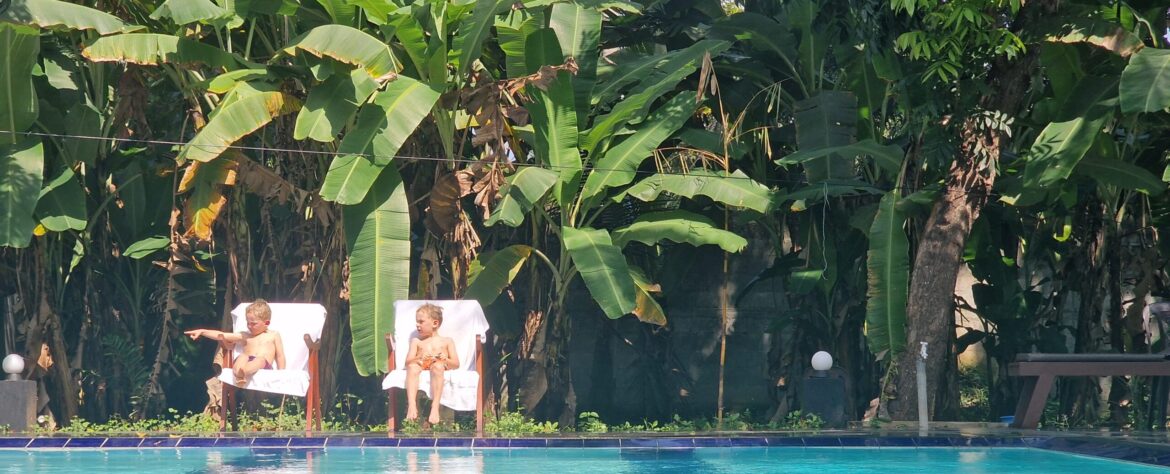
Negombo is a coastal town about 20 minutes from the airport, which made it the obvious first stop after a long haul flight. We booked a family-run, mid-range hotel and spent two days doing nothing but lounging by the pool and eating the hotel's homestyle food. It turned out to be the right call. Between the curries, hoppers, and sambols we tried poolside, it was as good an introduction to Sri Lankan food as the trip could have started with, and an easy way to adjust before heading further inland.
Pinnawala
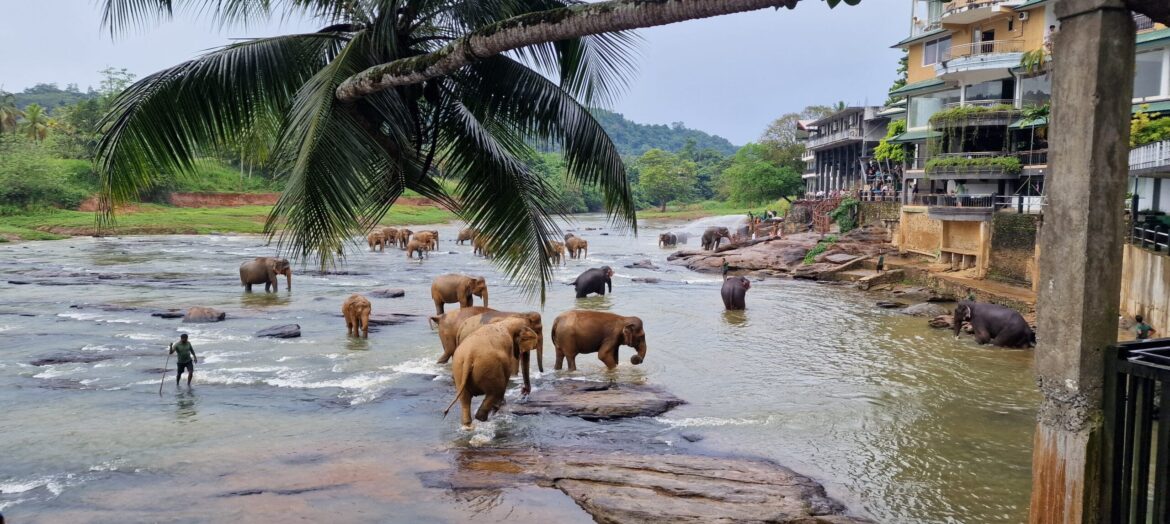
From Negombo we headed to Pinnawala, home to Sri Lanka's Elephant Orphanage. We stayed at a hotel built right on the riverbank, with views over a brown-water river lined in green. Twice a day, the orphanage's elephants are walked down through the streets of Pinnawala to bathe in that same river, and watching them come down to the water is genuinely one of those sights you don't forget.
The orphanage funds its care for abandoned elephants through ticket sales and visitor experiences, including the option to get in the water and help wash them. We did, and it's one of the highlights of the whole trip.
Hatton and the Arsulana Eco Lodge
We stayed a night at the Arsulana Eco Lodge, about an hour from Hatton, with a waterfall right outside the room and nothing but quiet around it. Our plan was to catch the well-known train from Hatton to Ella the next day. It was fully booked for the next month.
If you want to ride that train, book it well in advance. We didn't, and it cost us the experience.
Ella
With the train off the table, we passed through Ella by road instead and stopped for lunch. It meant missing the ride everyone talks about, but Ella itself was worth the stop, and the train is firmly on the list for next time, tickets booked well ahead of arrival.
Yala National Park
From Hatton we went south to Yala National Park for three nights. The safari was a real highlight of the trip, with leopard, elephant, and crocodile sightings, plus more bird species than we could keep track of. The landscape itself, dry scrubland opening onto lagoons, added as much to the experience as the wildlife did.
Mirissa
Further along the south coast, Mirissa gave us beach time and a whale watching trip, one of the more memorable stops on this leg of the journey.
Hikkaduwa
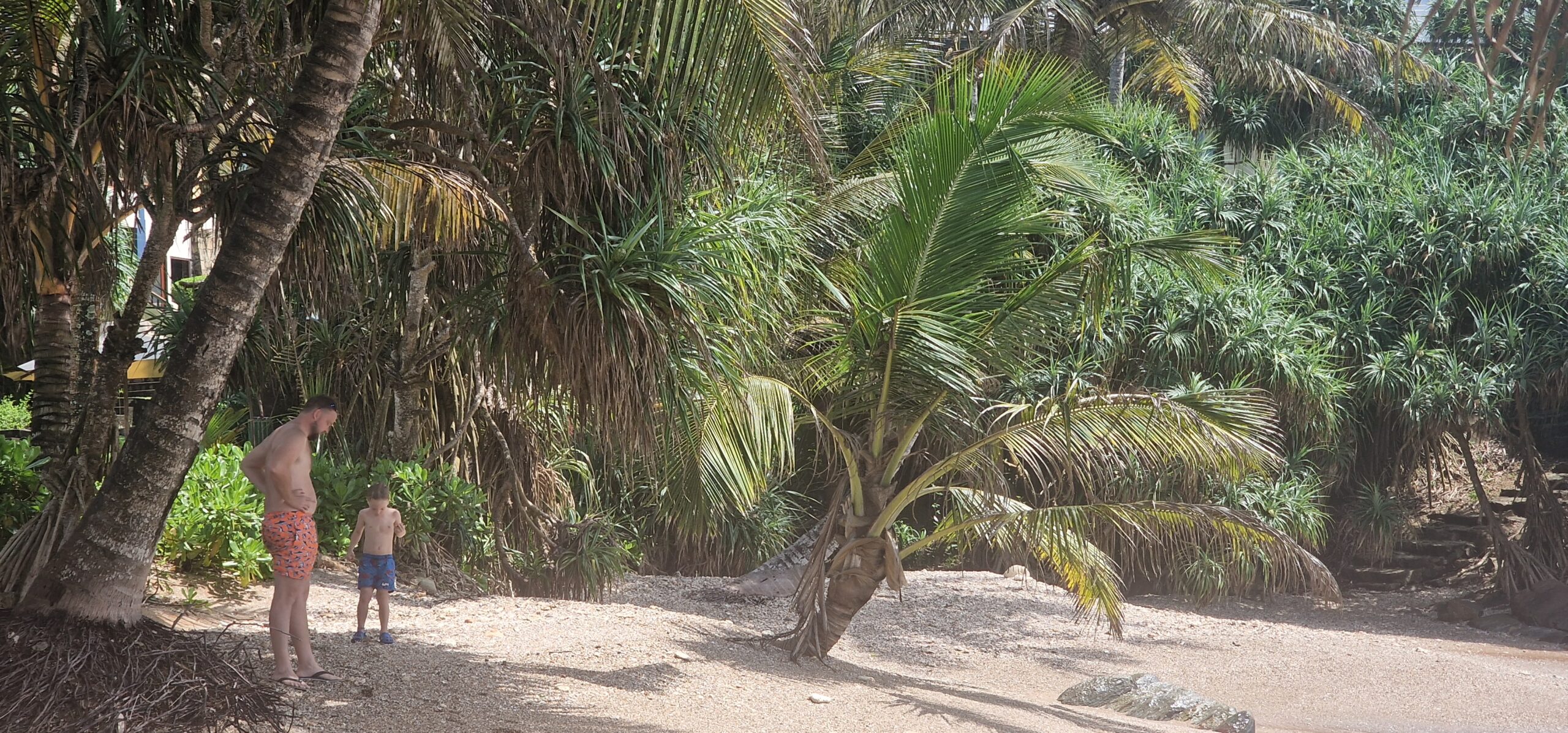
We ended the trip in Hikkaduwa, staying three weeks to visit family and settle into beach life. The kids spent most of their time surfing, we spent ours scuba diving and doing very little else, and it turned into the right mix of adventure earlier in the trip and doing nothing at all by the end of it.

Things To Do in Sri Lanka
Wash the elephants at Pinnawala. Beyond watching them bathe, you can pay to join in. It's a strange, wonderful thing to do with kids.
Go on safari in Yala National Park. Leopards, elephants, crocodiles, and enough bird life to fill a checklist. Three nights gave us multiple game drives without feeling rushed.
Book the Hatton to Ella train early. It's one of Sri Lanka's most scenic rail routes and it sells out a month ahead. Don't assume you can book it on arrival.
Surf or dive in Hikkaduwa. The town works for both. Our kids surfed, we dove, and there was enough coastline for everyone to do their own thing. Beginners can book a surf lesson right on the beach, and for more experienced surfers, Arugam Bay on the east coast is considered one of the best breaks in the country.
Spend time in the hill country. Even without the Ella train, the drive through tea country around Hatton is worth the time on its own. A tea plantation tour, common around Nuwara Eliya, adds context to the tea you'll see growing along every hillside.
Climb Sigiriya Rock Fortress. A 5th-century rock citadel built by King Kashyapa, with roughly 1,200 steps leading up past ancient frescoes to the ruins of a royal palace. Go early to beat both the heat and the crowds.
Visit the Dambulla Cave Temple. A short drive from Sigiriya, this cave monastery dates back to the 1st century BC and holds over 150 Buddha statues beneath painted ceilings. It's still an active place of worship, so modest dress is expected.
Climb Adam's Peak. A pilgrimage site sacred to four different religions, climbed at night so you reach the summit for sunrise. The main climbing season runs from December to May, outside of which the route is far quieter but also more exposed to weather.
See wild elephants at Udawalawe National Park. Where Yala is known for leopards, Udawalawe is the more reliable bet for elephants, with several hundred resident in open grassland that makes spotting them easy.
Visit a coconut plantation and see arrack being made. Sri Lanka is the world's largest producer of coconut arrack, distilled from the fermented sap of coconut flowers by toddy tappers who still climb the trees by hand. Some estates along the west coast's "toddy belt" offer tours that walk through the whole process, from tapping to distillation.
Tour a cinnamon plantation. True cinnamon (Ceylon cinnamon) originates in Sri Lanka, and the south coast around Galle has plantations where you can see the bark peeled and rolled by hand, a slower and more delicate process than most people expect.
Where to Stay in Sri Lanka
Where you base yourself in Sri Lanka depends on what stage of the trip you're at, more than any single town being the "right" answer.
Colombo is the capital and the country's main international gateway, though most travelers pass through it rather than stay long. It's worth a night if you're arriving late, need a day to handle logistics, or want a last taste of city life before flying out. Traffic can be heavy, so factor in more time than the distance on a map suggests, and note that the airport itself sits closer to Negombo than to Colombo proper.
Negombo works well as a landing pad. It's close to the airport, low-key, and a good place to recover from a long flight before you commit to moving around the island.
Pinnawala is worth a night specifically for the elephants. A riverside stay puts you close enough to catch the daily bathing walk without planning around it.
Hatton and the surrounding eco lodges suit travelers who want a quiet, nature-focused stop in the hill country, especially if you're building in time for the Ella train or just want a night away from towns.
Ella makes sense as a short stay of its own, especially if you're doing what we didn't and actually booking that train in advance. It's small, walkable, and puts you close to the Nine Arch Bridge and Little Adam's Peak.
Mirissa is the natural base for beach time and whale watching on the south coast. It's more built up than some of the surrounding coastline, so if you'd rather have a quieter version of the same access, look just along the coast toward Weligama or Ahangama.
Hikkaduwa is where we'd point anyone traveling with family or planning to stay longer in one place. It has the beach, the food, and enough going on (surfing, diving, markets) to fill three weeks without repeating yourself, which is exactly what it did for us.
Other bases worth knowing about: Kandy sits at higher elevation and works as the jumping-off point for the Temple of the Tooth and the hill-country train line. Galle, built inside a Dutch colonial fort on the south coast, offers a completely different register: boutique stays, cafés, and centuries-old walls rather than wildlife or beach. The Sigiriya and Dambulla area is usually a one-to-two-night stop built specifically around the rock fortress and cave temple. And Nuwara Eliya, Sri Lanka's old colonial hill station, works well as a stopover between Kandy and Ella given its position on the same rail line.
If you're short on time, Hikkaduwa is the single base that gives you the most for your stay. If you have the time, moving through the full route the way we did, coast to hill country to national park and back to coast, is worth it.

Sri Lankan Food
Sri Lankan food is built around rice, coconut, and spice, shaped by its position at one of the Indian Ocean's busiest trading crossroads. It favors bold, layered flavor over subtlety, with sour, spicy, sweet, and savory often sitting in the same meal rather than staying in their own lane. Most of it comes from home kitchens and roadside stalls rather than formal technique, built to be eaten fresh, often with your hands, and usually shared.
Sri Lankan food carries its history openly. The Portuguese arrived in 1505 and brought chili peppers, now essential to Sri Lankan curries, along with salted codfish and layered cakes that evolved into local sweets like bibikkan. The Dutch took over in the 17th century and left behind lamprais and the pickling tradition that became achcharu. The British, who ruled from 1815 to 1948, planted the tea estates that still define the hill country and introduced bread, puddings, and roast dishes still eaten today.
Beyond the colonial layers, the food shares real ground with its neighbors. Curry leaves, mustard seeds, and coconut connect it to South Indian cooking. Fried rice and stir-fried dishes trace back to Chinese traders. Lemongrass and pandan hint at Southeast Asia.


Frequently Asked Questions
Do you need a visa to visit Sri Lanka?
Yes. Almost all foreign nationals need an Electronic Travel Authorization (ETA) before arrival, applied for online rather than through an embassy. As of May 2026, citizens of 40 countries, including the US, UK, Canada, Australia, and most of the EU, can get a free 30-day tourist ETA, though the application itself is still required. Everyone else pays a standard ETA fee. Apply through the official portal a few days before you travel, since third-party sites often charge extra for the same thing.
Is Sri Lanka safe to visit?
Generally yes, and it's a well-established destination for family travel, including with young kids, as our own trip was. Standard travel precautions apply: negotiate tuk-tuk fares or use a metered rideshare app, keep an eye on belongings in crowded areas, and check current advisories before you go given the country's history of both natural and political disruption.
What's the difference between hoppers and string hoppers?
Hoppers are a fried, bowl-shaped pancake made from fermented rice flour and coconut milk. String hoppers are the same base ingredients pressed into thin noodles and steamed into small round nests instead. Hoppers have a crisp edge and soft center, string hoppers are soft and slightly chewy throughout. Full details are in our hoppers and string hoppers recipes.
Is Sri Lankan food very spicy?
It varies more than people expect. Dishes like dhal curry and rice and curry staples are mild to moderate, built for balance rather than heat. Others, like pol sambol or ambul thiyal, are intentionally sharp and spicy. A typical meal usually includes both ends of that range on the same plate.
What currency and language should I know before visiting?
Sri Lanka uses the Sri Lankan Rupee (LKR). Sinhala and Tamil are the official languages, and English is widely spoken in hotels, restaurants, and tourist areas, so getting around without local language isn't difficult.
What is the best way to travel around Sri Lanka?
A private driver or arranged transfers are easiest for a multi-stop itinerary. Trains are best used for the Hill Country, especially the journey from Nanu Oya to Ella.
Is Sri Lanka expensive to travel?
Sri Lanka can suit a range of budgets. Guesthouses, local food, and public transport can be affordable, while boutique hotels, private drivers, safaris, and beach resorts raise the overall cost.
What should I wear in Sri Lanka?
Wear lightweight, breathable clothing for most of the country, plus a light jacket for the Hill Country. For temples, cover your shoulders and knees and remove shoes where required.
When is the best time to visit Sri Lanka?
Sri Lanka has regional weather patterns, so the best coast depends on the time of year. Build flexibility into your trip, especially if beaches, hiking, or wildlife safaris are important to you.
Do I need to book the Ella train in advance?
It is wise to book reserved tickets in advance, especially during busy travel periods. Even without a reserved seat, the journey can still be enjoyable if you are flexible.


Sri Lanka in One Word? Abundant.
Elephants on the riverbank, leopards in the scrub at dusk, three weeks in Hikkaduwa that still felt too short. Sri Lanka doesn't make you choose between wildlife, hill country, and the coast. It just asks for enough time to get through all three, and gives you a very good reason to eat well while you do it.